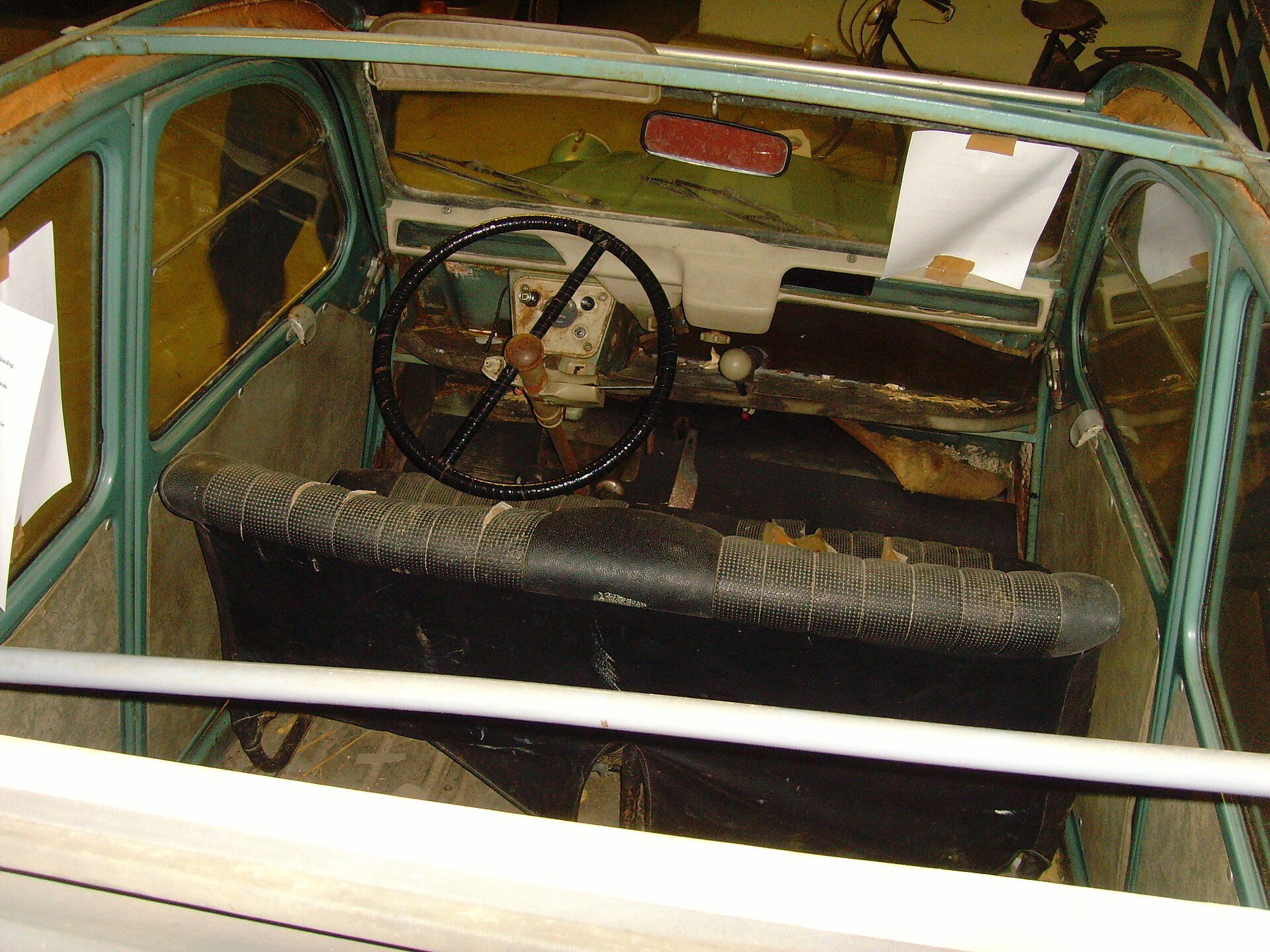
The "Tin Snail" that put France on wheels is back, this time electric.
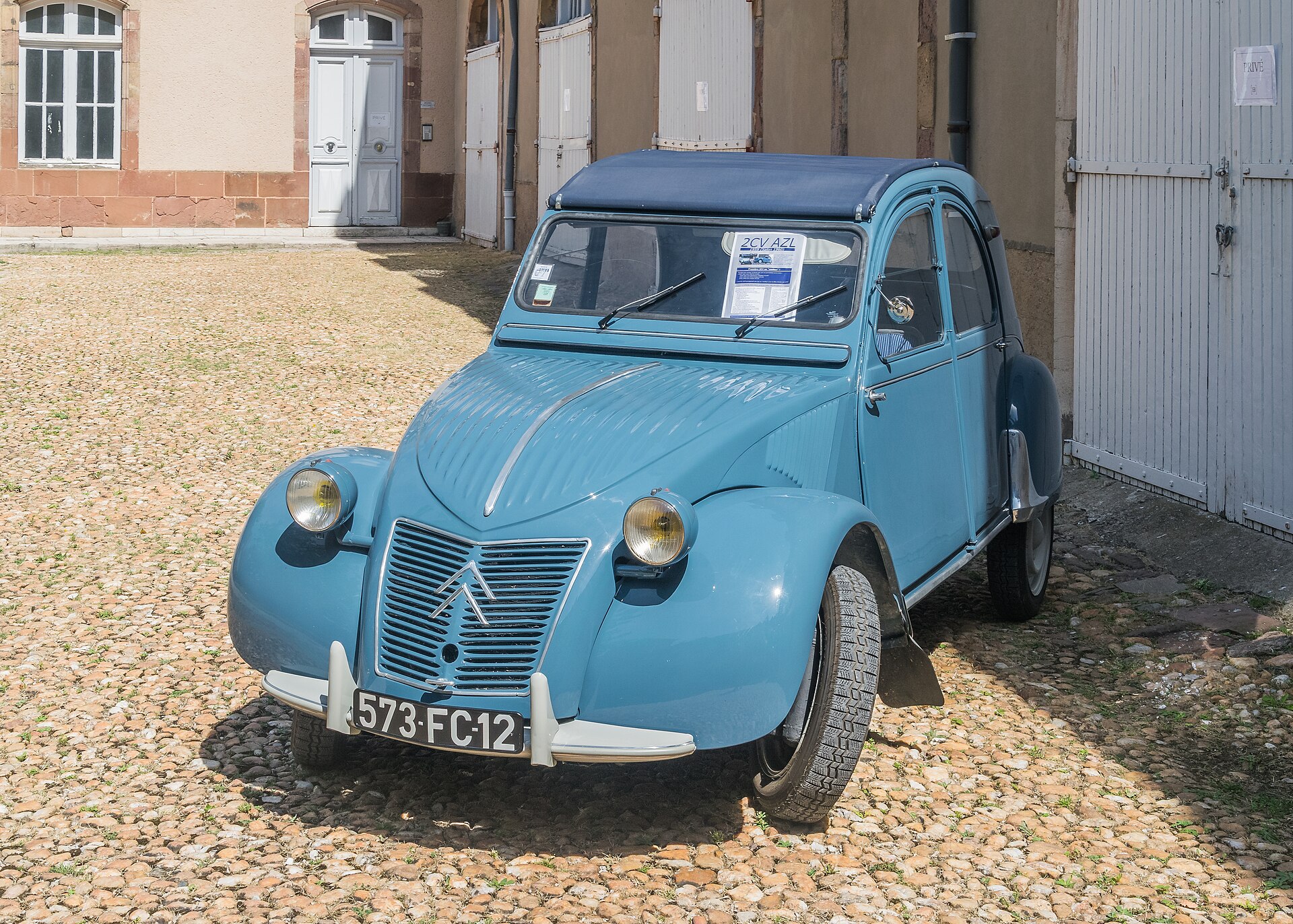
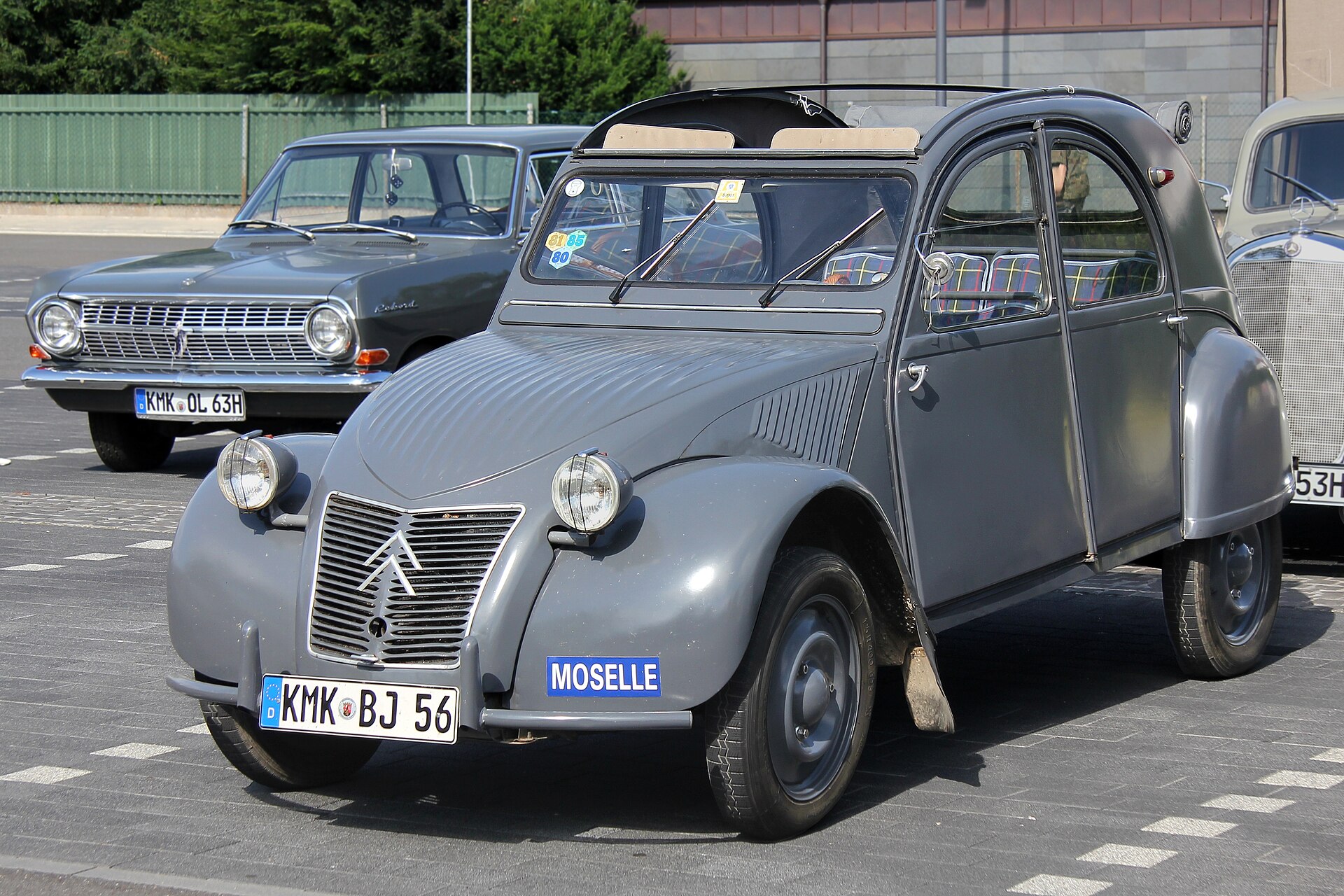
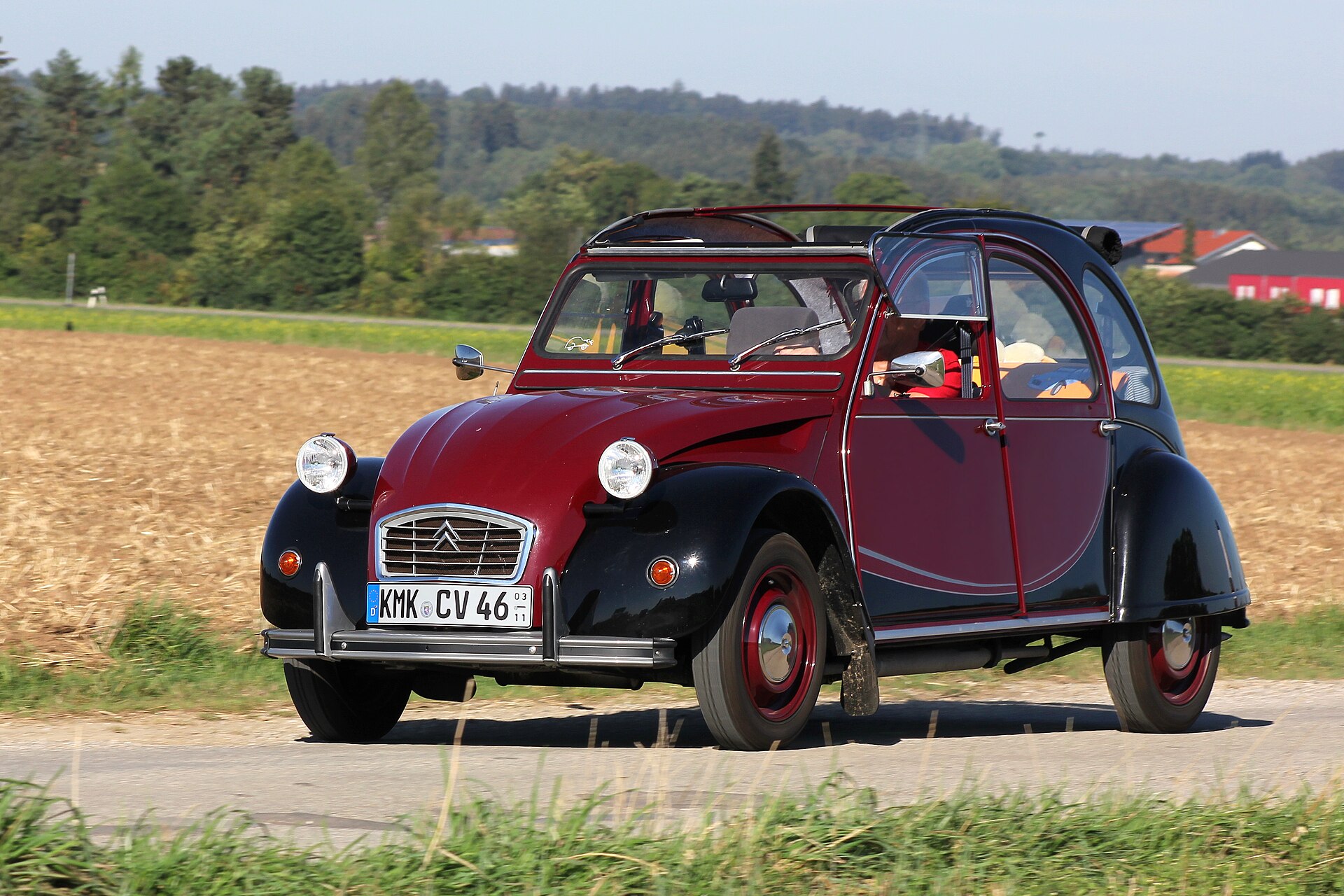
The Citroën 2CV debuted in 1948 and was built until 1990. The idea was simple, light, cheap motoring for everyone, and the French gave it nicknames like the "deuche," the "tin snail" and the "umbrella on wheels." It became one of the most recognizable cars ever made and a symbol of postwar mobility in France and across Europe.
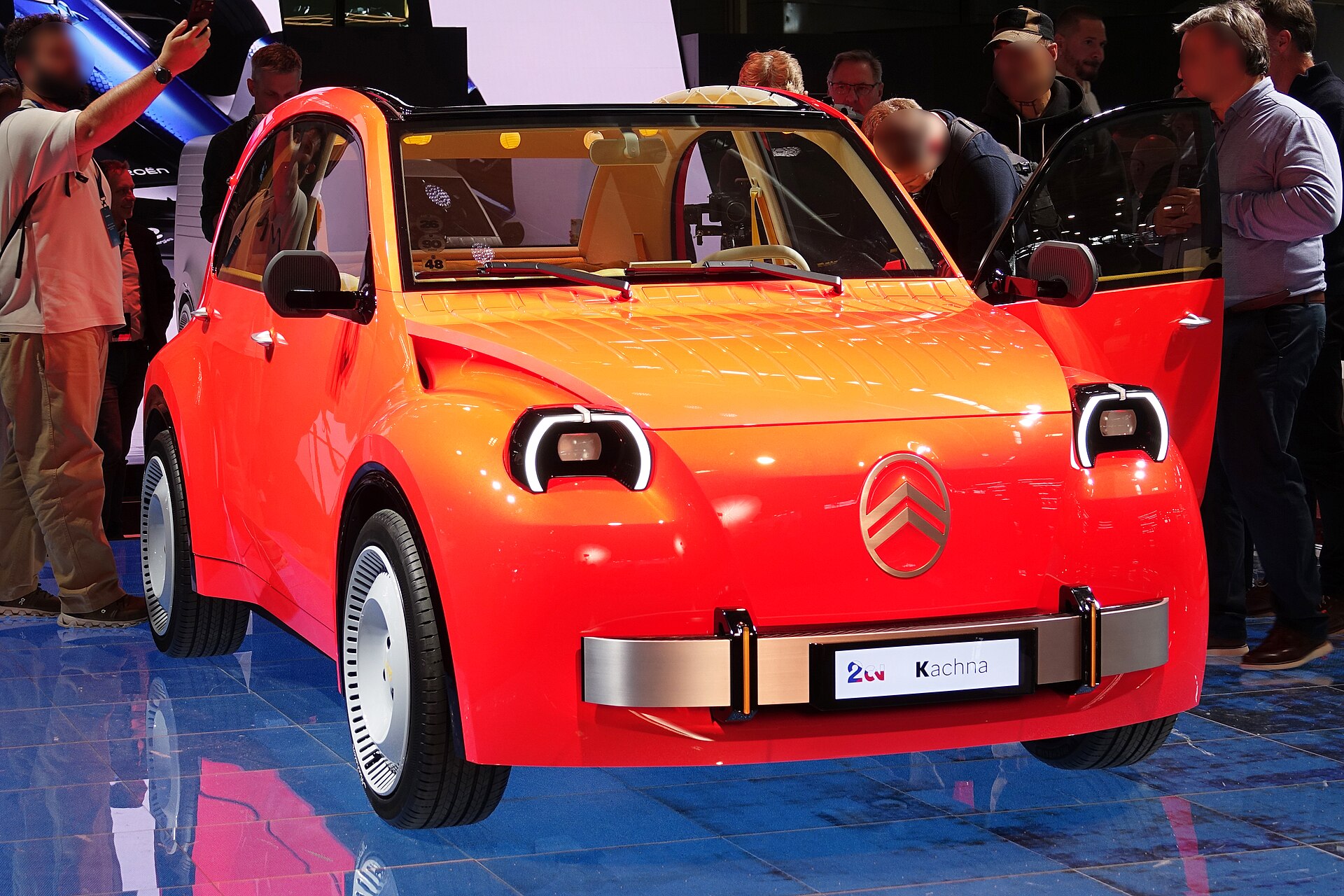
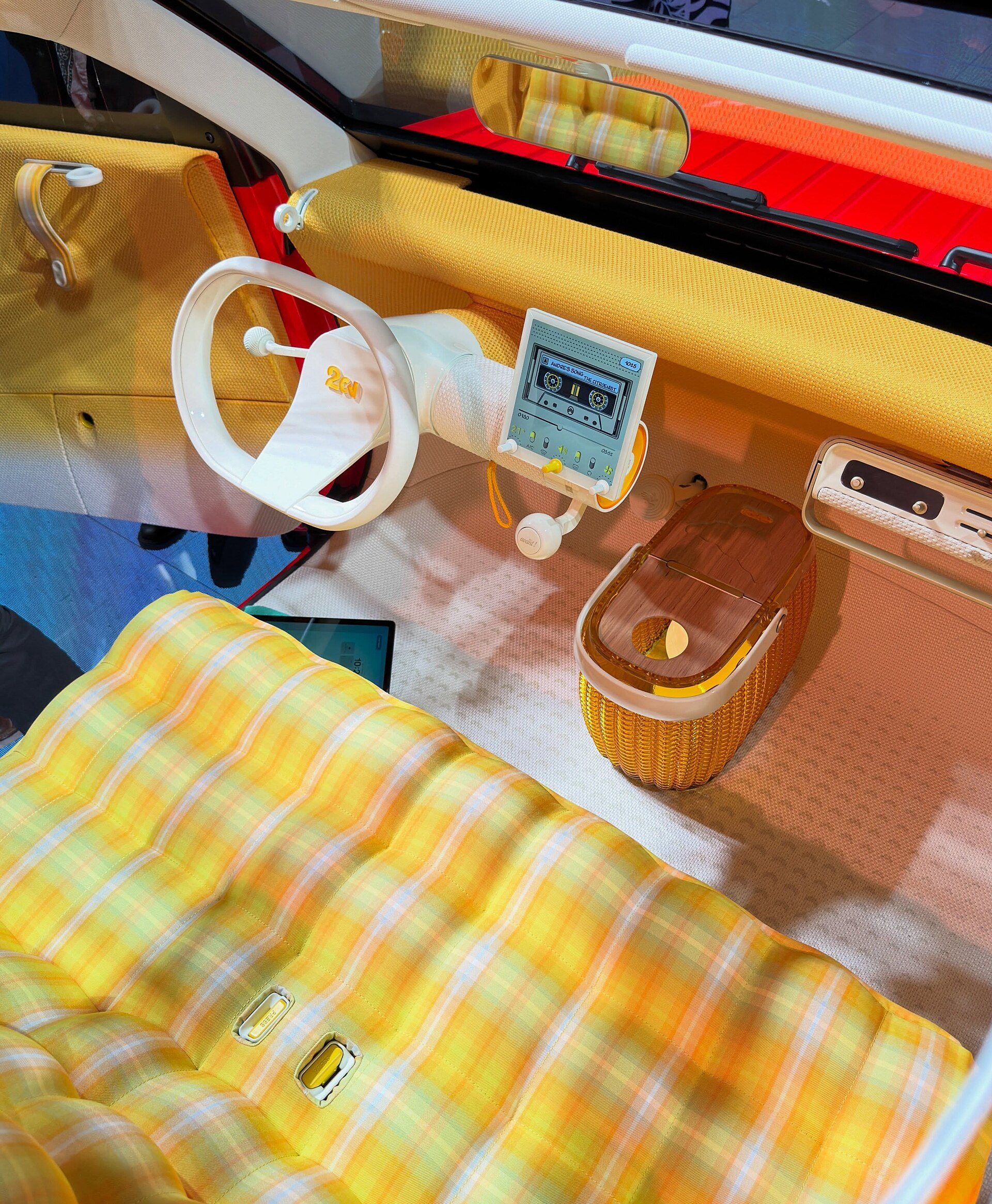
At the 2026 Paris Motor Show, Citroën unveiled the 2 CV Concept, an electric reinterpretation of the original. It's 3.76 m long and aims to weigh under 1,000 kg. Citroën says the production version will be built in Europe, will comply with the upcoming E-Car regulations and will target a starting price of about €15,000 (the BBC reports roughly £13,000), with a production model due by 2028. Citroën CEO Xavier Chardon told AutoRAI.nl that the production version will be revealed at the 2028 Paris show and will be the first car on Stellantis' new E-Car platform, built at Pomigliano d'Arco in Italy.
Why it's our Car of the Day: few cars carry as much history, and this week the BBC and outlets across Europe are covering its revival. That puts the 2CV in front of enthusiasts and everyday drivers alike.
Specs below are for the original 1948–1990 2CV unless marked. Citroën has published only headline figures for the electric 2 CV Concept.
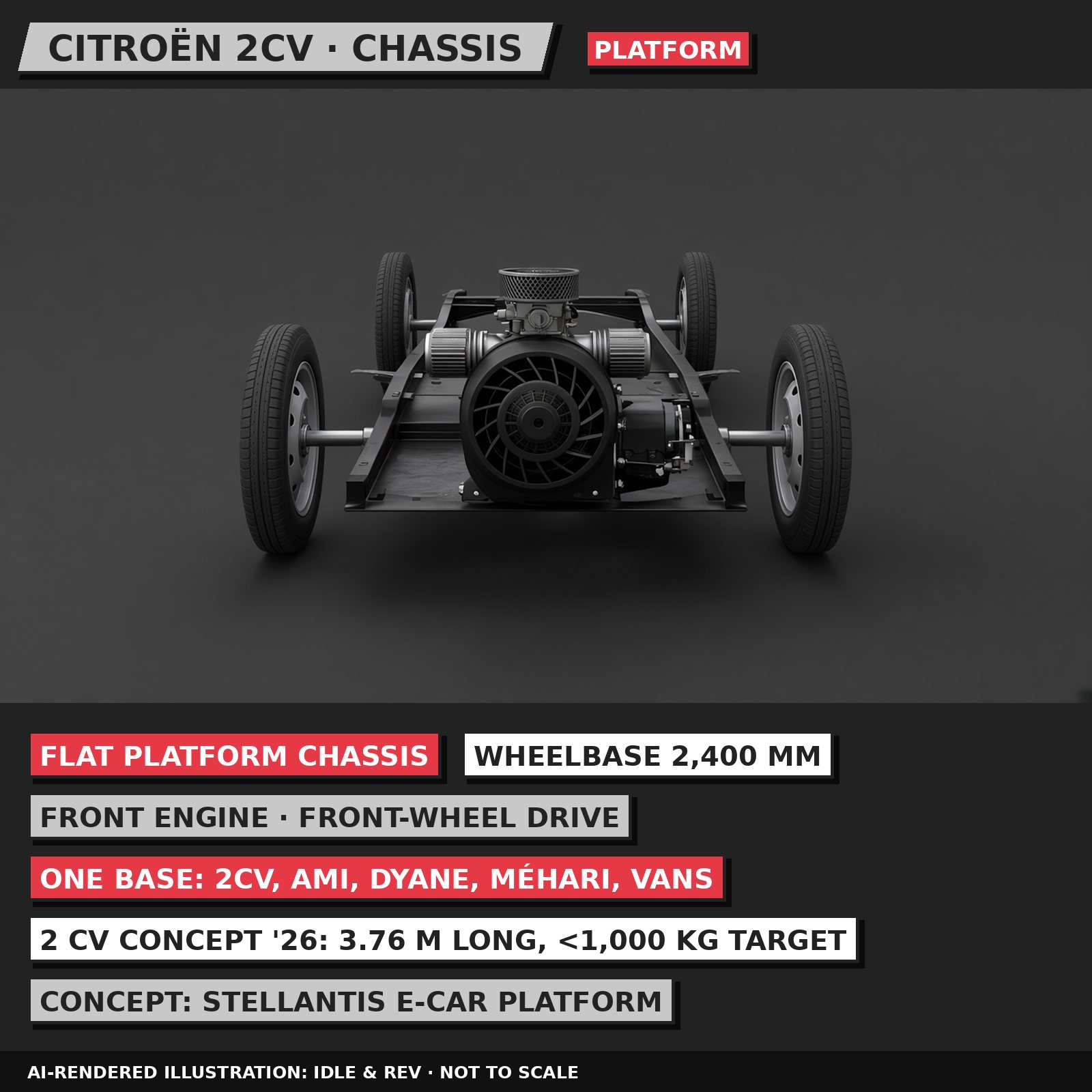
Chassis
Original 2CV: platform chassis, 2,400 mm wheelbase, front engine driving the front wheels
2 CV Concept (2026): 3.76 m long, target weight under 1,000 kg; the production car will be the first on Stellantis' E-Car platform
Concept platform details beyond that have not been published
The separate platform was what let Citroën spin off vans, the Ami, Dyane and Méhari from one base, and it let the body stay simple. The new car's sub-one-tonne target is the modern echo of the original's obsession with lightness.
Illustration: Idle & Rev (AI-rendered, for illustration; not to scale)
Suspension
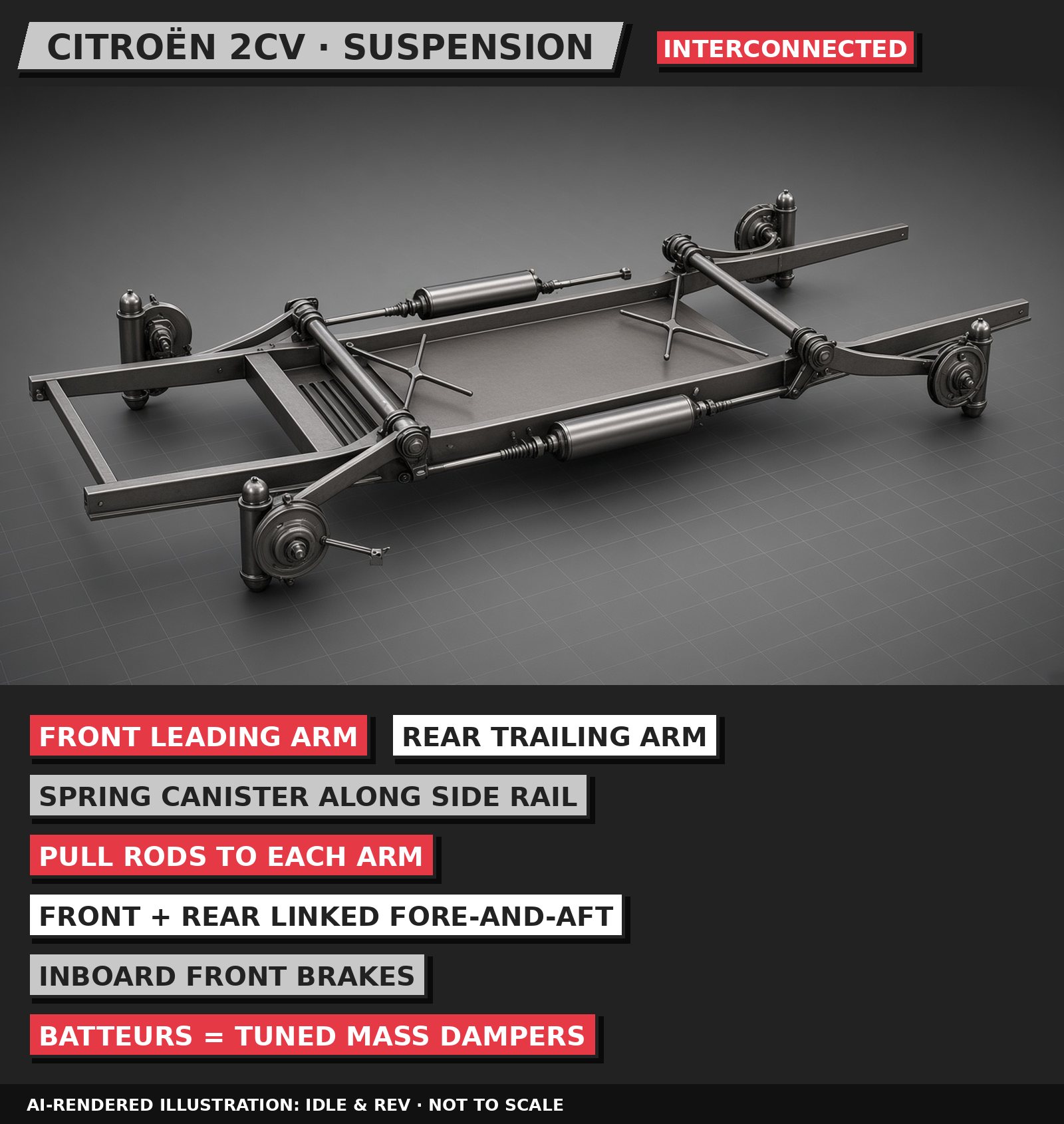
Original 2CV: front leading arms and rear trailing arms, linked fore-and-aft
Two horizontal suspension cylinders, one on each side of the platform, each holding two springs (one per wheel)
Inboard front brakes cut unsprung mass; tuned mass dampers ("batteurs") were used, with hydraulic telescopic dampers on later cars
2 CV Concept: suspension not yet disclosed
This is the system built to cross a ploughed field without breaking a basket of eggs. Linking front and rear on each side lets the wheels follow the ground closely while the body floats, which is why a 2CV leans dramatically yet rides like few small cars.
Illustration: Idle & Rev (AI-rendered, for illustration; not to scale)
Engine / Powertrain
0–60 mph: 32.7 s for the 602 cc 2CV6 (Autocar road test, March 8, 1975; top speed 69 mph). The 1948 375 cc car's top speed was only about 40 mph, so it had no 0–60 time. 2 CV Concept: not published
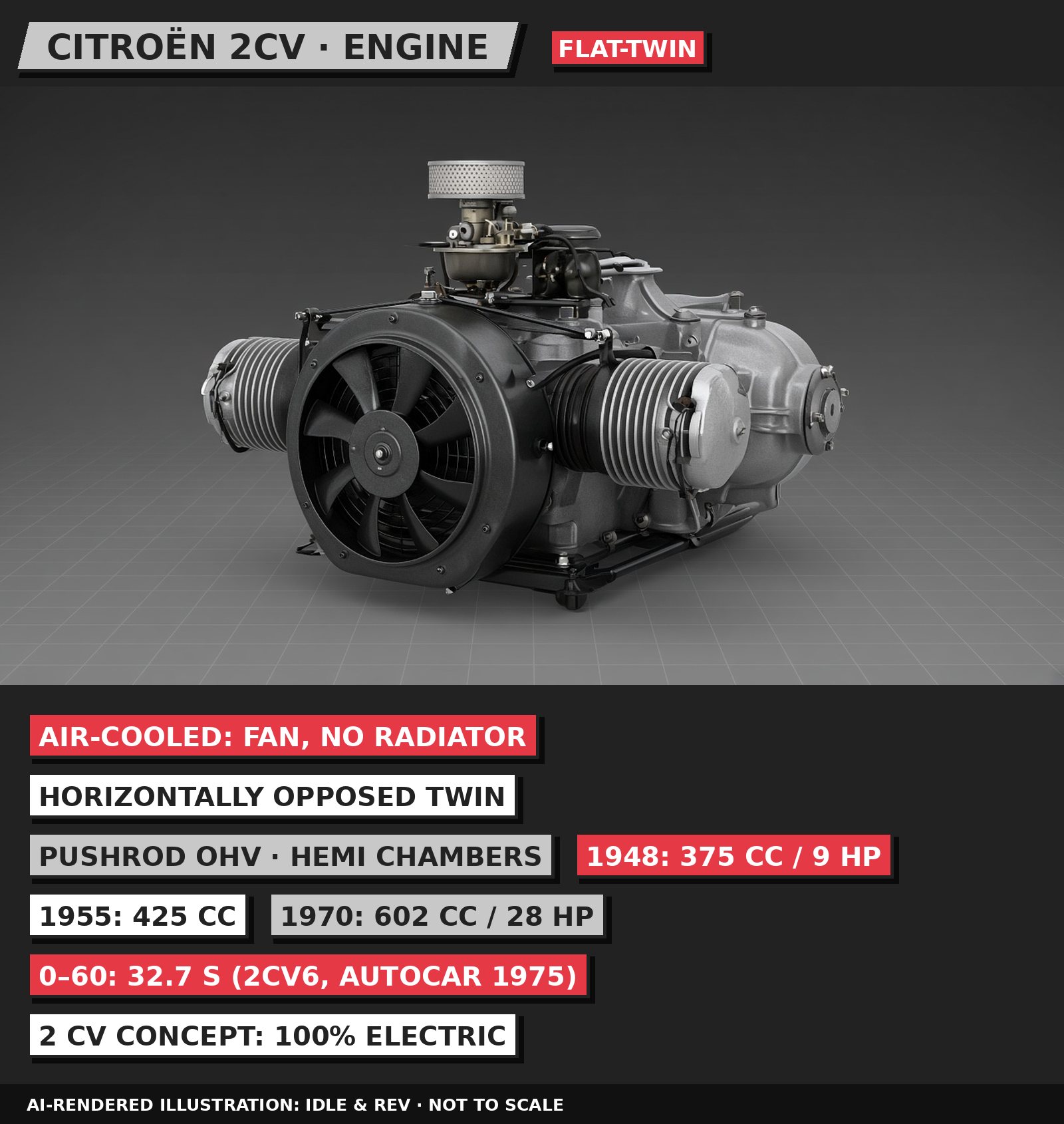
Original 2CV: air-cooled, four-stroke flat-twin with pushrod OHV and hemispherical chambers, designed by Walter Becchia and Lucien Gerard
375 cc / 9 hp at launch; 425 cc from 1955 (12, later 18 hp); 602 cc from 1970 with 28 hp at 7,000 rpm
2 CV Concept: 100% electric; motor, battery and range have not been published (Citroën's CEO says range will be close to the original's)
Air cooling meant no radiator, no coolant and almost nothing to go wrong, ideal for rural owners. The tiny twin revs freely, and keeping a 2CV moving is part of the charm.
Illustration: Idle & Rev (AI-rendered, for illustration; not to scale)