Issue #3 · Saturday, October 17, 2026
← Back to today's issue
Car of the DayCLASSIC CARSOct 17, 2026
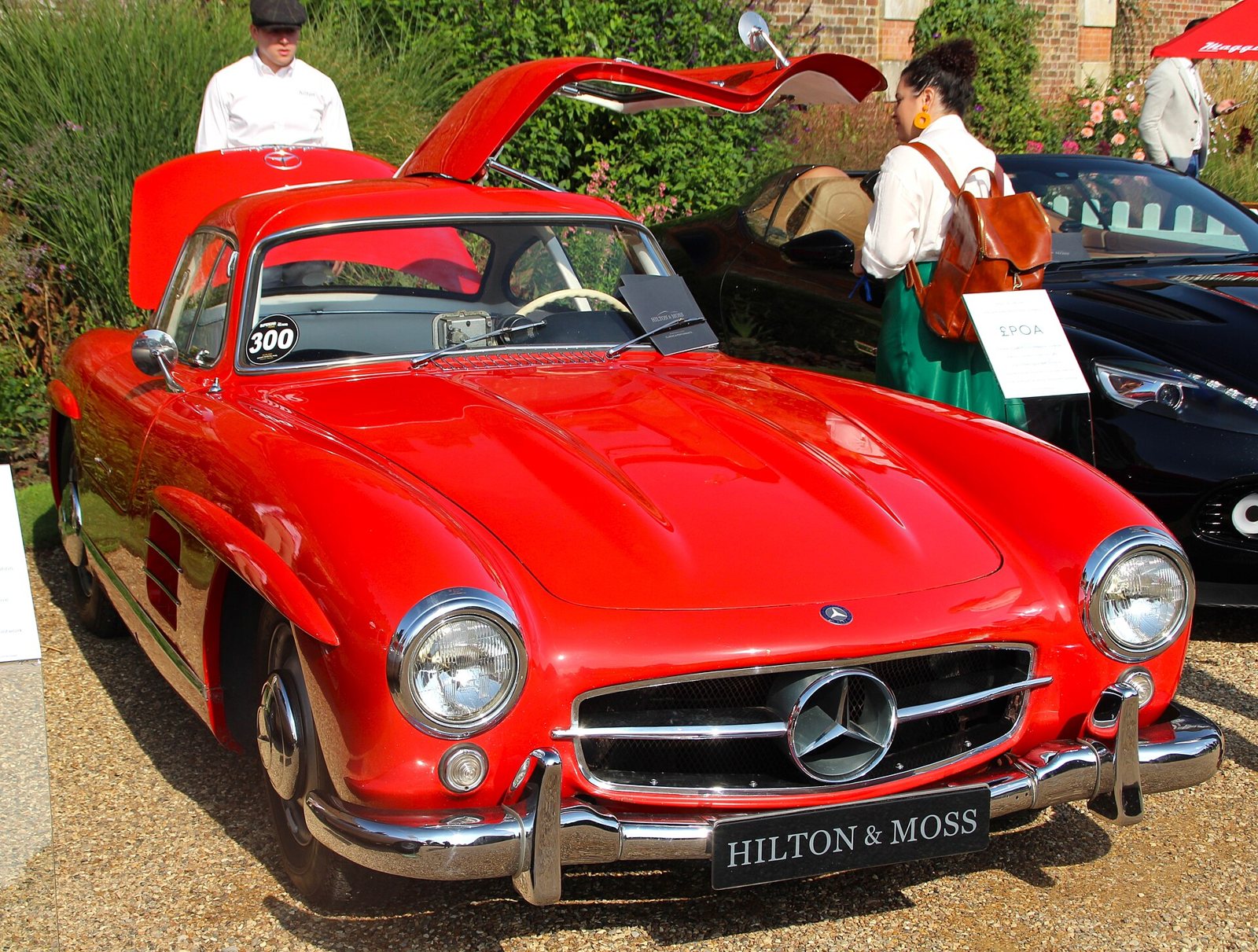
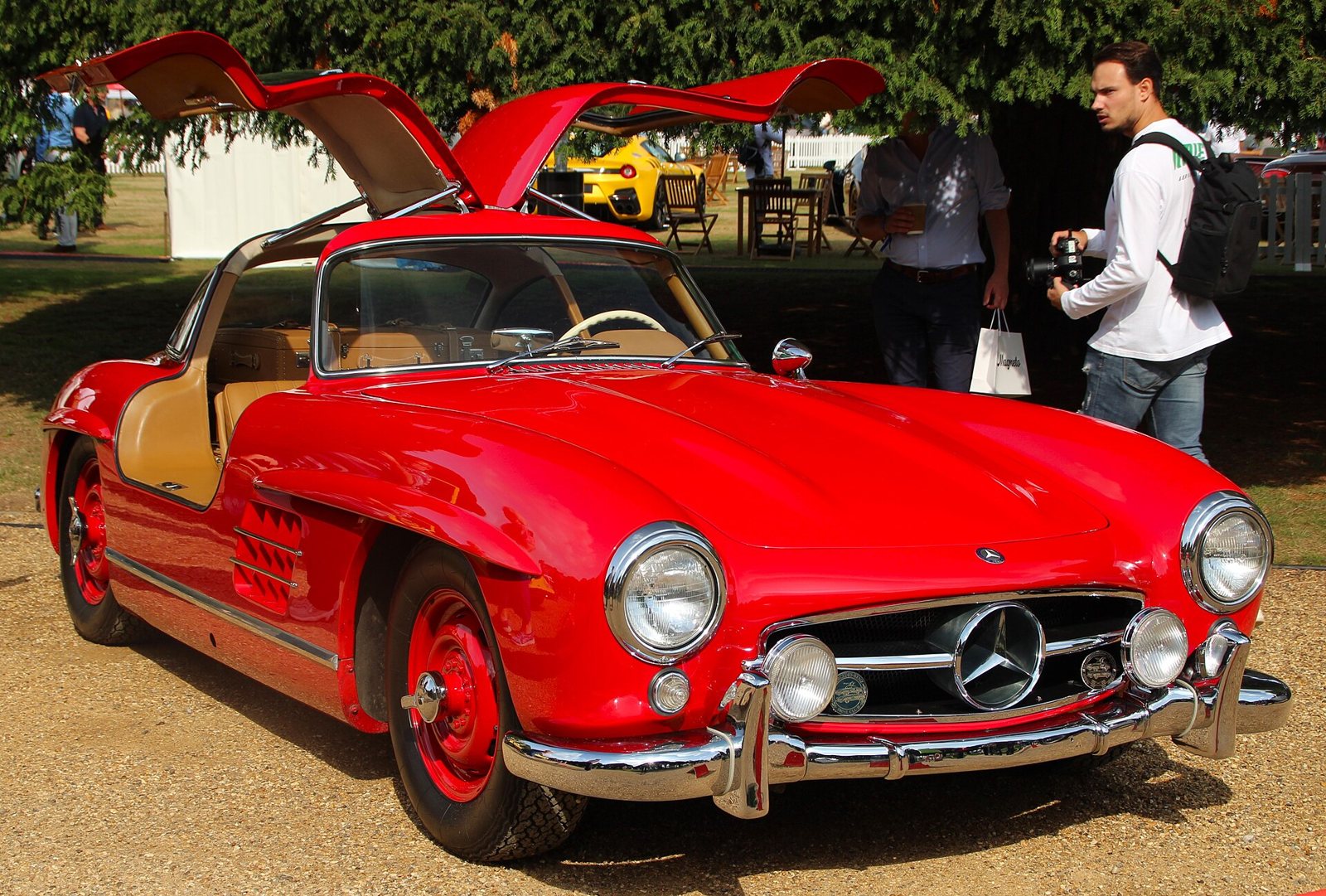
1955 Mercedes-Benz 300 SL Gullwing coupé in red with both gullwing doors open
Photo: 1955 Mercedes-Benz 300 SL Gullwing, doors open. MrWalkr via Wikimedia Commons · License: CC BY-SA 4.0

Mercedes-Benz 300 SL Gullwing (W198)

4 min read

Mercedes-Benz's racing-bred gullwing coupé: one of the first production cars with direct fuel injection, and the fastest production car of its day.

The road-going 300 SL grew out of a racing car. In 1952 Mercedes-Benz's W194 300 SL, a lightweight coupé with a 3-liter straight-six, won the 24 Hours of Le Mans (Hermann Lang and Fritz Riess) and the Carrera Panamericana (Karl Kling and Hans Klenk). Max Hoffman, the company's U.S. importer, saw a market for a street version among wealthy American enthusiasts and backed the idea with an order for 1,000 cars. The production 300 SL (chassis code W198) debuted at the New York auto show in February 1954, rather than at Frankfurt or Geneva, and production began that August.

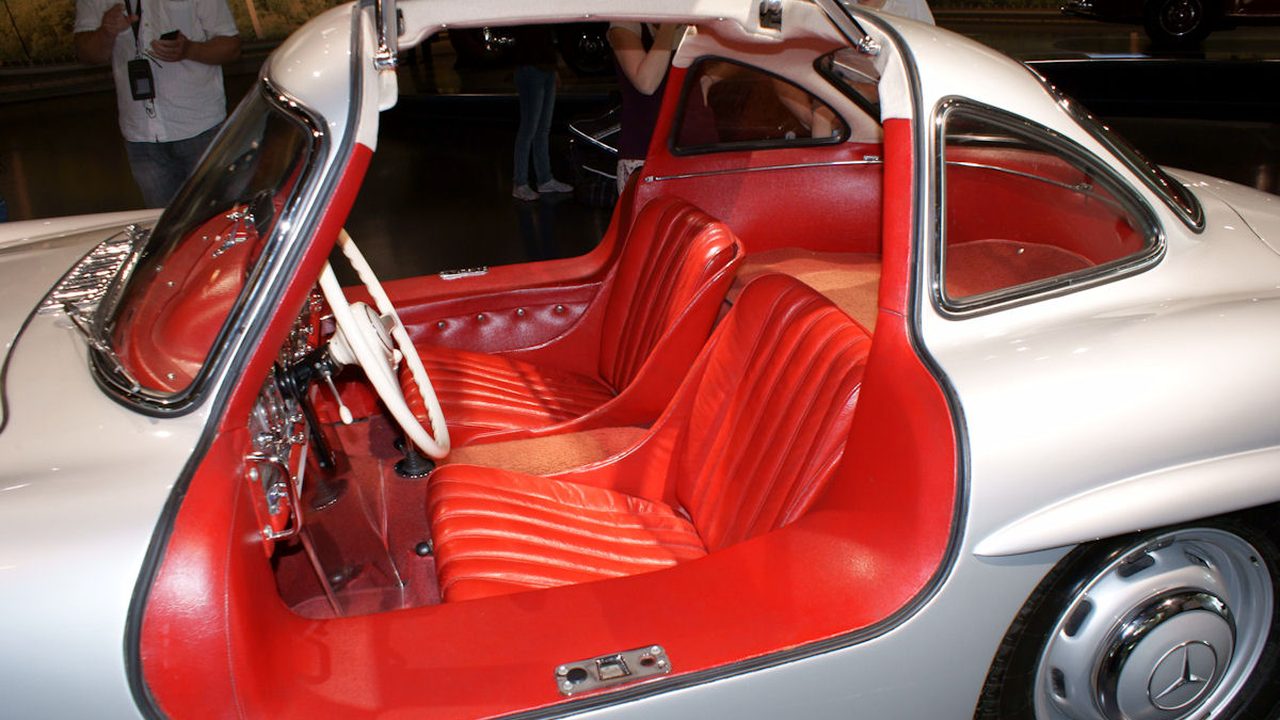
Its most famous feature was a consequence of its engineering. Chief engineer Rudolf Uhlenhaut's tubular space frame ran high along the sides of the cockpit, too high for conventional doors, so the coupé got roof-hinged gullwing doors. Under the long hood, the M198 straight-six used Bosch mechanical direct fuel injection, making the 300 SL one of the first production cars with direct gasoline injection. With the tallest optional axle ratio it could reach about 263 km/h (163 mph), and Wikipedia's article calls it the fastest production car of its time. In the U.S. the coupé cost $6,820.

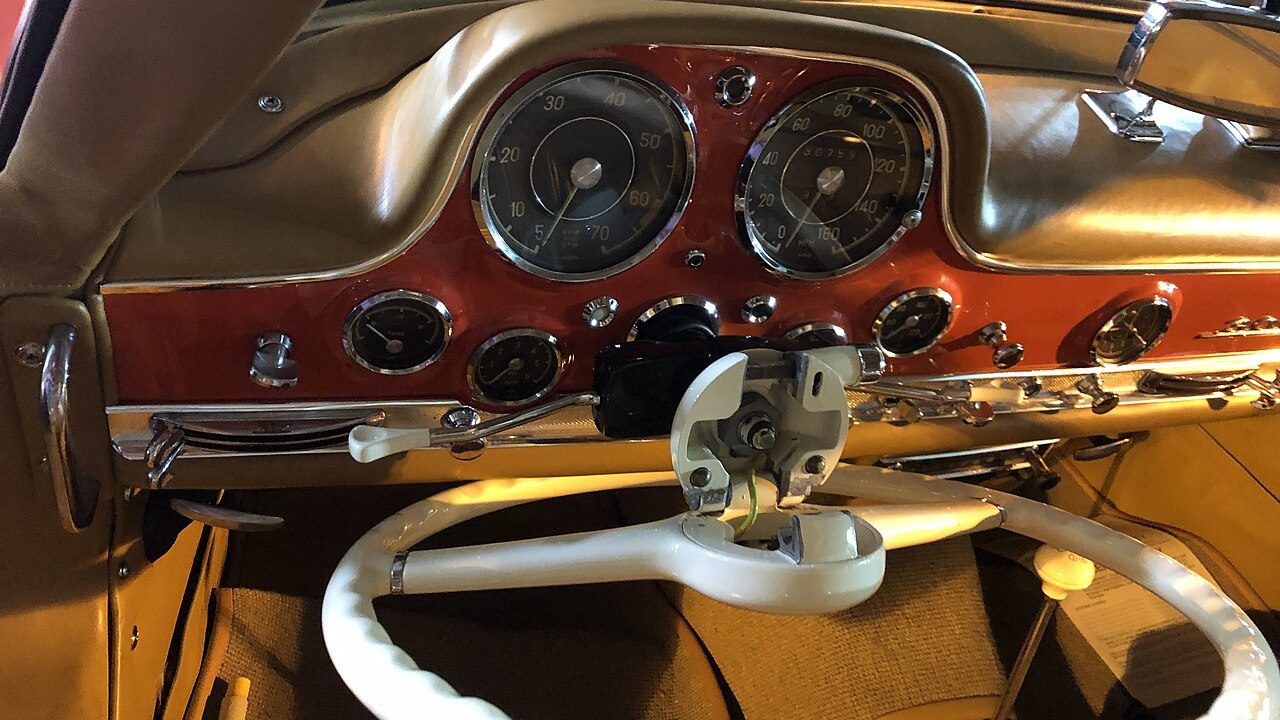
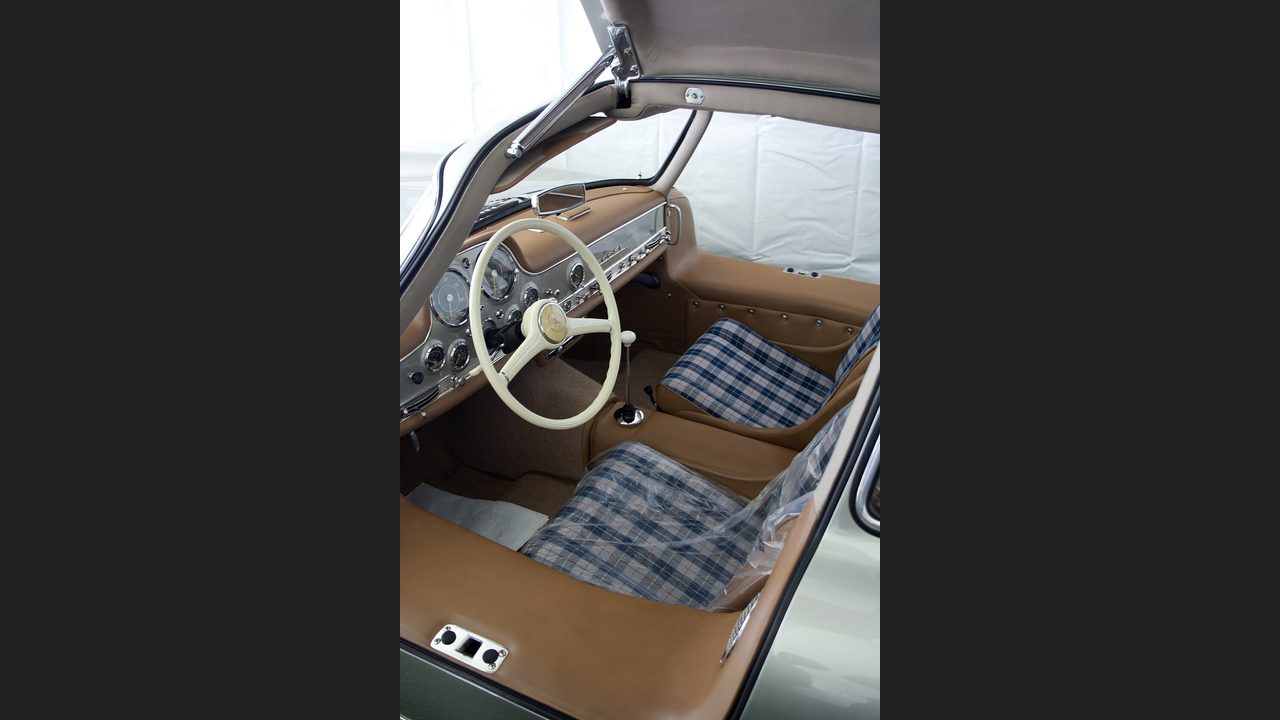
Mercedes built 1,400 coupés from 1954 to 1957, then 1,858 roadsters through February 1963, the last Mercedes-Benz car built on a separate frame. It had its flaws: the high, wide sill made getting in awkward (the steering wheel tilts out of the way to help), the swing-axle rear could be treacherous at the limit, and the fuel-injection system could dilute the engine oil on short trips.

Why it's our Car of the Day: This weekend Mercedes-Benz marks 140 years since Carl Benz's 1886 motor-car patent. Its free 140 Festival at the Mercedes-Benz Museum in Stuttgart on Sunday, Oct 18, features historic cars including the 300 SL Gullwing, and the new Mercedes-AMG GT SUV premieres there tonight. The 300 SL is also on collectors' minds: RM Sotheby's has a 1963 300 SL Roadster, described as the penultimate roadster built, estimated at £1.1–1.3 million for its Oct 31 London sale, after roadsters sold for €1,265,000 (Bonhams) and €1,041,250 (Broad Arrow) at Zoute last week. On X, posts mentioning "300 SL" or "Gullwing" ran at about 400 over the past seven days (X recent-count data, Oct 10–17), ahead of other classics we checked, such as the Porsche 959 (about 80) and the Benz Patent-Motorwagen (about 50).

Sources: Wikipedia: Mercedes-Benz 300 SL · Autocar: 1955 Mercedes-Benz 300 SL road test · Octane: Mercedes-Benz Museum 140 Festival · Modern Car Collector market brief, Oct 16
Mechanics

Specs are for the 300 SL coupé (1954–1957) unless marked.

Chassis

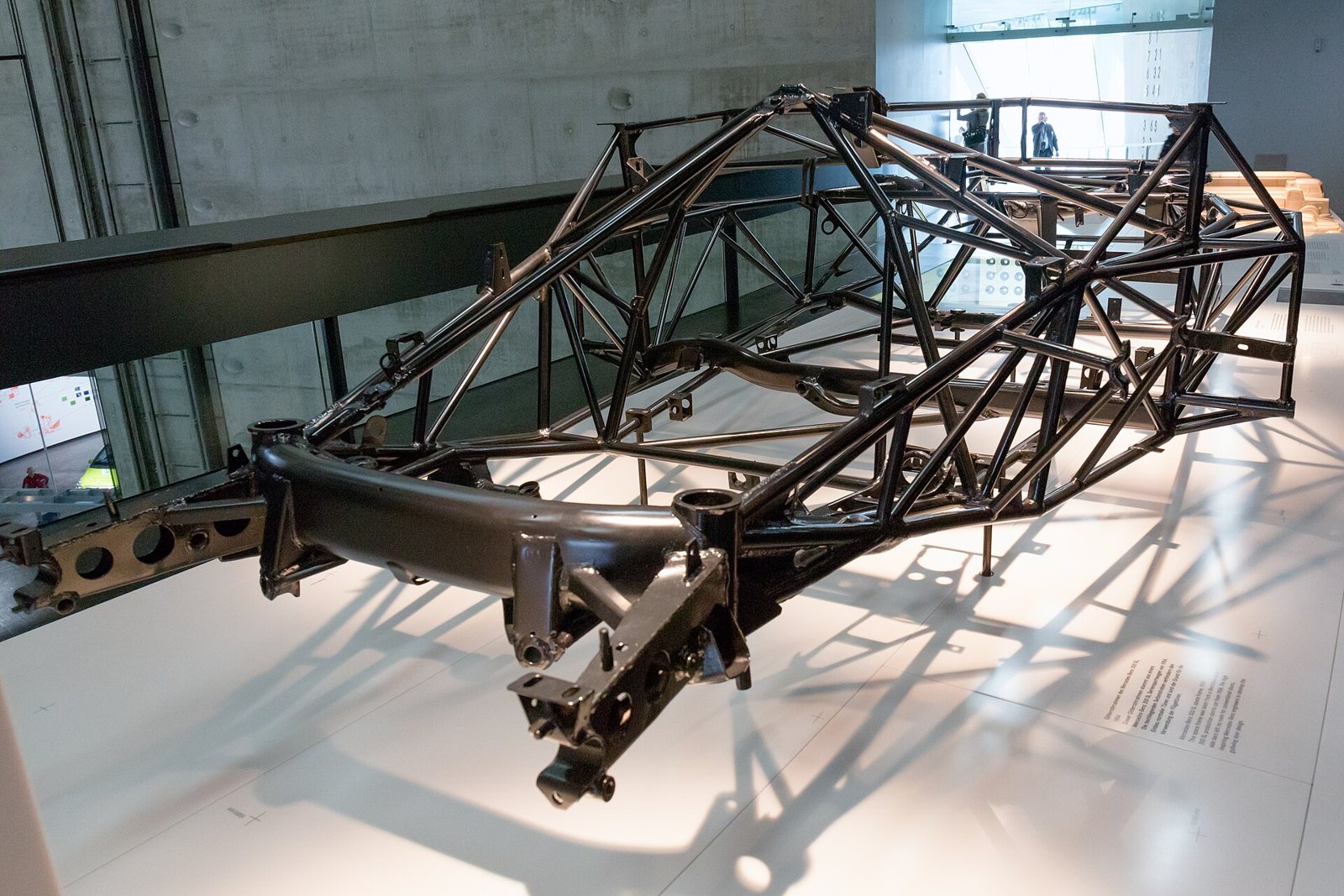
  • Tubular space frame of chrome-molybdenum steel tubes arranged in triangles, designed by Rudolf Uhlenhaut; the bare frame weighs 82 kg (181 lb)
  • High, deep side sills (the frame's upper tube is level with the driver's elbow), hence the gullwing doors
  • Steel body with aluminum hood, doors, dashboard and trunk lid; 29 all-aluminum-body cars saved a further 80 kg
  • Wheelbase 2,400 mm (94.5 in); length 4,520 mm; weight 1,295 kg (coupé)
  • Front engine, rear-wheel drive; weight distribution almost exactly 50/50

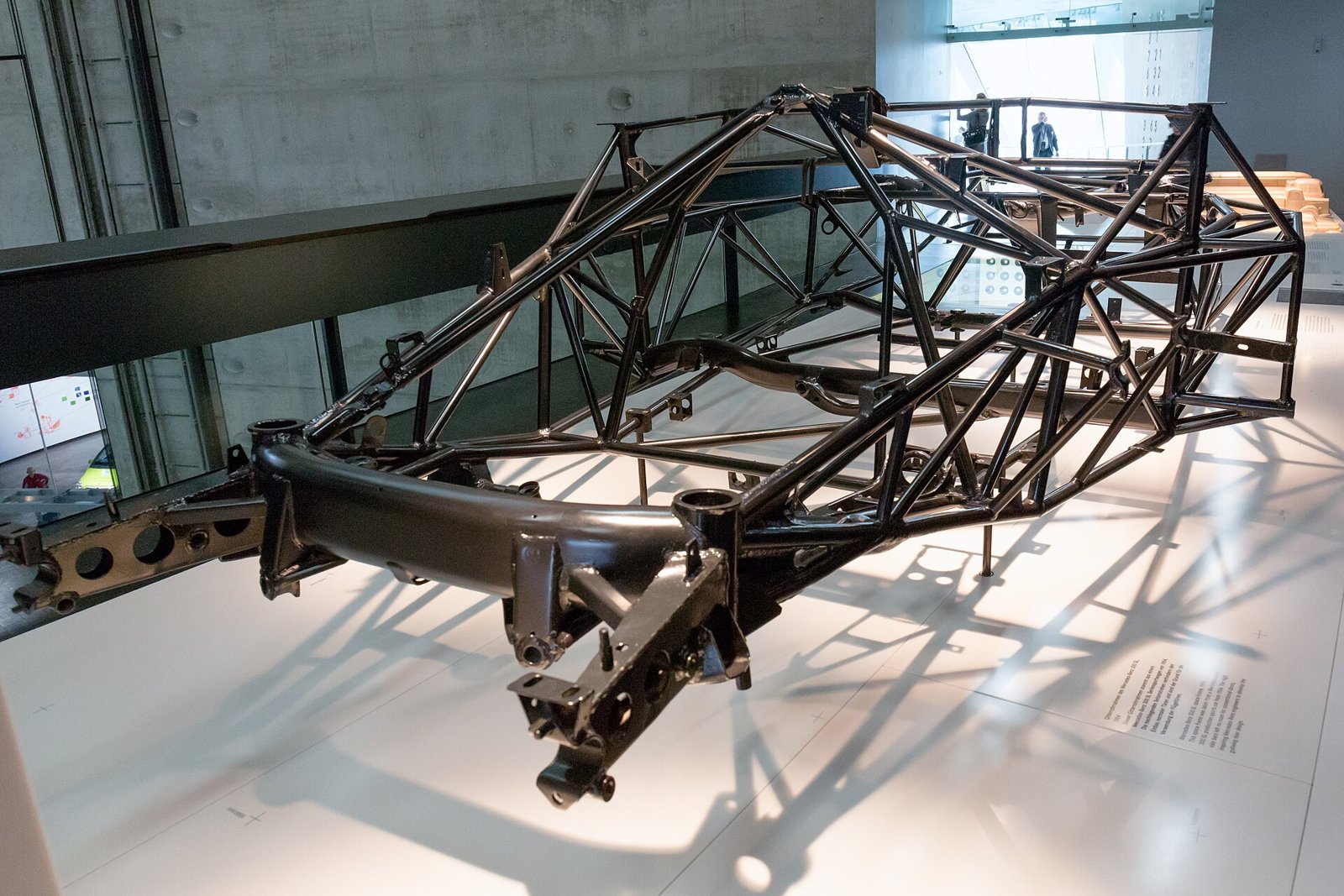
A space frame like this was race-car practice in the early 1950s: thin straight tubes in triangles give a stiff structure for very little weight. The trade-off was packaging. With the tubes running so high along the cockpit, conventional doors were impossible, and the gullwing doors became the car's signature.

The real Mercedes-Benz 300 SL (W198) tubular space frame on display at the Mercedes-Benz Museum
The real W198 space frame at the Mercedes-Benz Museum, Stuttgart: thin triangulated steel tubes, with the tall side sills that made gullwing doors necessary.
Photo: Morio via Wikimedia Commons · License: CC BY-SA 3.0

Suspension

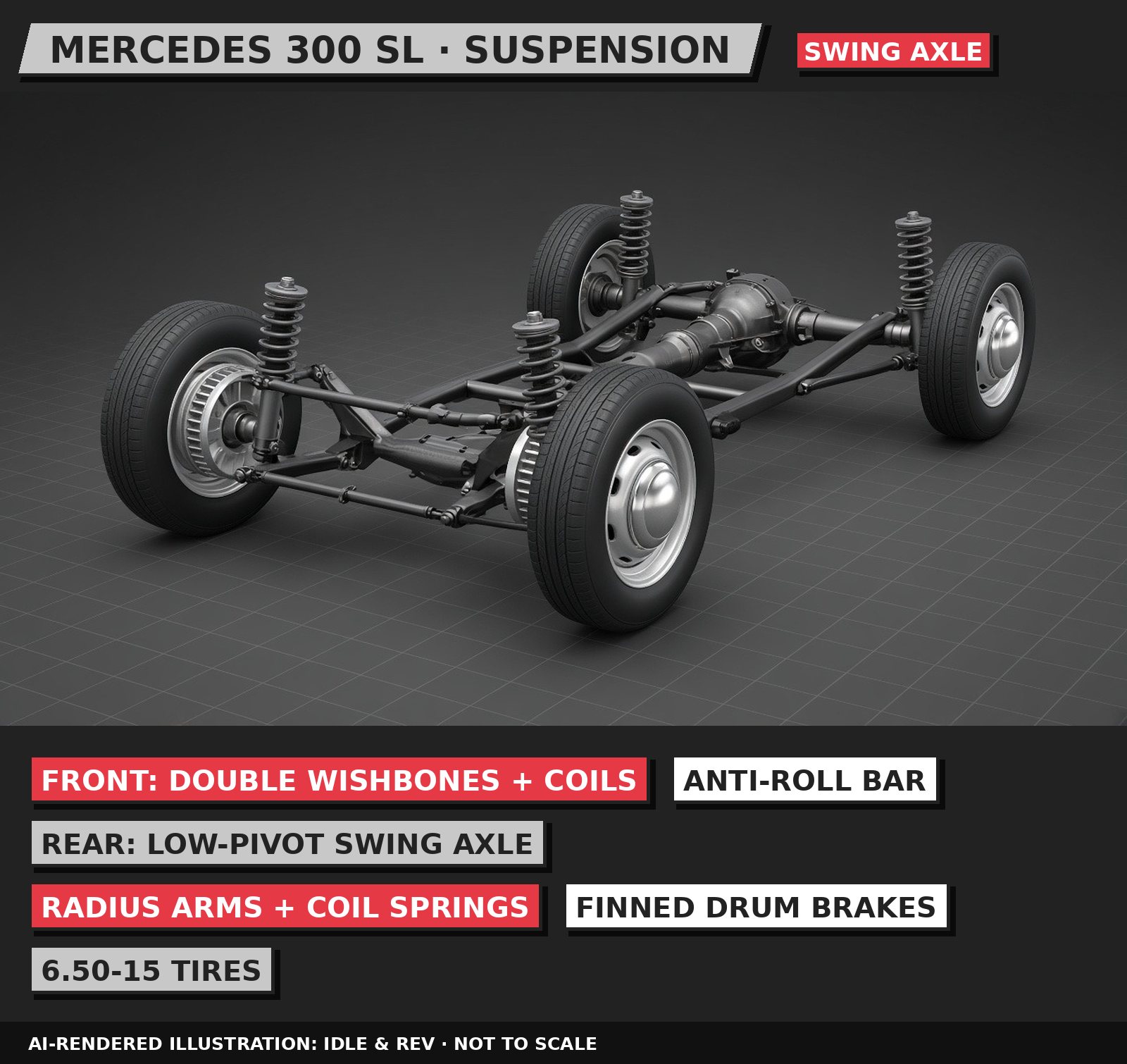
  • Front: independent, unequal-length double wishbones with coil springs, telescopic shock absorbers and an anti-roll bar
  • Rear: low-pivot swing axle with radius arms and coil springs; the 1957 roadster got revised swing-axle geometry for better handling
  • Steering: recirculating ball
  • Brakes: finned, self-cooling drums, 1,470 cm² (227.9 sq in), with a vacuum brake booster; 290 mm discs all round from March 1961 (roadster)
  • Tires: 6.50-15 (coupé); Rudge 5J×15 rims optional

The basic layout came from the Mercedes 300 "Adenauer" luxury sedan, retuned for a sports car. It rode and handled well for its time, but the swing axle, jointed only at the differential, changed camber sharply in hard cornering. Drivers had to respect it at high speed or on bad roads.

AI-rendered 3D illustration: Mercedes-Benz 300 SL suspension, labelled
Illustration: Idle & Rev (AI-rendered, for illustration; not to scale)

Engine / Powertrain

  • 0–60 mph: 8.8 s, 300 SL coupé (Autocar road test, March 1955; 0–100 mph 21.0 s, 135 mph top speed). Road & Track's April 1955 test is reported at 7.4 s.
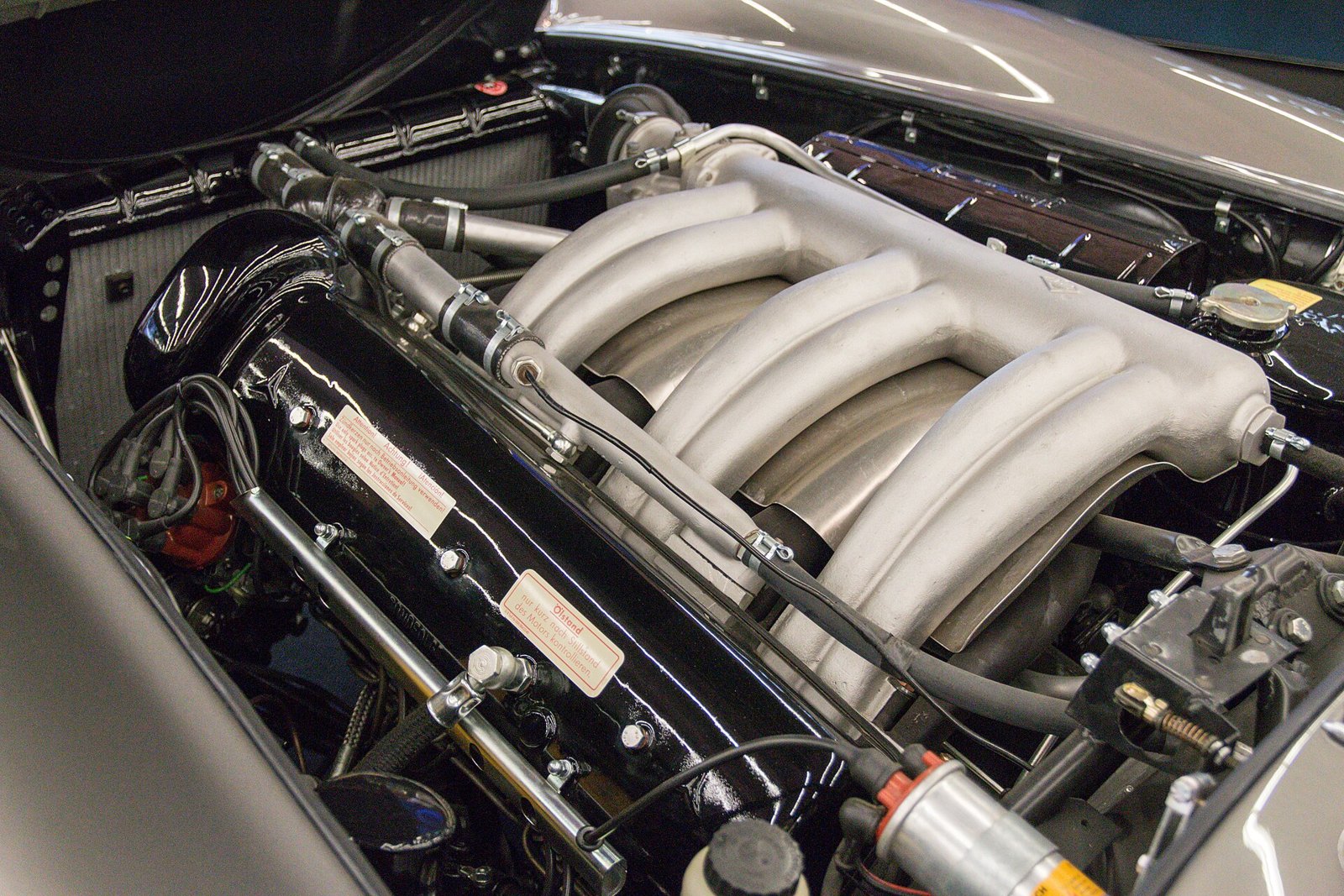
  • Mercedes-Benz M198 water-cooled 2,996 cc SOHC straight-six, two valves per cylinder, aluminum cylinder head
  • Engine tilted 50° toward the driver's side to fit under the low hood
  • Bosch mechanical direct fuel injection; 240 hp (SAE gross) at 6,100 rpm; 8.55:1 compression
  • Dry-sump lubrication with 15 L oil capacity
  • Four-speed manual; axle ratios 3.42 (first cars), 3.64 standard, 3.25 to 4.11 optional; up to 263 km/h (163 mph) with the 3.25 axle

Direct injection was racing technology in 1954: the W194 racers had used carburetors and about 175 hp, and fuel injection lifted the road car to 240 hp (SAE gross). Laying the engine over at 50 degrees and using a dry sump kept the hood low, which helped the car slip through the air. The catch was the oil dilution described above, so owners were told to change the oil often.

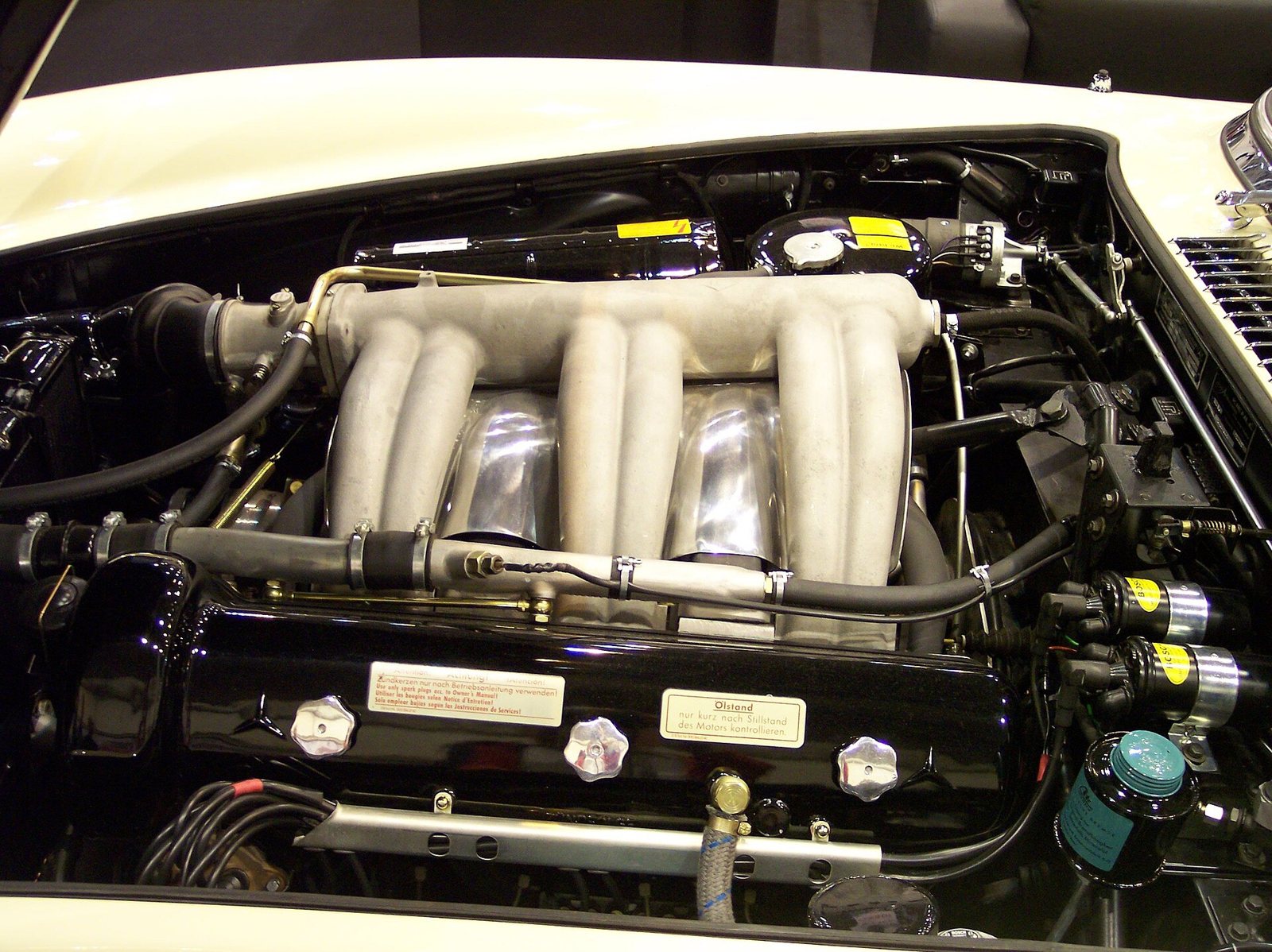
Mercedes-Benz M198 straight-six in a 300 SL, inclined to one side, with long intake runners
The M198 3.0-litre straight-six in a 300 SL: mounted tilted to one side to keep the hood low, with long cast intake runners feeding the Bosch direct-injection system.
Photo: Johannes Maximilian via Wikimedia Commons · License: CC BY-SA 4.0

Mechanics sources: Wikipedia: Mercedes-Benz 300 SL (cites Nitske, Mercedes-Benz 300 SL, 1974, and Mercedes-Benz archive); Autocar: 1955 Mercedes-Benz 300 SL road test; 0-60specs (Road & Track, April 1955 test)

On track

Mercedes-Benz 300 SL Gullwing at speed · AI-rendered illustration by Idle & Rev, not real footage

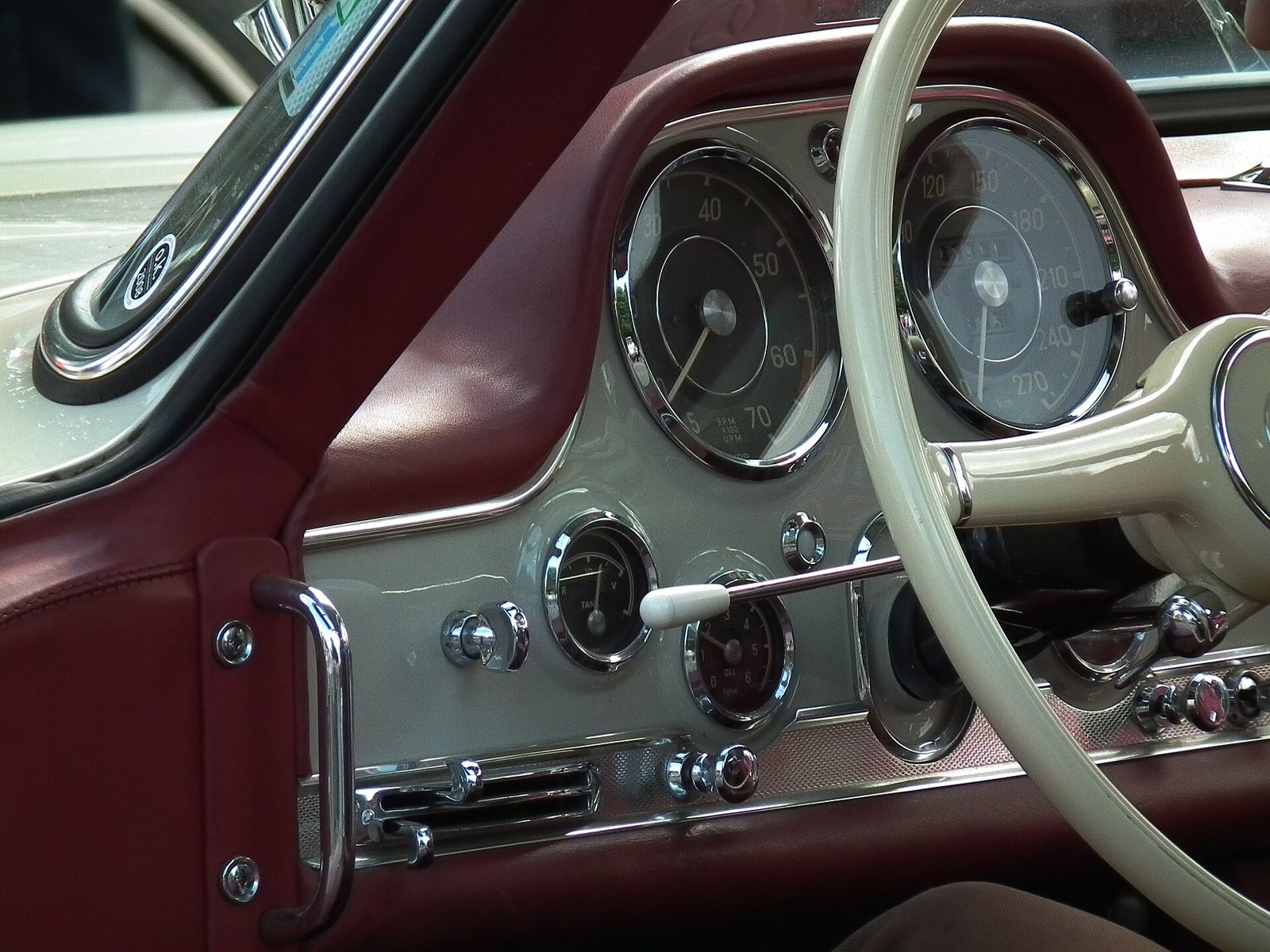
Inside the Gullwing

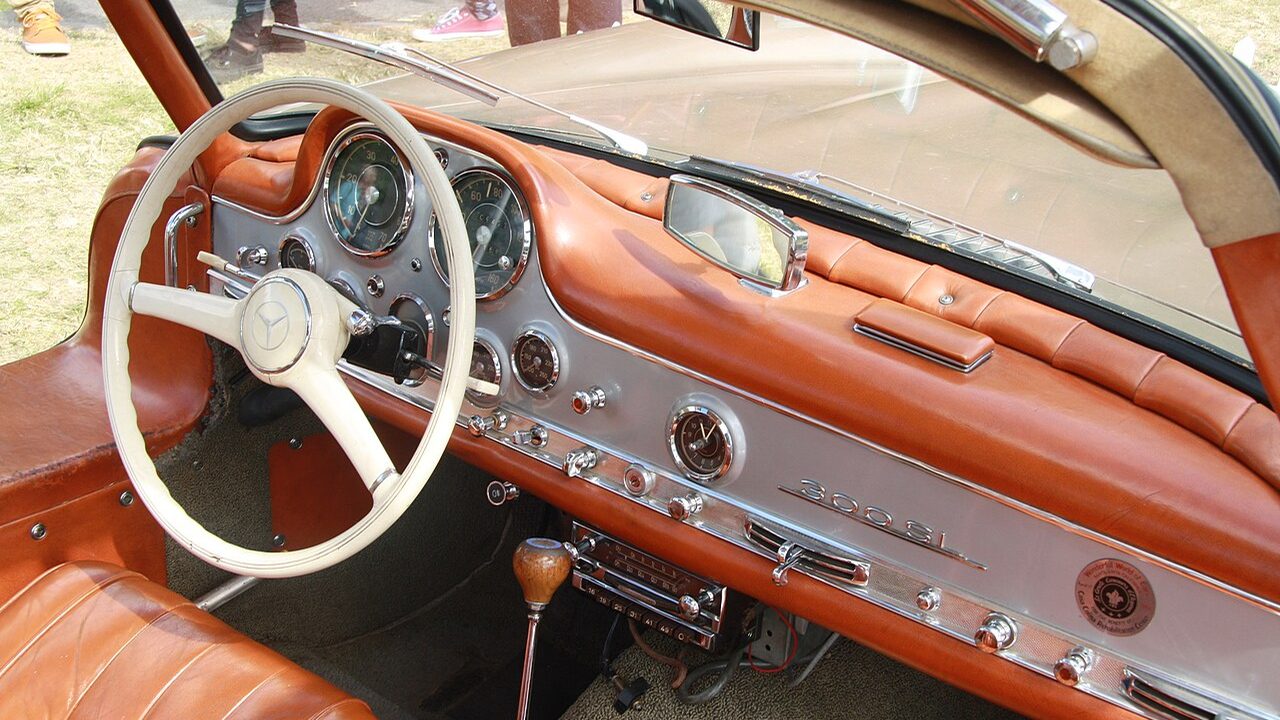
The cabin is snug and businesslike: a painted metal dash with large round instruments, a big thin-rimmed wheel that tilts out of the way, and two seats set low between the tall sills of the space frame.

Gallery