Tesla Roadster (2nd gen)
6 min read
Nearly nine years after it was first shown, Tesla finally unveiled the next-gen Roadster on Thursday, Oct 15, 2026 — and it drove upside down, flipped, and flew.
Tesla first showed a next-generation Roadster in November 2017, said deliveries would begin in 2020, and started taking $50,000 deposits. Nearly nine years later it still hasn't delivered a production car. By Electrek's count, the program had slipped at least six times on production and gone through seven unveil dates before this one stuck.
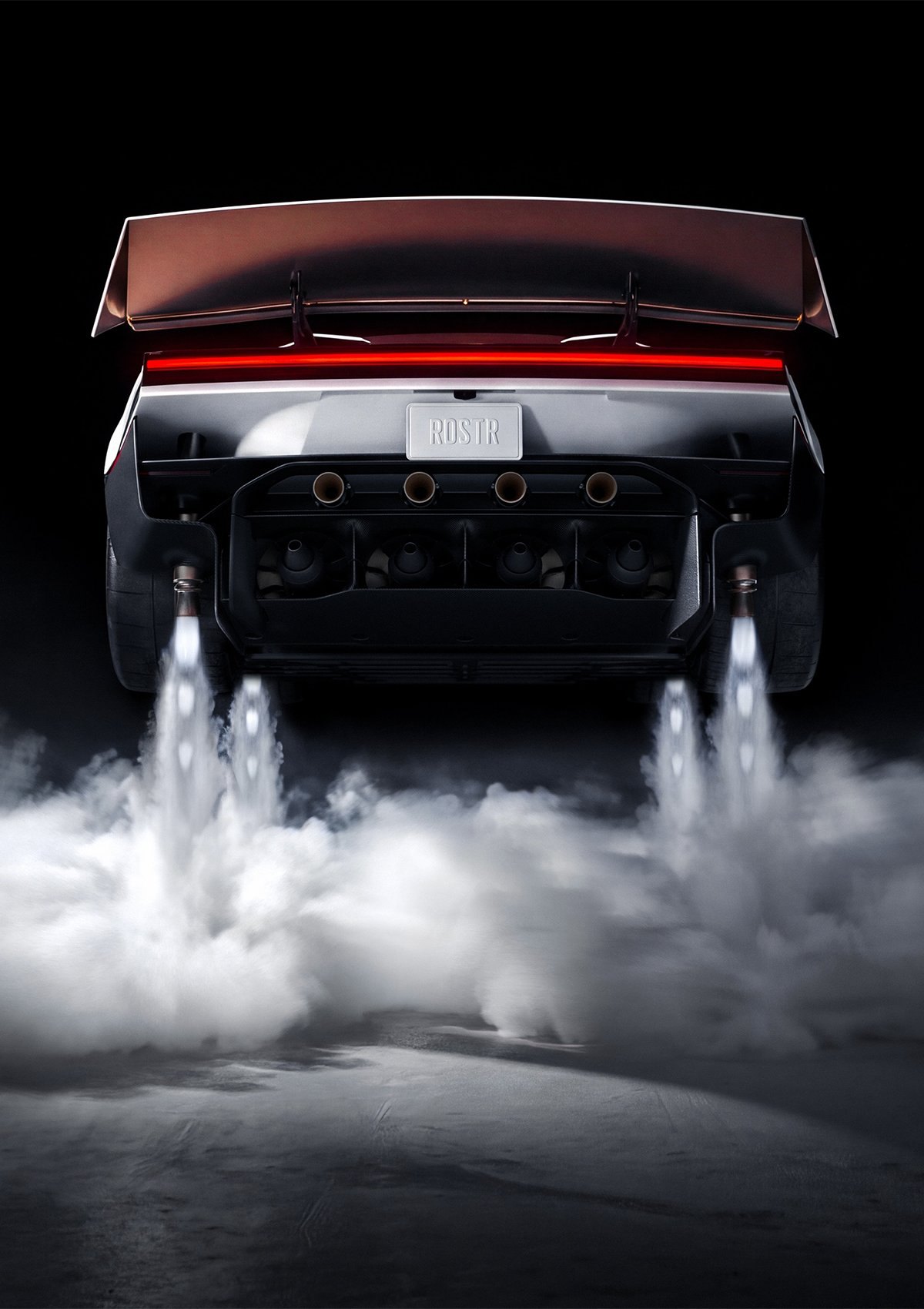
On Thursday, Oct 15, 2026, Tesla unveiled the redesigned Roadster from a SpaceX test site in McGregor, Texas, near Waco. The event had been set for Oct 1, then called off on Sept 28 because of the weather forecast. Coverage from The Verge, Engadget, Reuters, CNBC and others described a demo that looked more like a stunt show than a conventional car launch: the Roadster drove upside down on a tall ramp using a multi-mode fan/suction (ground-sealing) system that The Verge says can make up to about 2 Gs of suction. It also used cold-gas thrusters for aerial maneuvers — flipping, landing, and flying over a Tesla lineup that included the Semi. An Optimus robot was in the driver's seat; Engadget reported the car was programmed for the stunts.
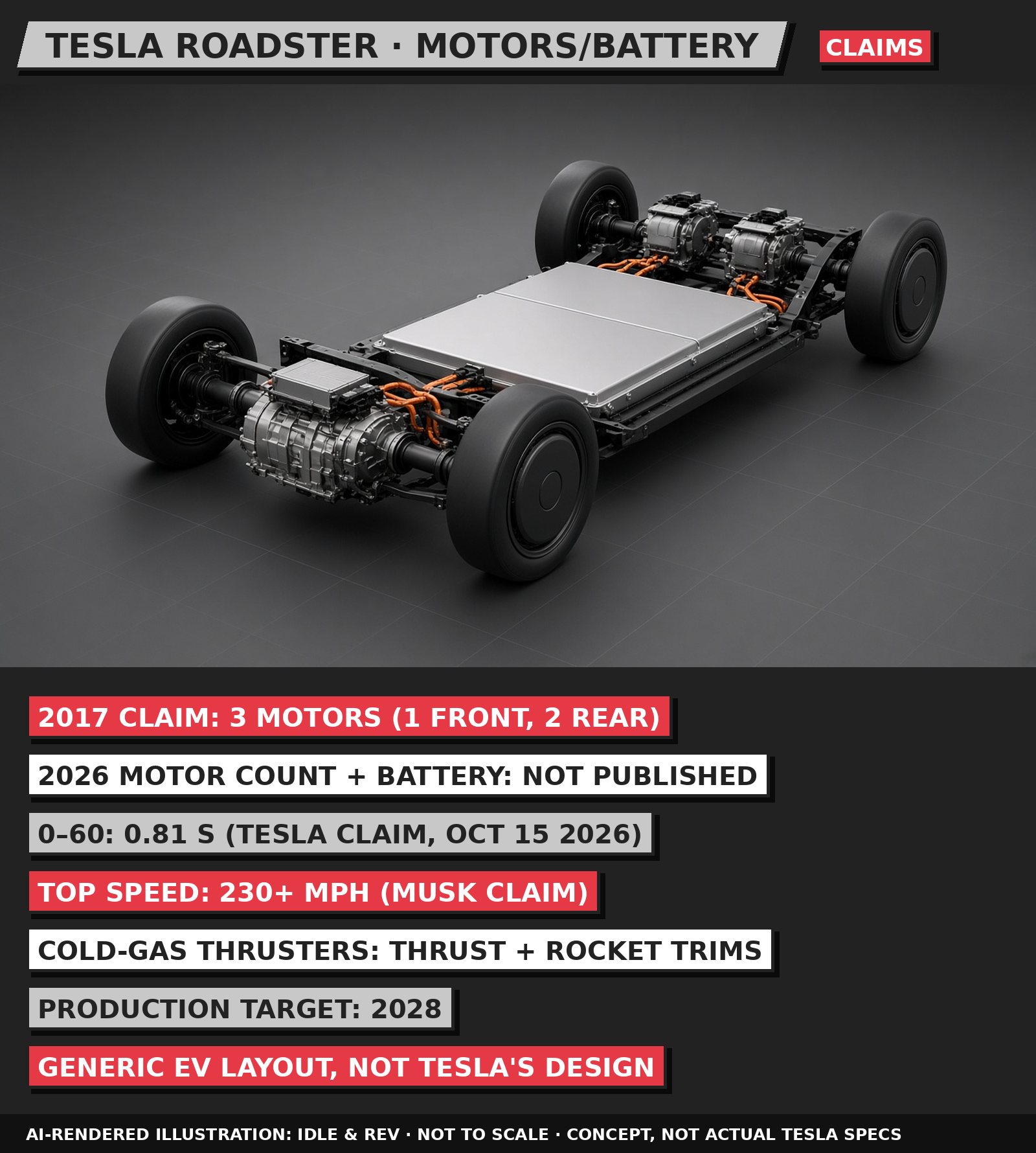
At the event, Tesla/Musk claimed 0–60 mph in 0.81 seconds (a claim, not an independent test). On top speed, Engadget reported a Musk/crowd exchange of at least about 235 mph and "much faster"; Reuters reported Musk saying over 230 mph — again, claims. Production is targeted for 2028 (Musk). No final retail vehicle prices were announced.
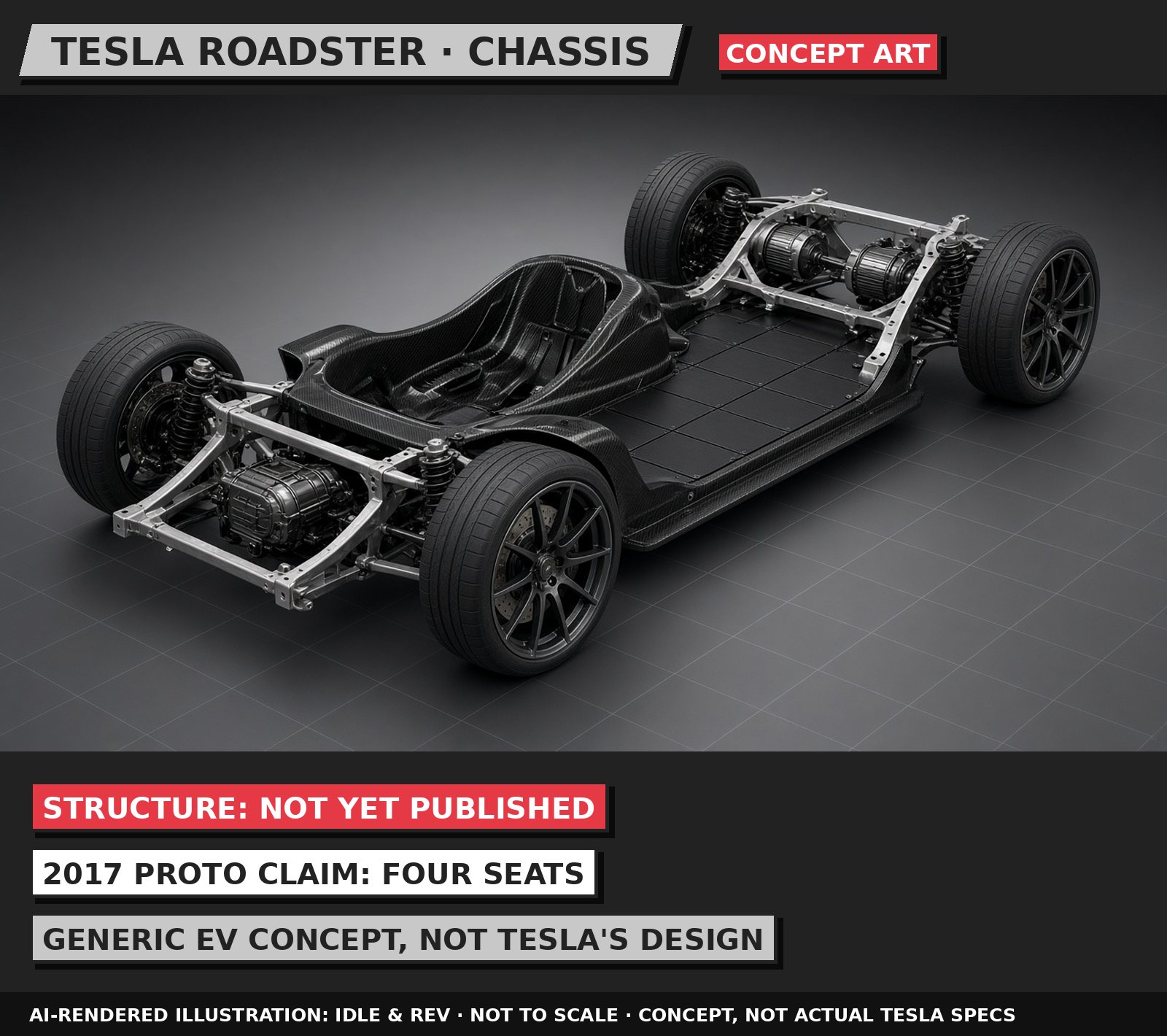
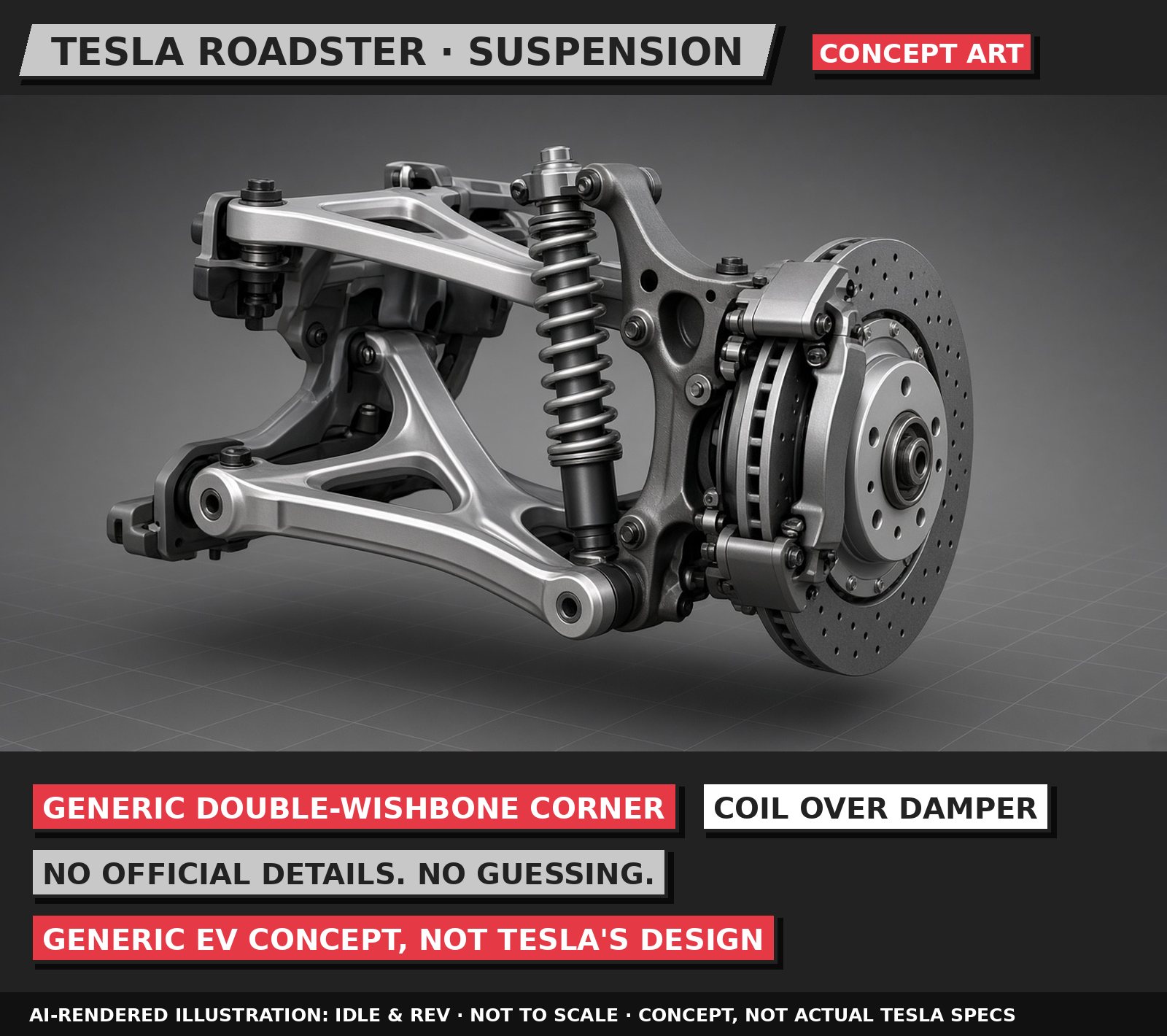
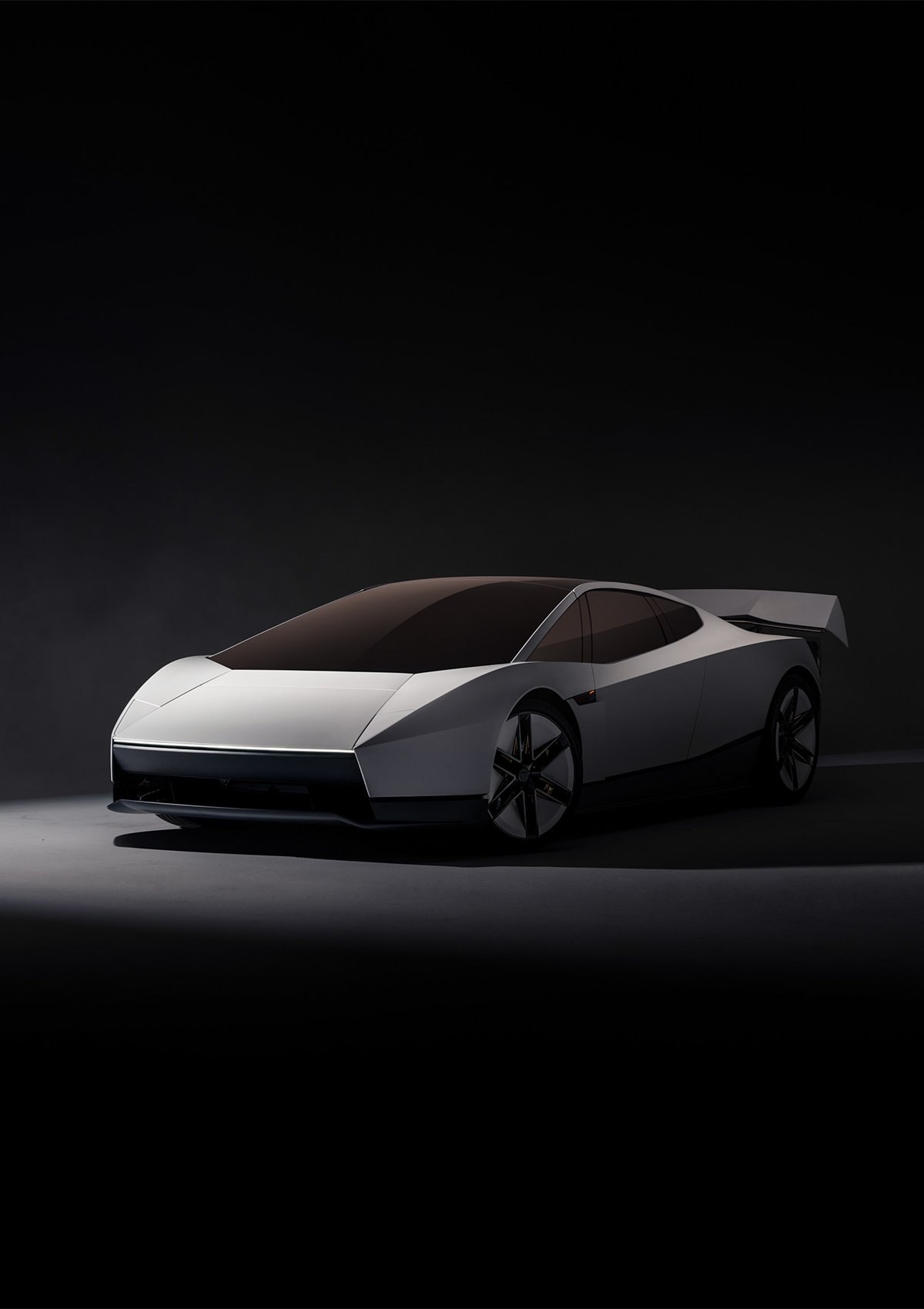
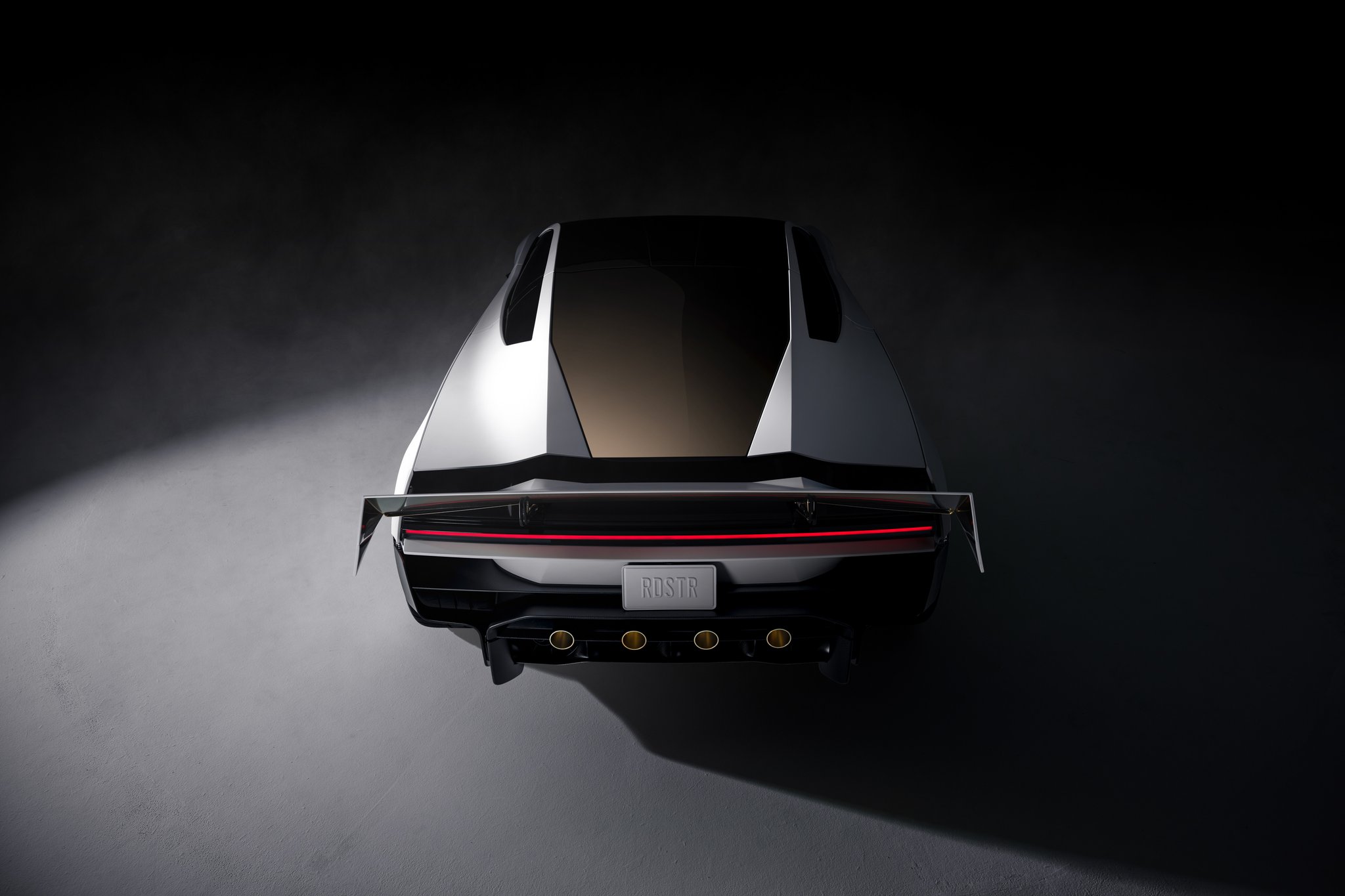
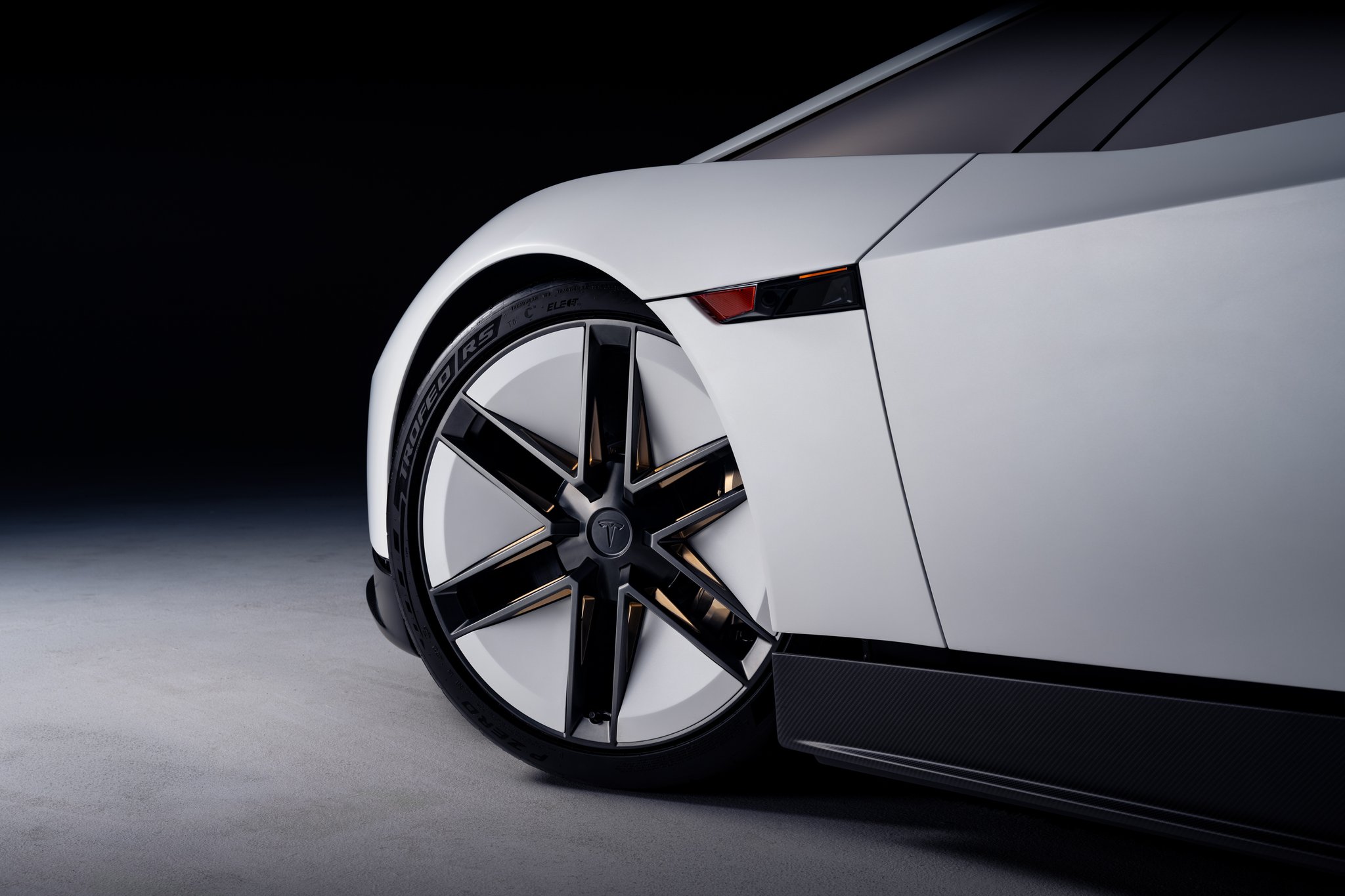
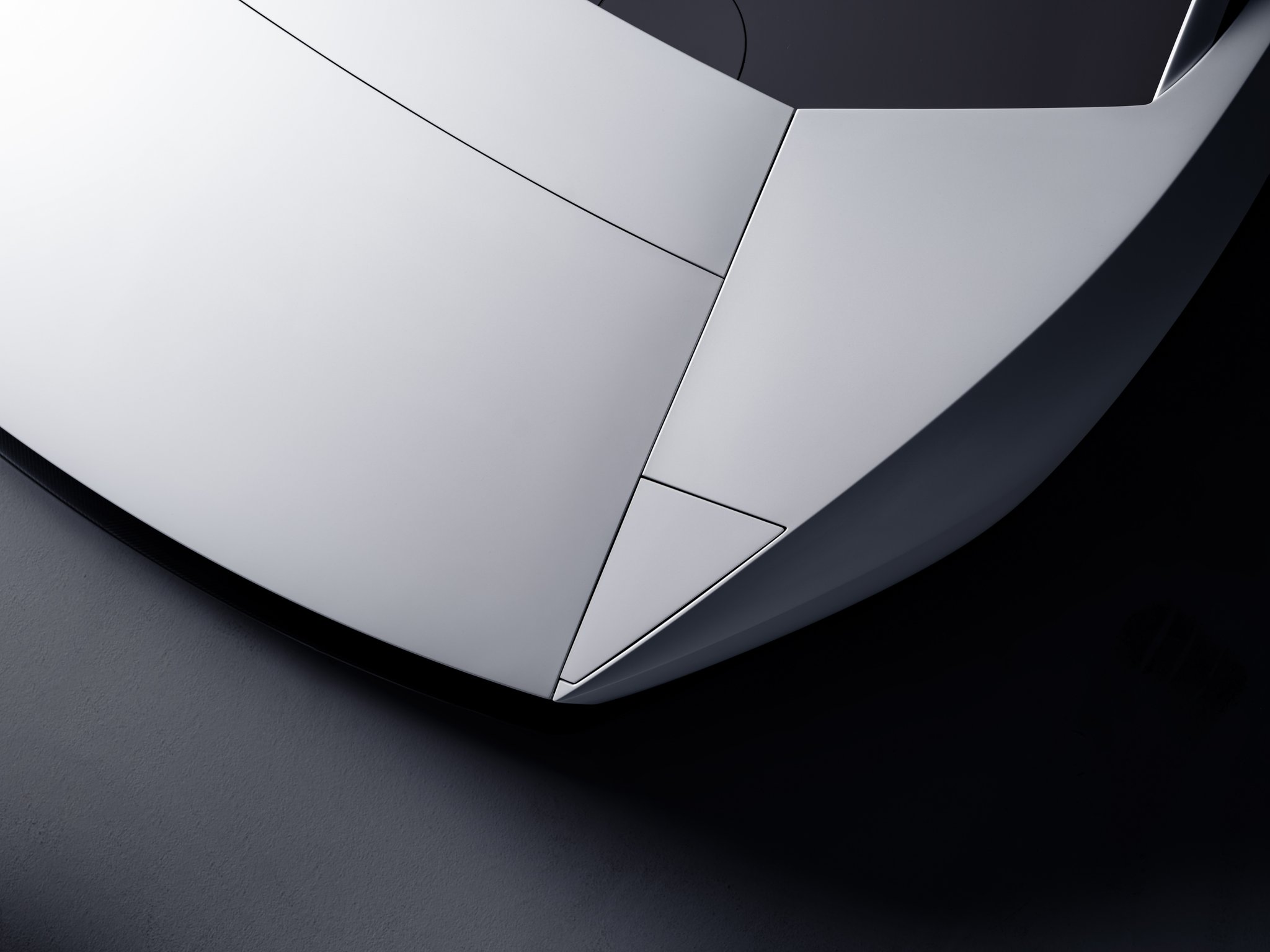
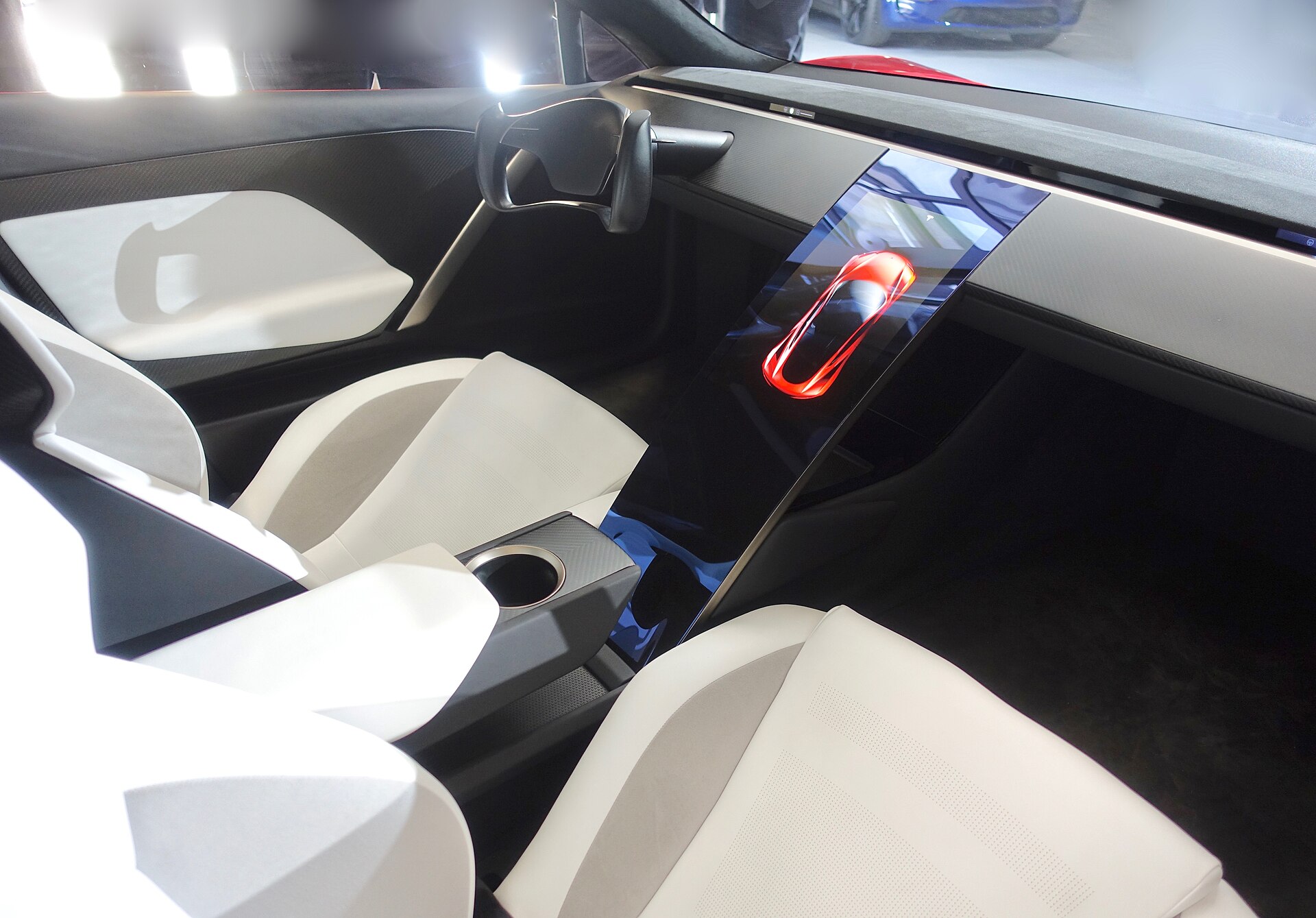
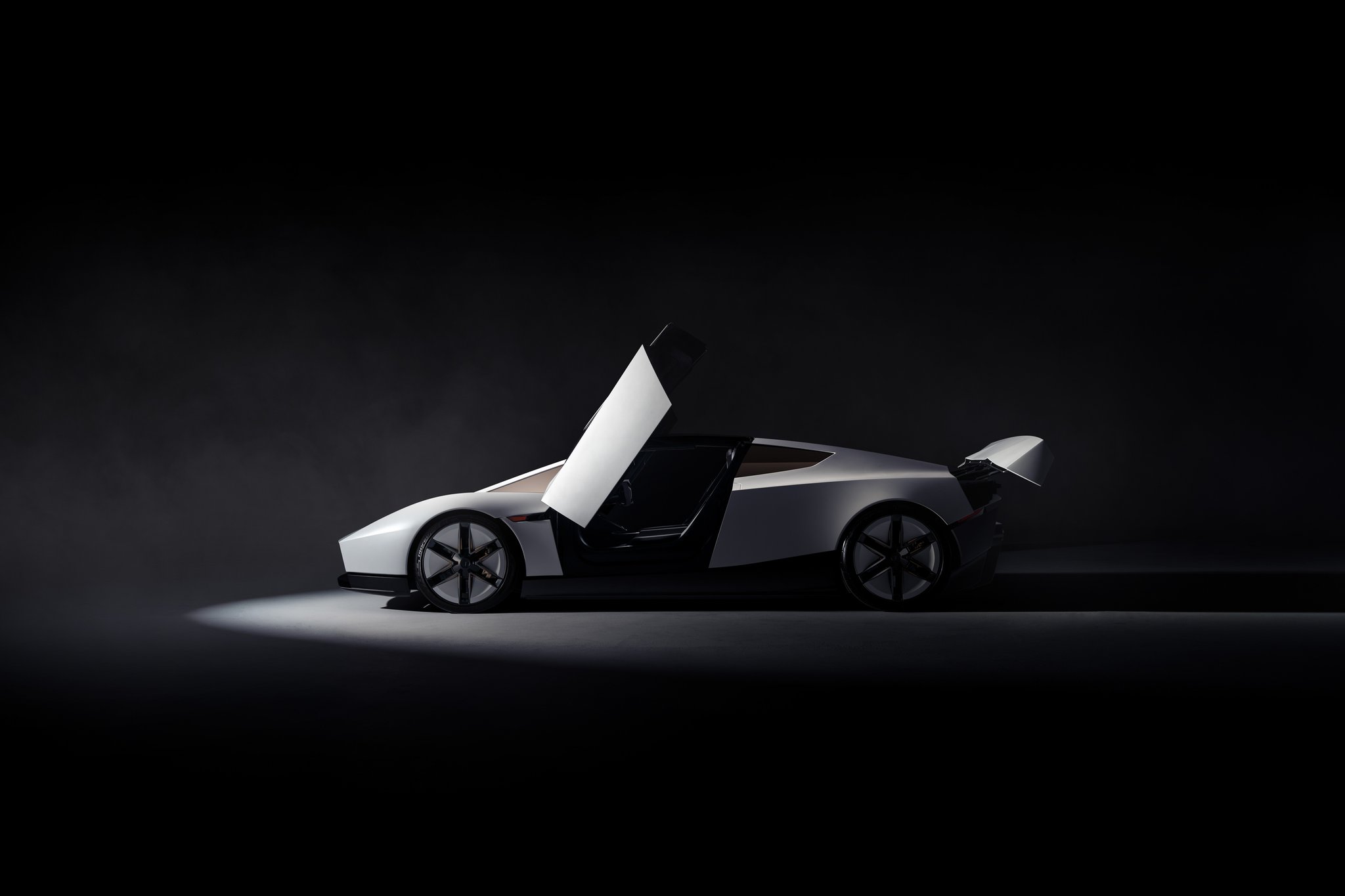
Design inspiration, per a Tesla post cited by Engadget, is the SR-71 and F-35. The road-going layout is a two-seater with seats molded into the chassis, a steer-by-wire yoke, thrusters/fans at the rear, and a retractable, auto-adjusting rear wing (The Verge, Engadget). Tesla Canada describes hidden headlights, a full-length taillight, flush aero, an Ultrawhite interior with gray microsuede, and Track Mode that lowers the car and transforms the suspension. Materials cited include magnesium, titanium and carbon fiber.
After the reveal, Tesla's site listed three configurations:
- Performance (Road ready): 2 seats; active aero and multi-mode suction; no thrusters. Reservation: $5,000 due at order plus $45,000 within 10 days ($50,000 total).
- Thrust (Race ready / Limited Release): 2 seats; Performance features plus rear cold-gas acceleration thrusters. Tesla's site says 0–100 under 1 second; Engadget reported a $250,000 downpayment/deposit.
- Rocket (Air ready / Invite only): 1 seat; full flight system with perimeter thrusters. Tesla notes it is not approved for public road use.
The cold-gas system, per The Verge: two ultra-high-pressure air tanks with about 600 liters combined volume, about 250 kg of air, and 10 nozzles. The air is rechargeable — no special chemical propellant. Cold-gas thrusters use all-electric actuators (Tesla Canada).
Update, Oct 16: Tesla's Roadster page now claims a range of more than 300 miles and, for the Rocket version, a top speed of over 230 mph (reported by Euronews; source). Both are Tesla claims, not tested figures.
What still isn't published for the 2026 car: motor count, battery capacity, and final MSRP. The 2017 claims (620-mile range, 1.9 s 0–60, about $200,000, four seats) are historical context only.
Why it's our Car of the Week: it's the most-talked-about car on the internet today. The Verge, Engadget, Reuters, CNBC, Electrek and Car and Driver all covered the reveal, and the upside-down / thruster demo put the Roadster in front of people who don't usually follow cars.
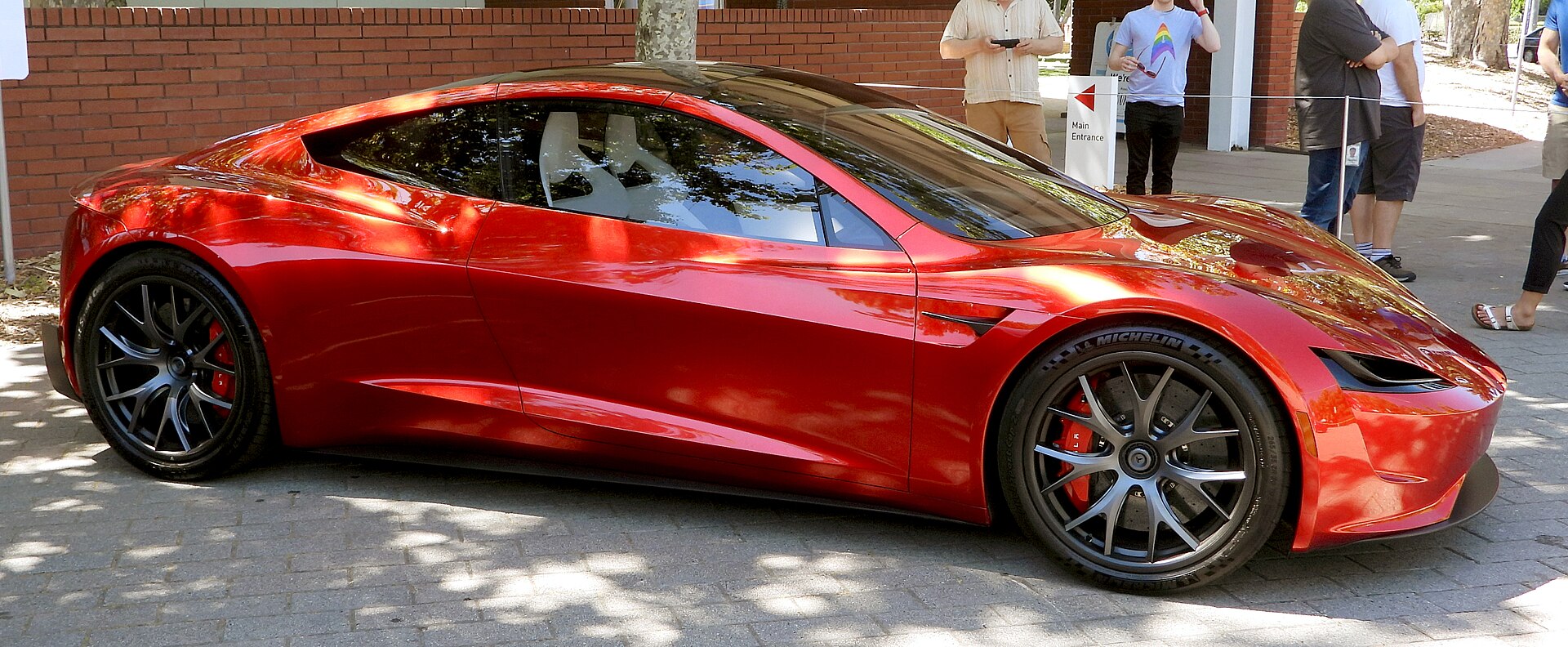
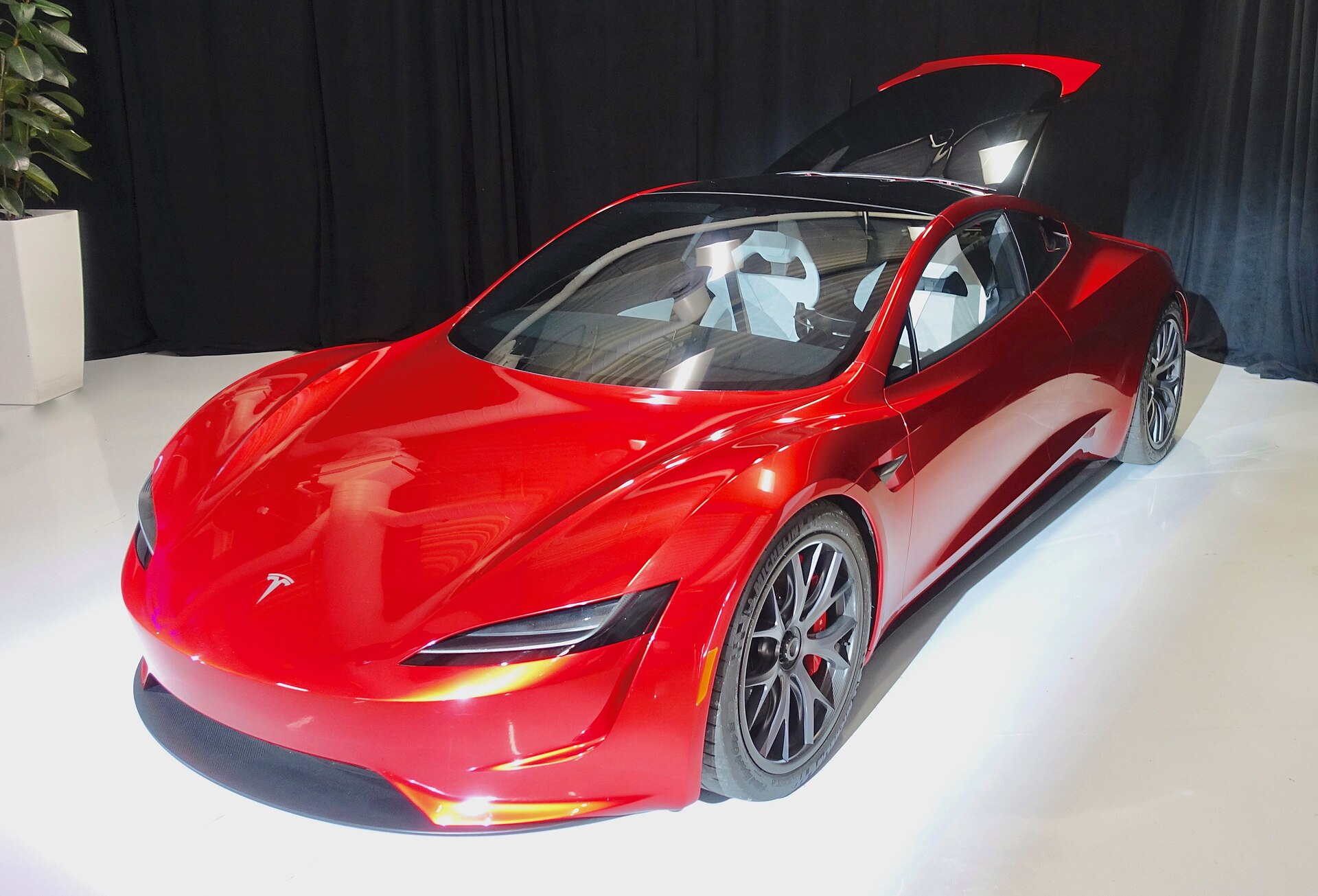
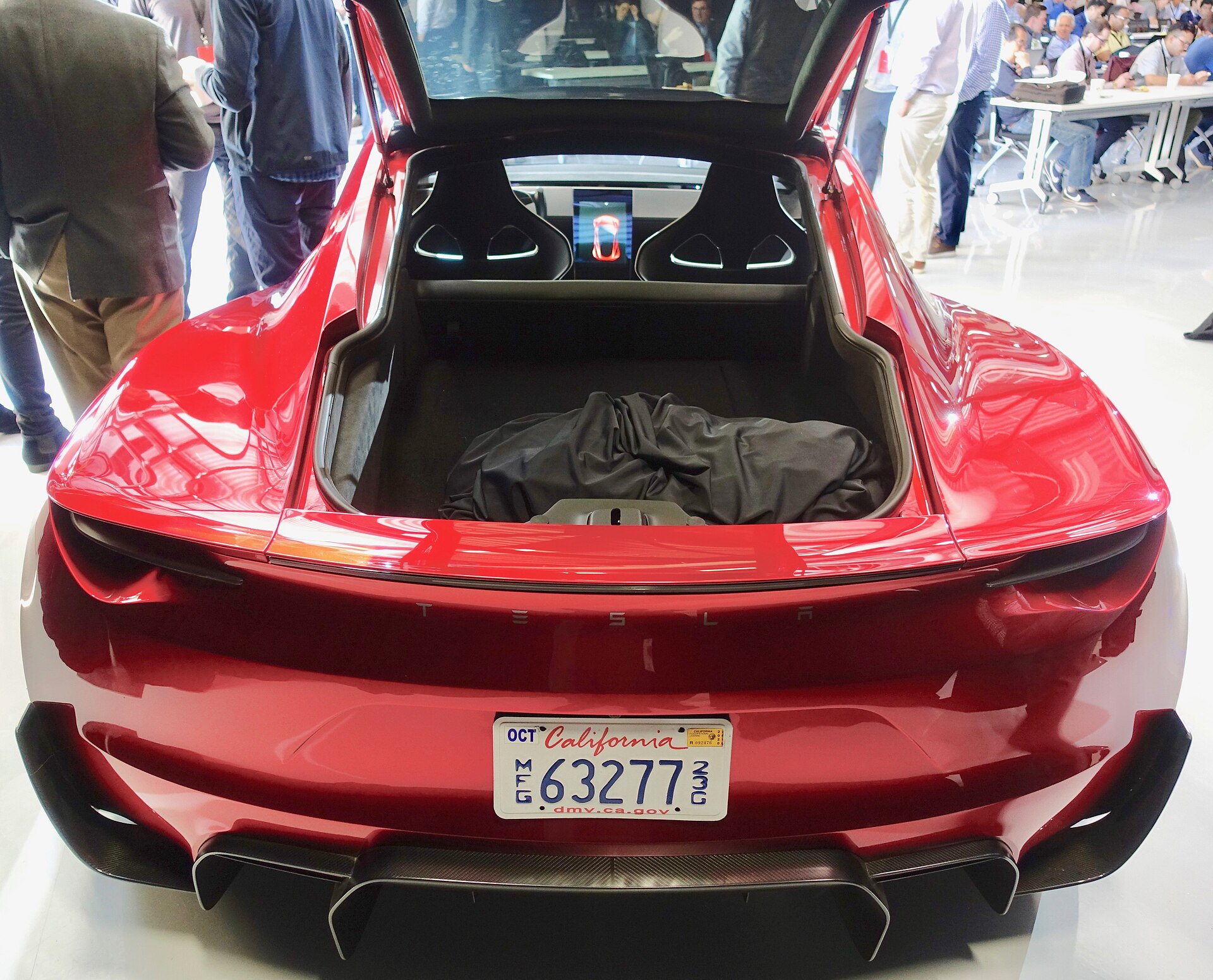
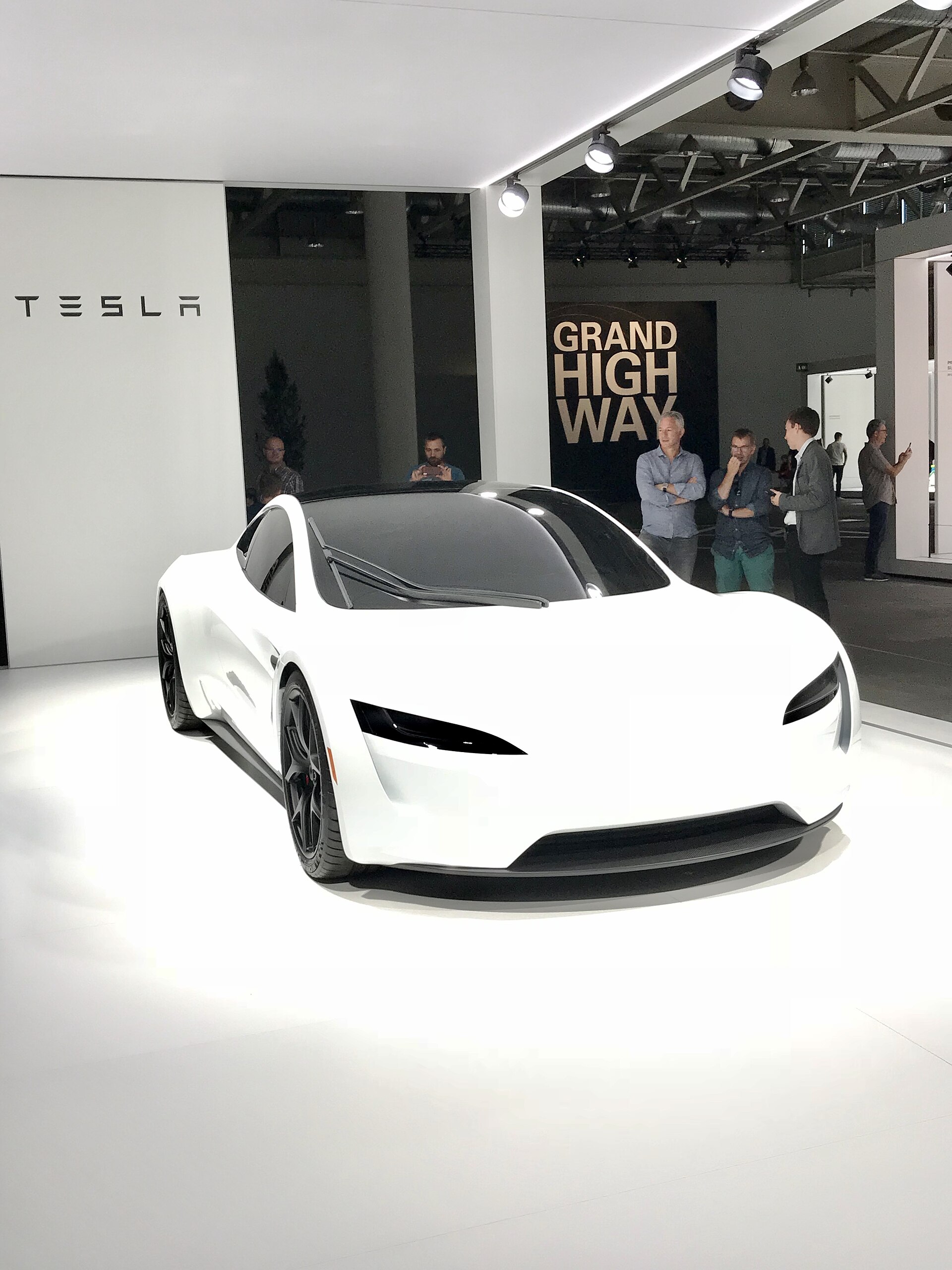
Photo note: freely licensed photos of the redesigned 2026 Roadster were not available on Wikimedia Commons at update time. The gallery keeps the 2017-design prototypes, with captions that make clear they are not the car shown at the Oct 15, 2026 reveal.
Sources: The Verge · Engadget · CNBC · Reuters via Yahoo Finance · Electrek · Car and Driver · Tesla Canada