
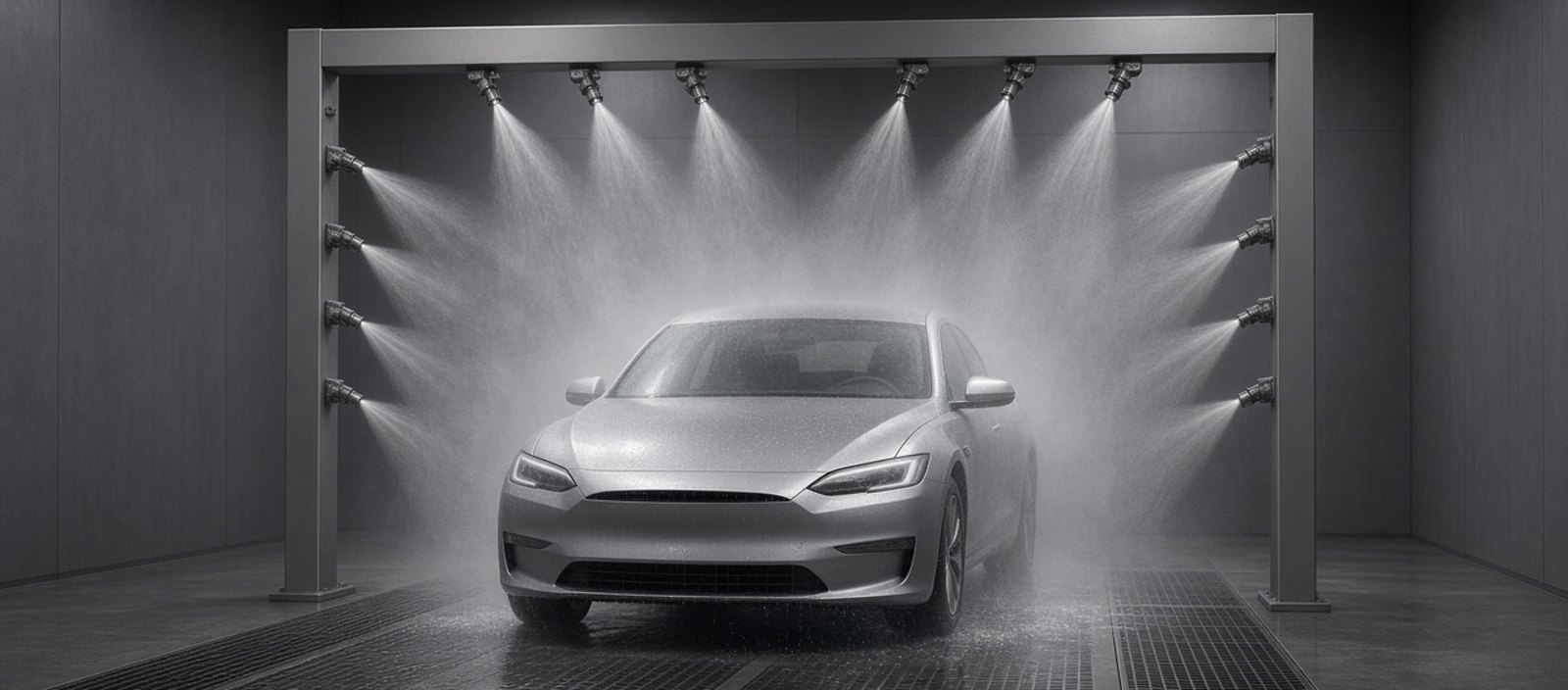
Touchless vs. hand wash: how to clean your car without scratching it
5 min read
Why swirl marks happen, what each wash type trades off, and a step-by-step two-bucket hand wash.
Most of the fine scratches you see on a car's paint in direct light, the circular "swirl marks," don't come from the road. They come from washing. Detailing guides from CarCareTruth, Chemical Guys and The Daily Automotive all make the same basic point: paint gets scratched when grit is dragged across it, so the safest wash is the one that removes loose dirt before anything touches the surface, and keeps that dirt from coming back.
Here's how touchless automatic washes and hand washing compare, and how to do a proper two-bucket hand wash at home.
Where swirl marks come from
When you wipe a dirty panel, sand and road grit get trapped in your sponge or mitt. If that mitt goes back into the same bucket of soapy water, the grit goes with it, and the next pass rubs it into the clear coat. Chemical Guys says this contaminated water being dragged back across the paint is where most wash-induced swirl marks come from, and that they show up most on dark paint.
Technique matters too. Chemical Guys and The Daily Automotive both recommend washing in straight lines rather than circles, since circular scrubbing grinds particles into the finish. The Daily Automotive lists a single bucket, a dirty sponge and drying with a dry towel as the most common causes of hand-wash scratches.
Touchless automatic washes: pros and cons
A touchless (brushless) wash uses high-pressure water and detergents, and nothing physically touches the paint. The Daily Automotive rates it the lowest scratch risk of any wash type, which makes it a good fit for dark, new or ceramic-coated cars.
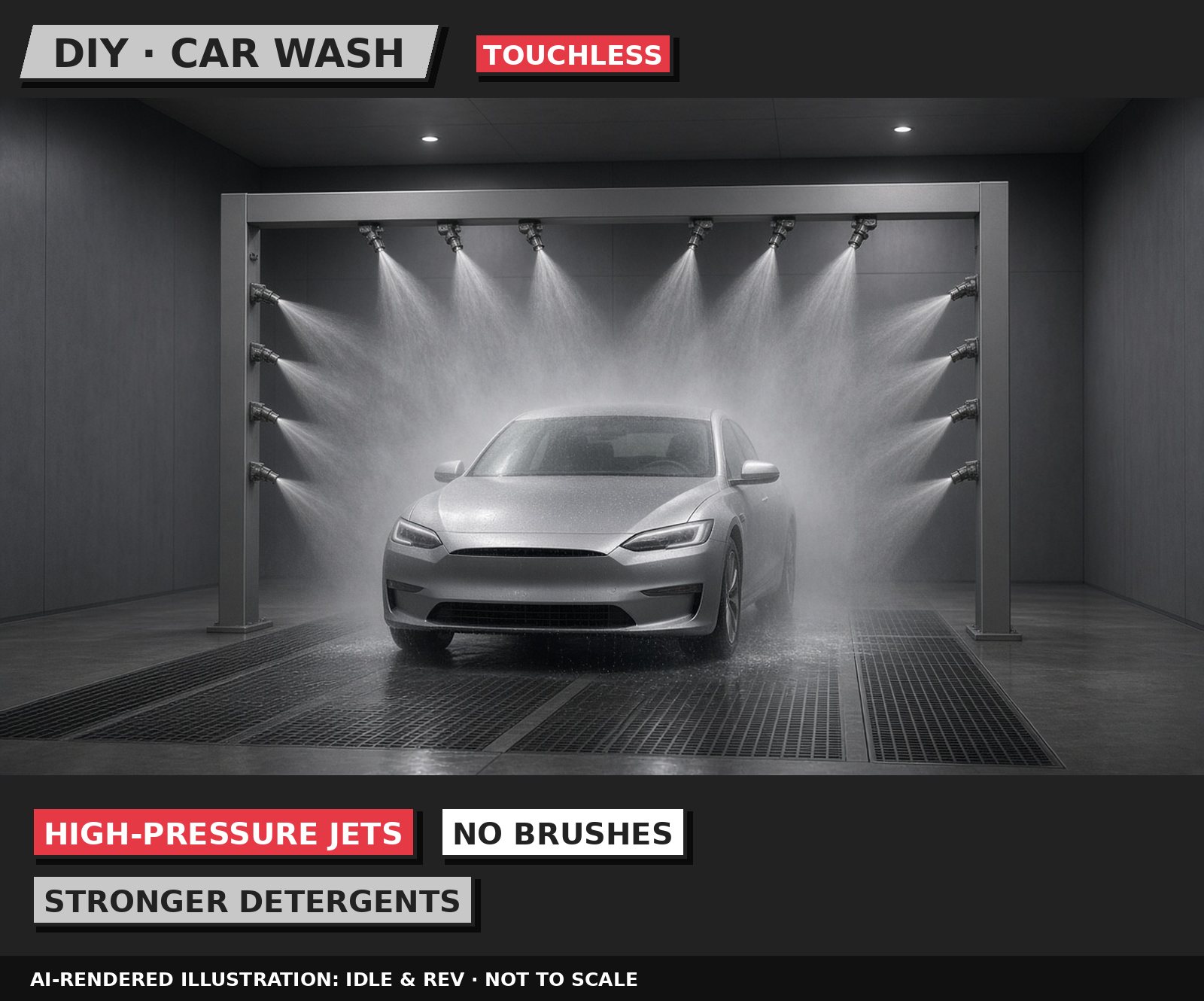
The trade-off is chemistry. Because there are no brushes doing the scrubbing, industry experts quoted by Carwash.com say touchless washes often need harsher chemicals, longer wash times and more water. The Daily Automotive adds that they may leave road film behind, may not fully remove tar, tree sap or baked-on grime, and can strip wax or sealant faster if you use them often.
Soft-cloth tunnel washes clean more aggressively but carry more contact risk, since grit can stay in the cloth strips between cars. The Daily Automotive calls a well-maintained modern soft-cloth wash a reasonable compromise and rates older stiff-bristle washes and shared self-serve brushes as the riskiest.
Hand washing: pros and cons
A hand wash gives you the most control. CarCareTruth calls the two-bucket method the gold standard for safe hand washing and the right choice for paint you care about. It also lets you reach spots an automatic wash misses.
The downside is time, water and space, and the result depends entirely on your discipline. The Daily Automotive notes that a careless hand wash with one bucket and a dirty sponge can cause more marring than a well-run automatic wash. CarCareTruth's summary is a fair rule of thumb: for a daily driver where a few swirls won't bother you, an automatic is a fair trade; for show-quality or freshly corrected paint, wash by hand.
What you need
- Two buckets (3.5 to 5 gallon is the common size for grit guards, per The Daily Automotive)
- A grit guard for each bucket; Chemical Guys says the soap-bucket guard matters most
- pH-neutral car wash soap (not dish soap)
- A clean microfiber wash mitt
- A hose, and optionally a pressure washer with a foam cannon
- Clean, soft microfiber drying towels
Step by step
- Set up two bucketsFill one bucket with water and car wash soap and the other with plain rinse water. Drop a grit guard into the bottom of each. CarCareTruth notes that without guards, the rinse bucket just becomes a second dirty bucket.
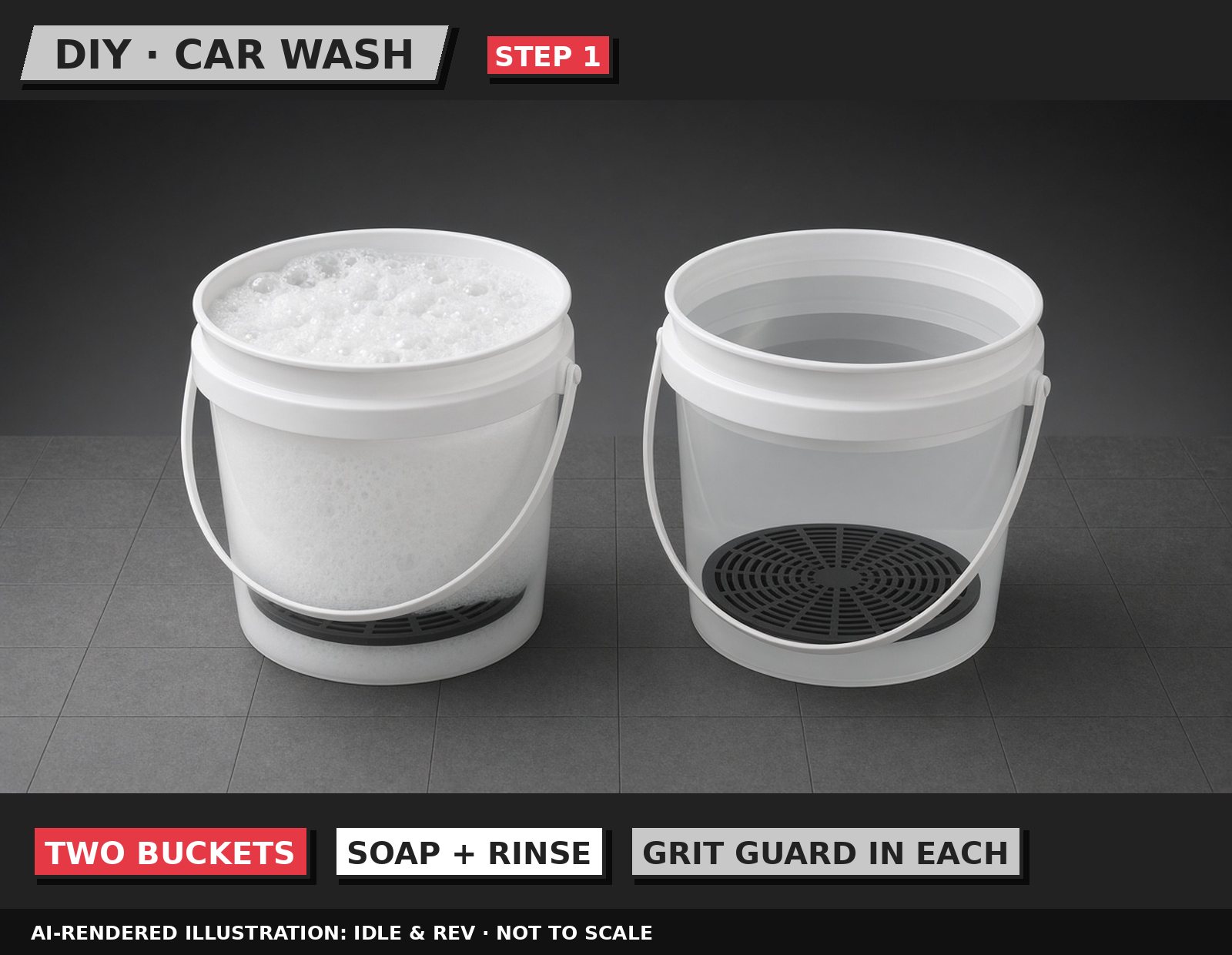
Illustration: Idle & Rev (AI-rendered, for illustration; not to scale) - Pre-rinse the whole carRinse the car thoroughly from top to bottom to knock off loose dirt before anything touches the paint. If the car is very dirty, CarCareTruth and Chemical Guys recommend a foam pre-wash and rinse first, so your mitt meets a cleaner surface.
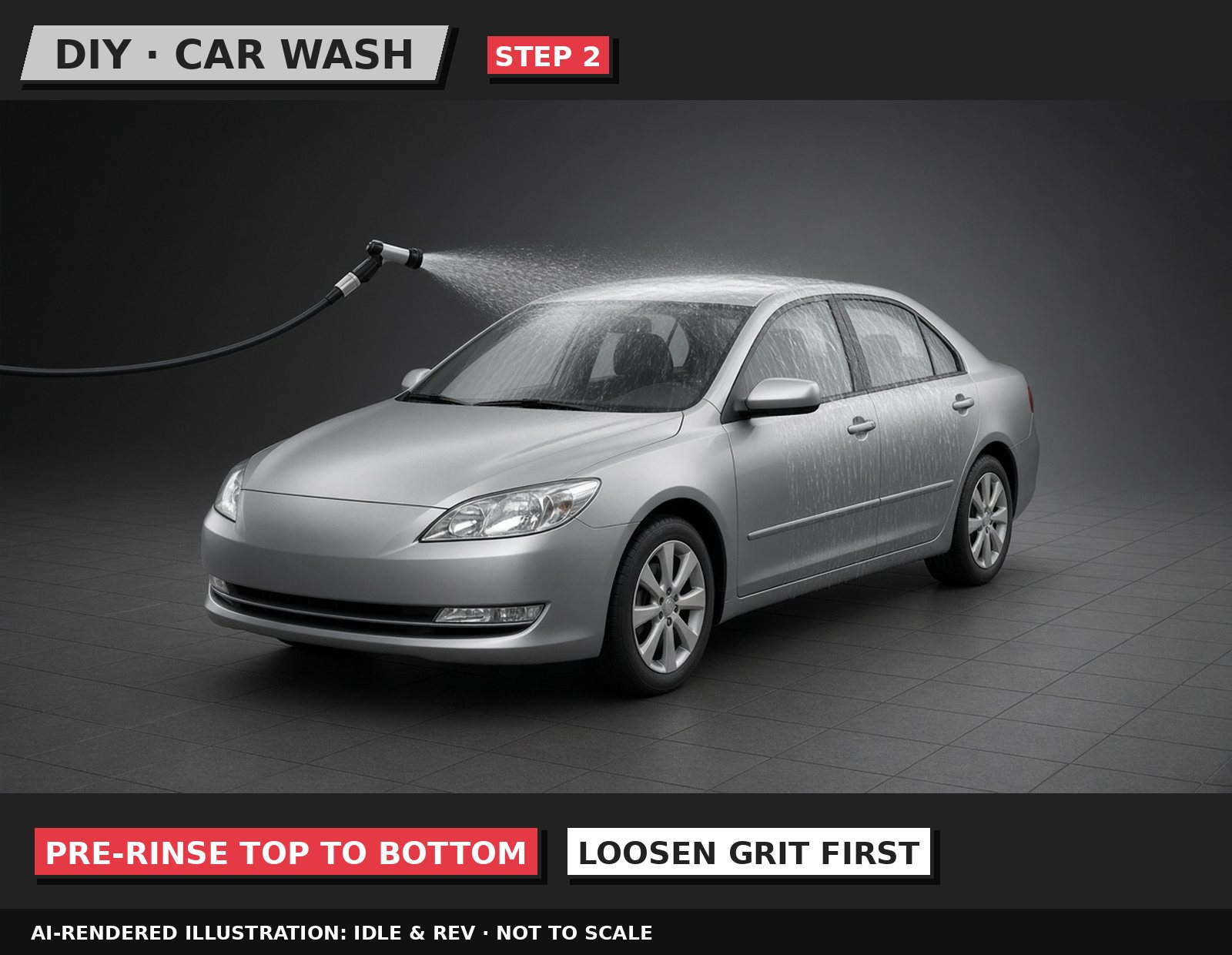
Illustration: Idle & Rev (AI-rendered, for illustration; not to scale) - Load the mitt and wash one panel, top downDip the mitt in the soap bucket and wash a single panel, starting with the roof and working down to the lower body, which is the dirtiest. Use light pressure and straight-line strokes, not circles.
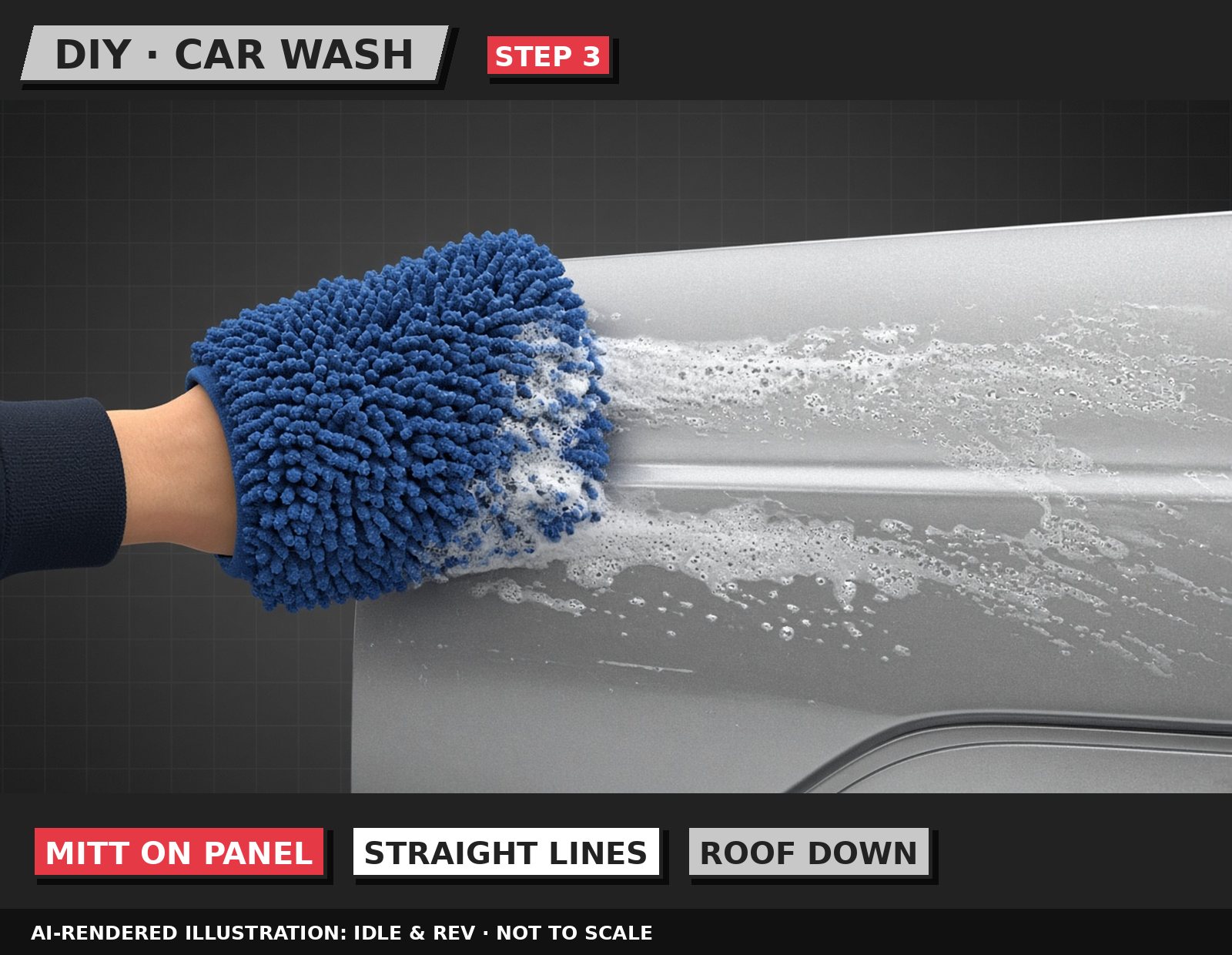
Illustration: Idle & Rev (AI-rendered, for illustration; not to scale) - Rinse the mitt on the grit guardBefore you reload with soap, plunge the mitt into the rinse bucket and rub it against the grit guard so dirt falls to the bottom and stays below the guard. Wring it out.
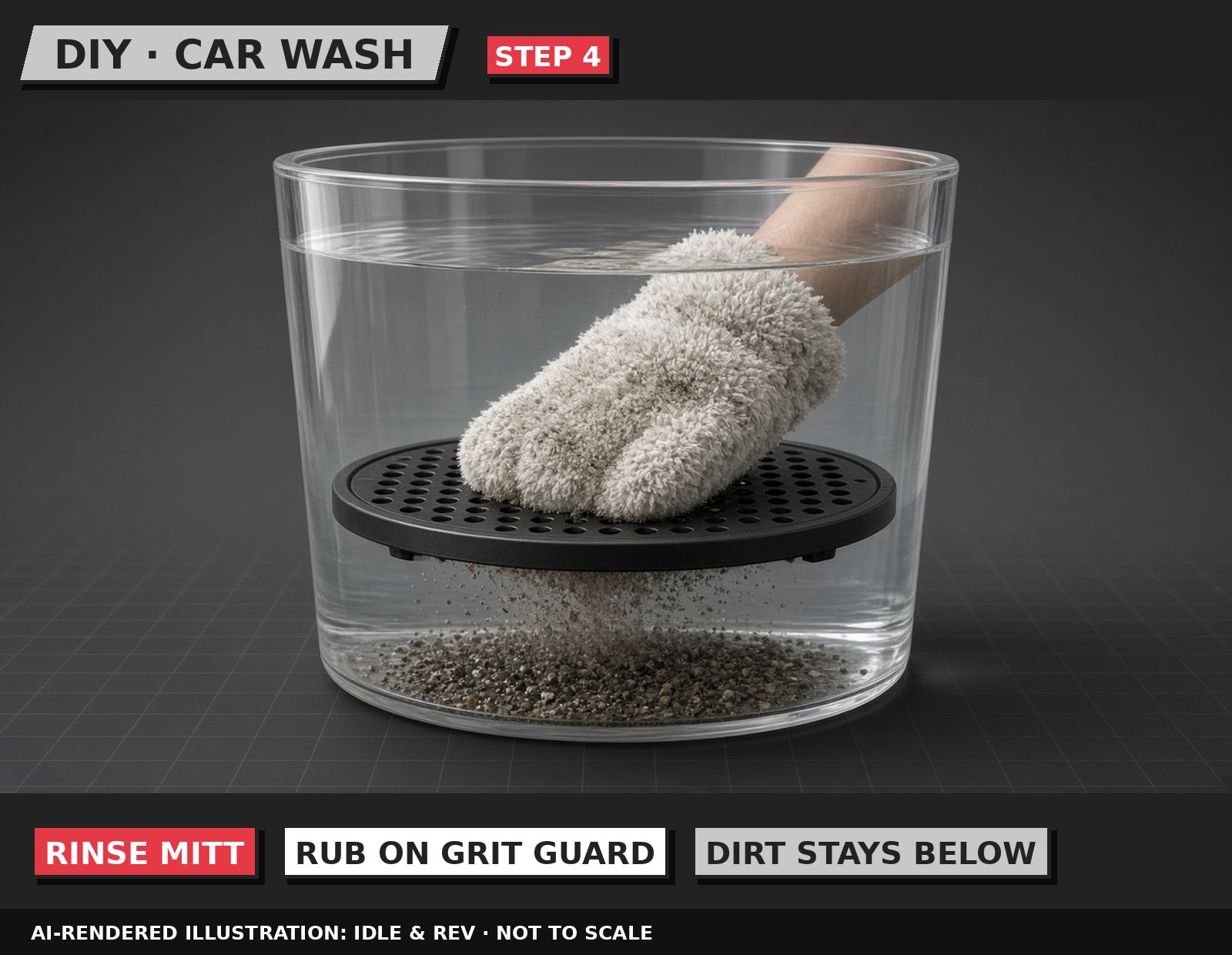
Illustration: Idle & Rev (AI-rendered, for illustration; not to scale) - Reload and repeat panel by panelGo back to the soap bucket for fresh suds and move to the next panel. Rinse the mitt after every panel. If you drop the mitt on the ground, swap to a clean one; it will be full of grit.
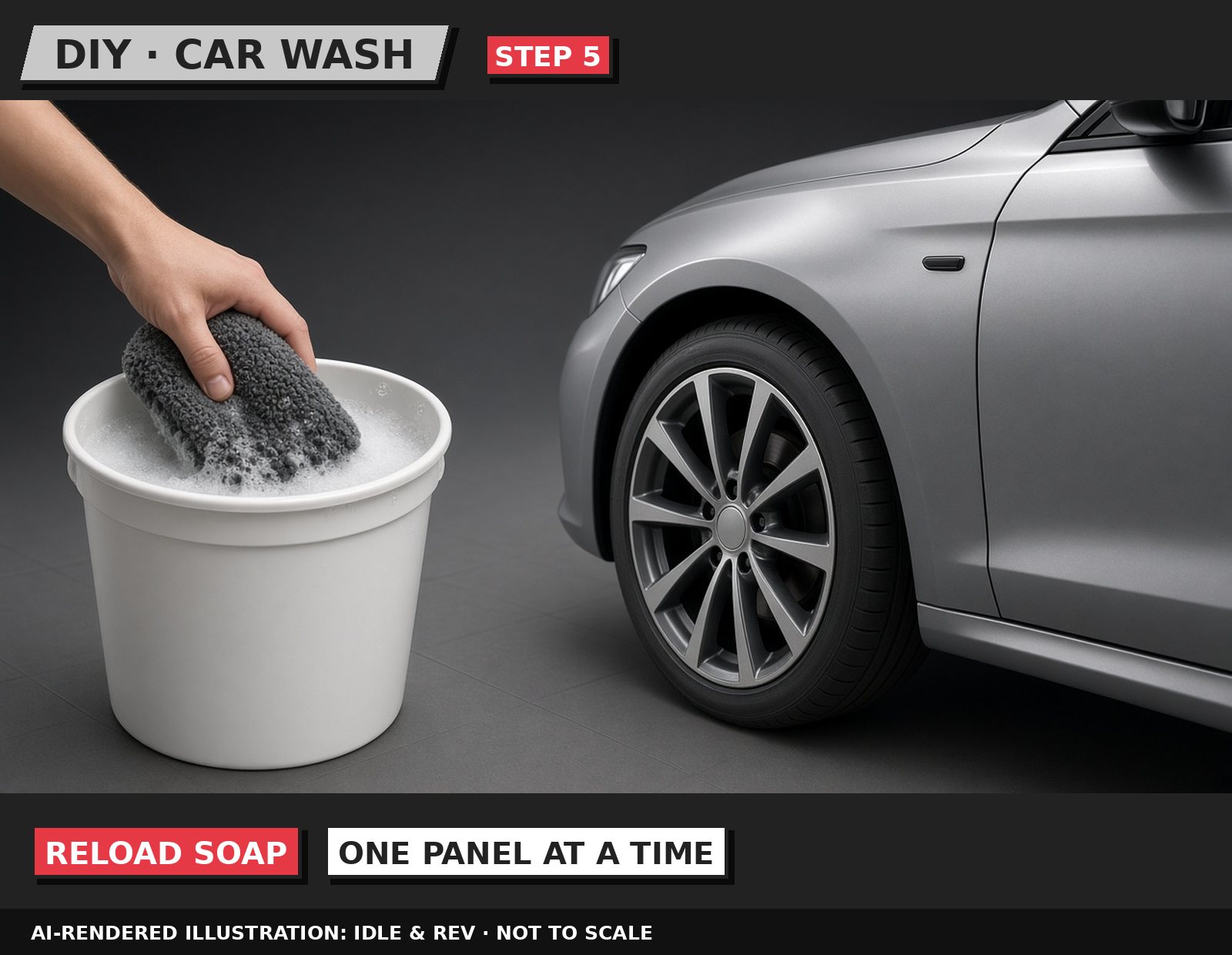
Illustration: Idle & Rev (AI-rendered, for illustration; not to scale) - Rinse the car againRinse off all the soap from the top down before it dries on the paint.
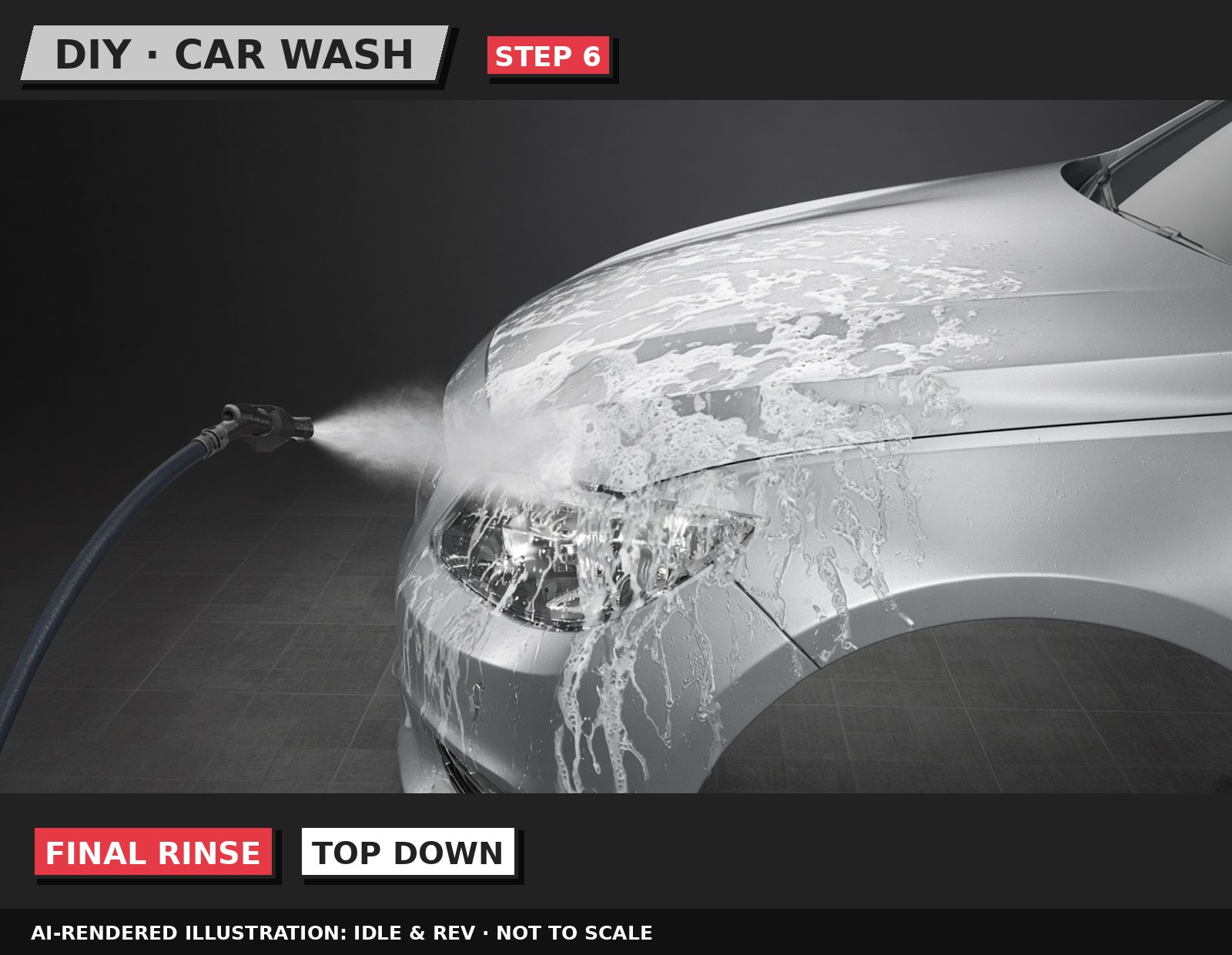
Illustration: Idle & Rev (AI-rendered, for illustration; not to scale) - Dry by blottingDry with clean, soft microfiber towels by blotting or gently laying them on the panel rather than dragging a dry towel across it. The Daily Automotive recommends blotting to avoid adding swirls at the last step.
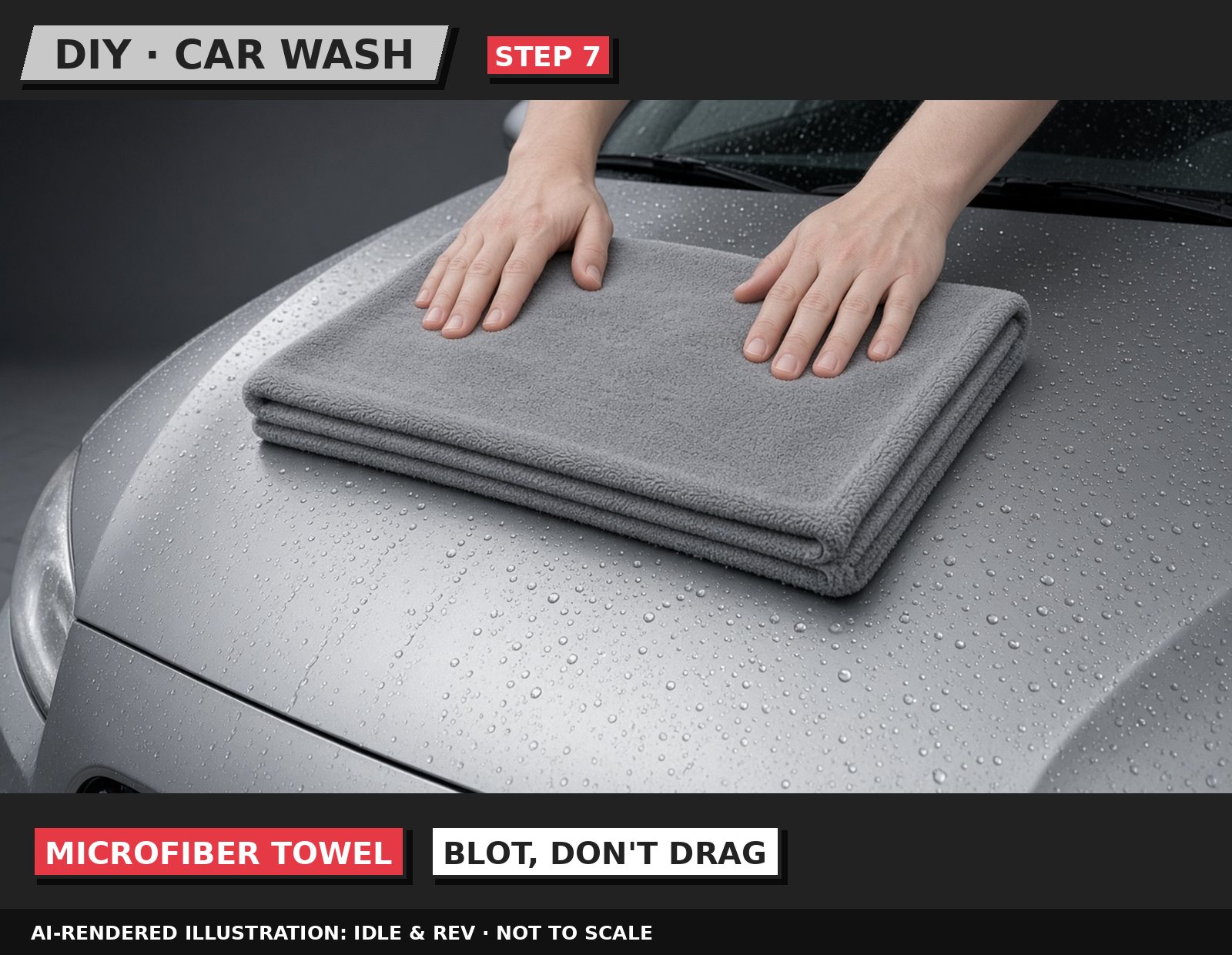
Illustration: Idle & Rev (AI-rendered, for illustration; not to scale)
Sources: CarCareTruth: Car wash methods explained, Chemical Guys: Two bucket method, The Daily Automotive: Do car washes scratch cars?, The Daily Automotive: Do car washes scratch paint?, Carwash.com: Comparing soft touch and touchless