
How to change a flat tire
6 min read
Get somewhere safe, then swap on the spare in about 15 minutes.
A flat tire is unsettling, but changing it is a straightforward job if you have a spare, a jack and a lug wrench, and you take safety seriously. Most of the risk is the location, not the wrench work.
Check your trunk now, before you need it. Many newer cars have no spare at all and come with a sealant-and-inflator kit instead; NHTSA notes that more and more vehicles ship that way. Your owner's manual shows where your jack points are and how to use the kit.
What you need
- Inflated spare tire (check its pressure monthly)
- Jack and lug wrench (usually stored with the spare)
- Wheel wedges or chocks
- Owner's manual, gloves and a flashlight
- Wheel lock key, if your car has locking lug nuts
Step by step
- Get safe and secure the carPull onto level, solid ground well away from traffic, turn on the hazards, put it in Park (or in gear for a manual) and set the parking brake.

Illustration: Idle & Rev (AI-rendered, for illustration; not to scale) - Wedge the wheelsPlace wheel wedges against the tire diagonally opposite the flat, so the car can't roll when it's raised.
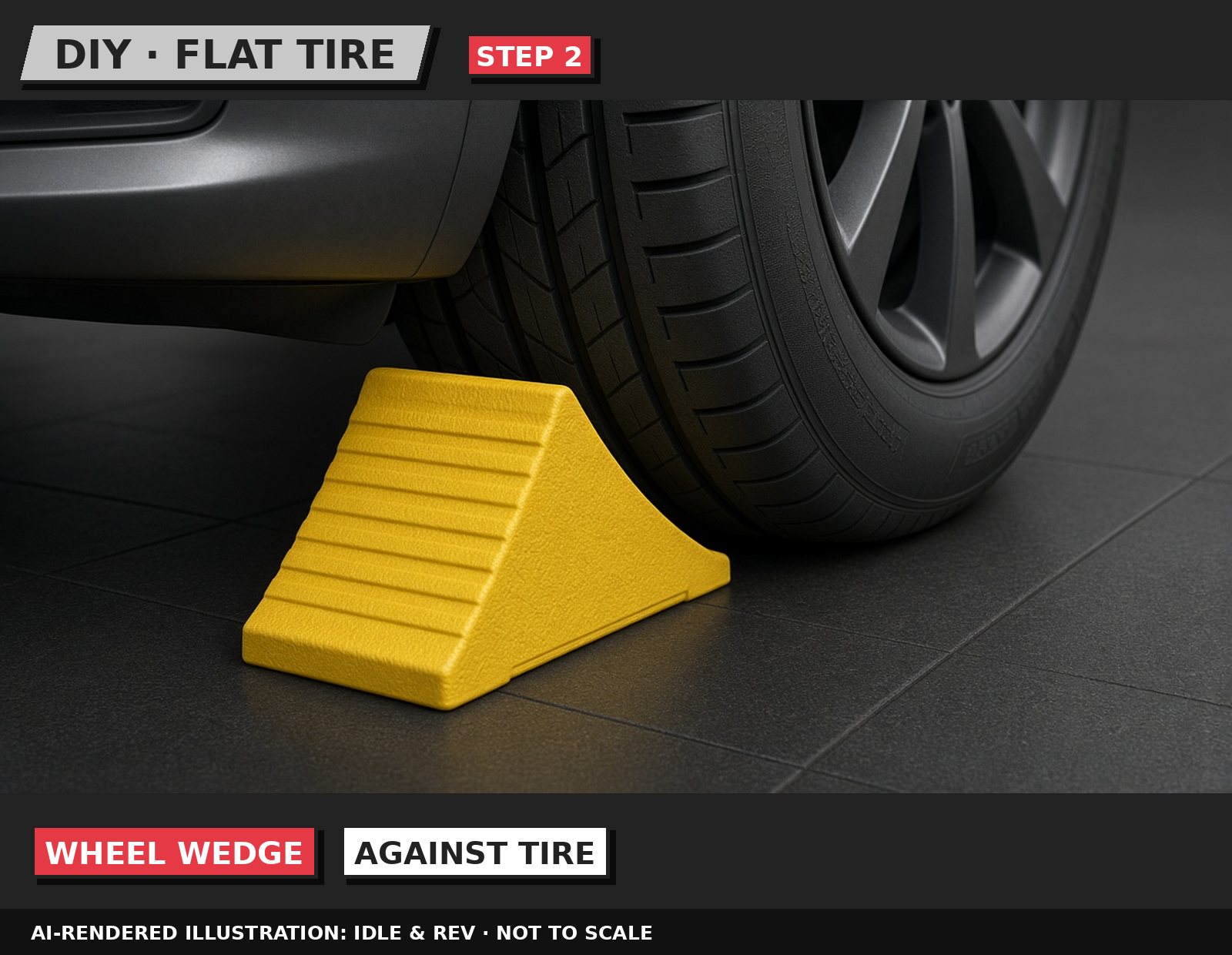
Illustration: Idle & Rev (AI-rendered, for illustration; not to scale) - Loosen the lug nutsRemove the hubcap if there is one. With the car still on the ground, turn each lug nut counterclockwise about a quarter to half turn with the lug wrench. Don't remove them yet.
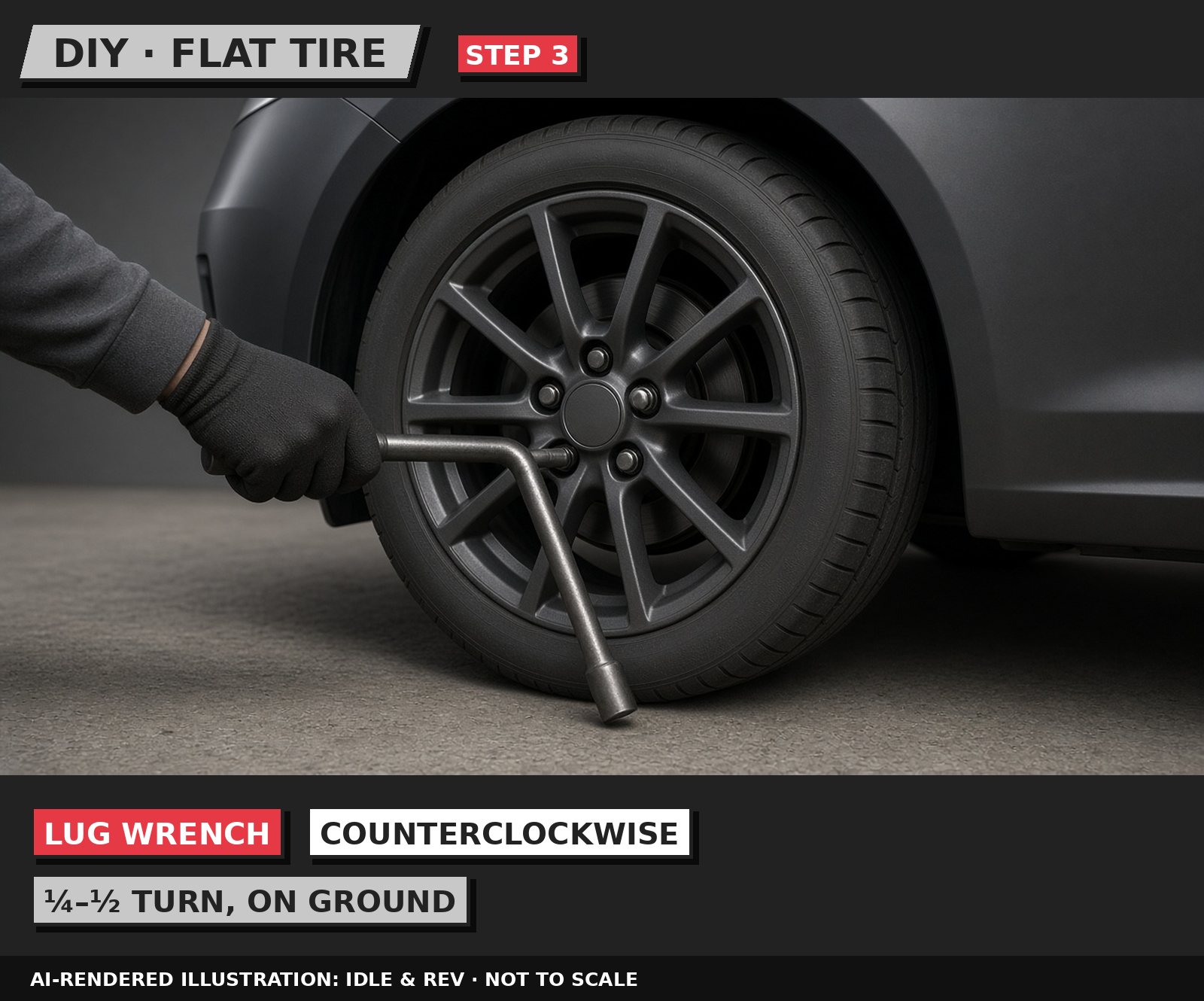
Illustration: Idle & Rev (AI-rendered, for illustration; not to scale) - Jack at the lift pointPlace the jack under the lift point closest to the flat, as shown in the manual, and raise the car until the flat tire is about six inches off the ground.
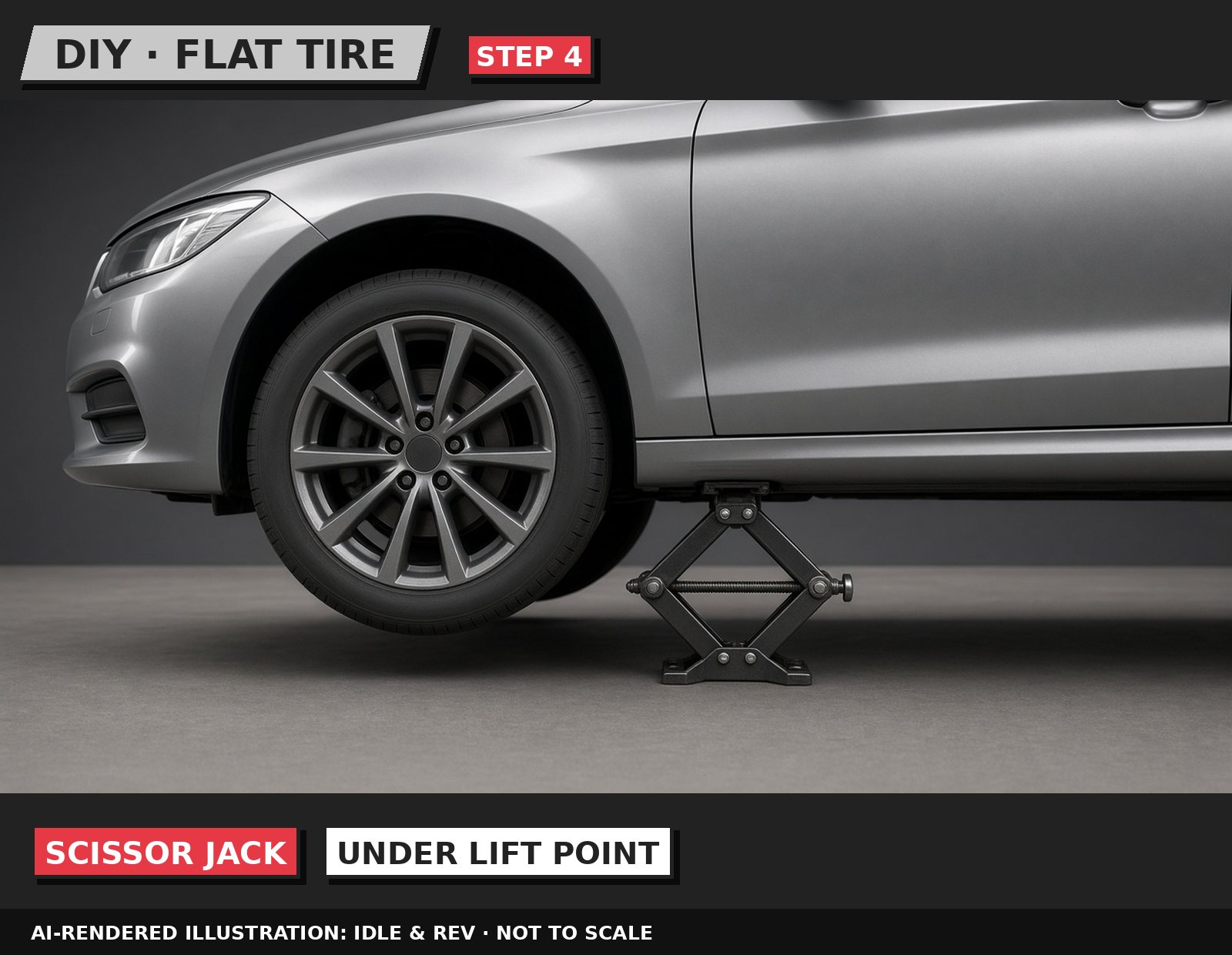
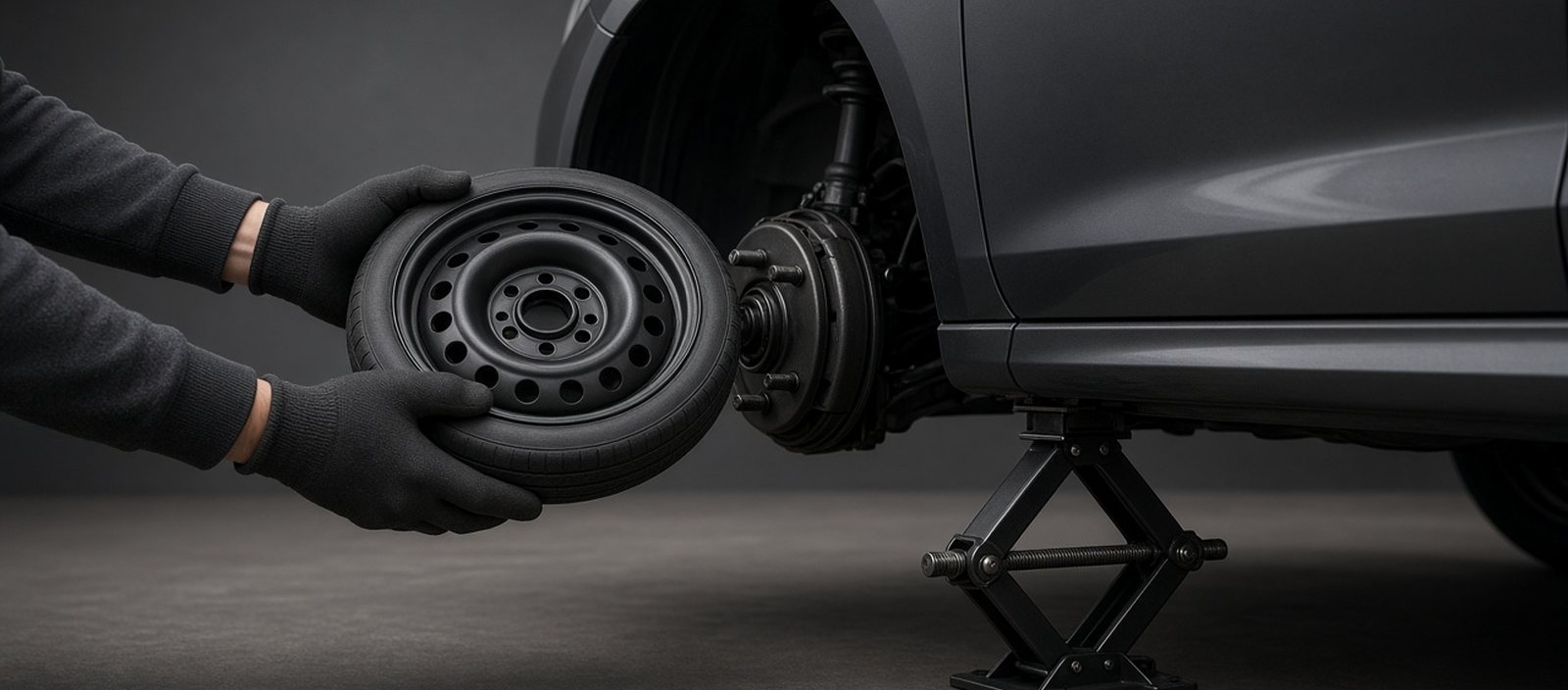
Illustration: Idle & Rev (AI-rendered, for illustration; not to scale) - Remove the lug nuts and the flatUnscrew the lug nuts the rest of the way, keep them together, and pull the wheel straight toward you.
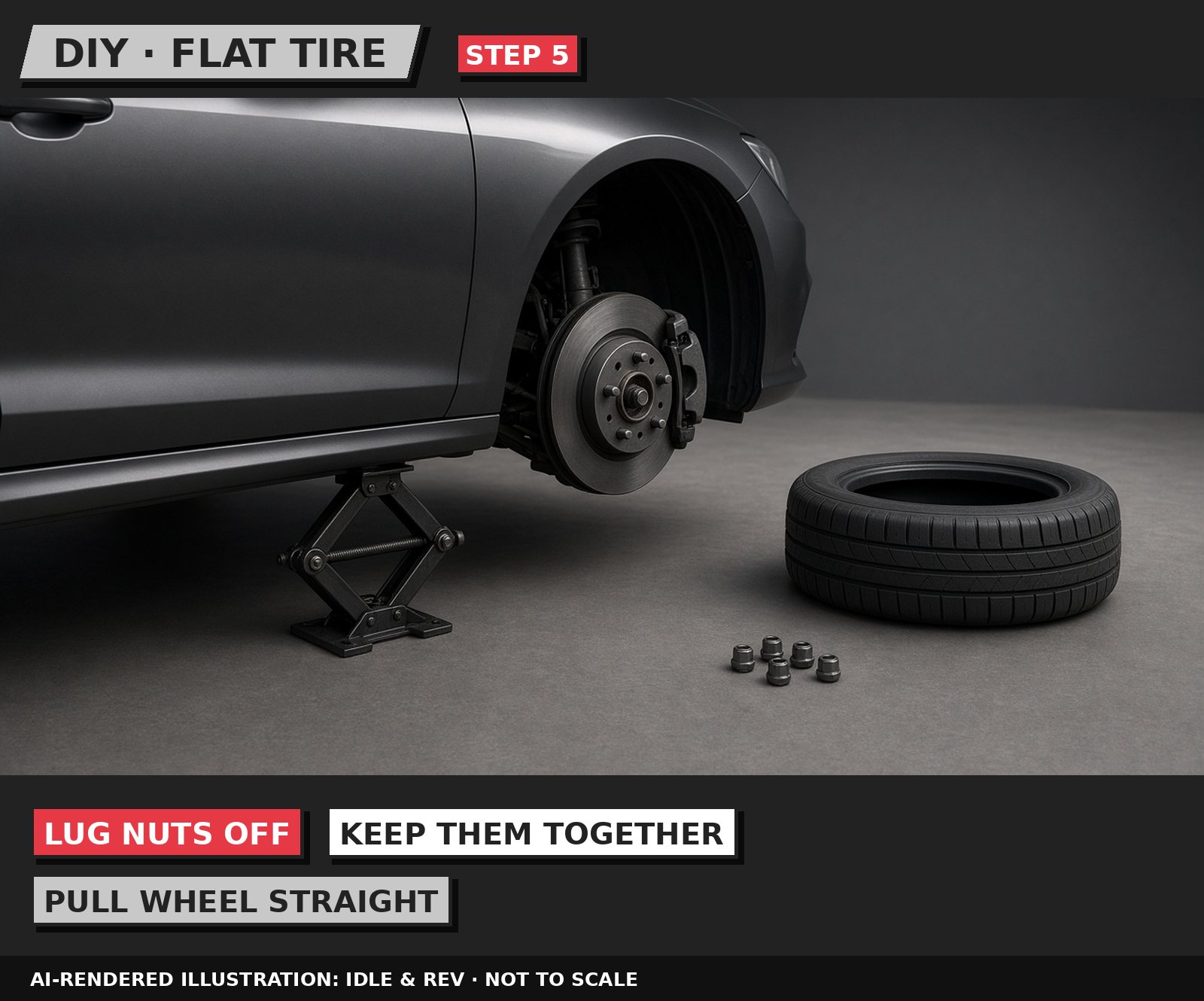
Illustration: Idle & Rev (AI-rendered, for illustration; not to scale) - Mount the spareLine the spare's holes up with the wheel studs and push it on until it sits flat against the hub.
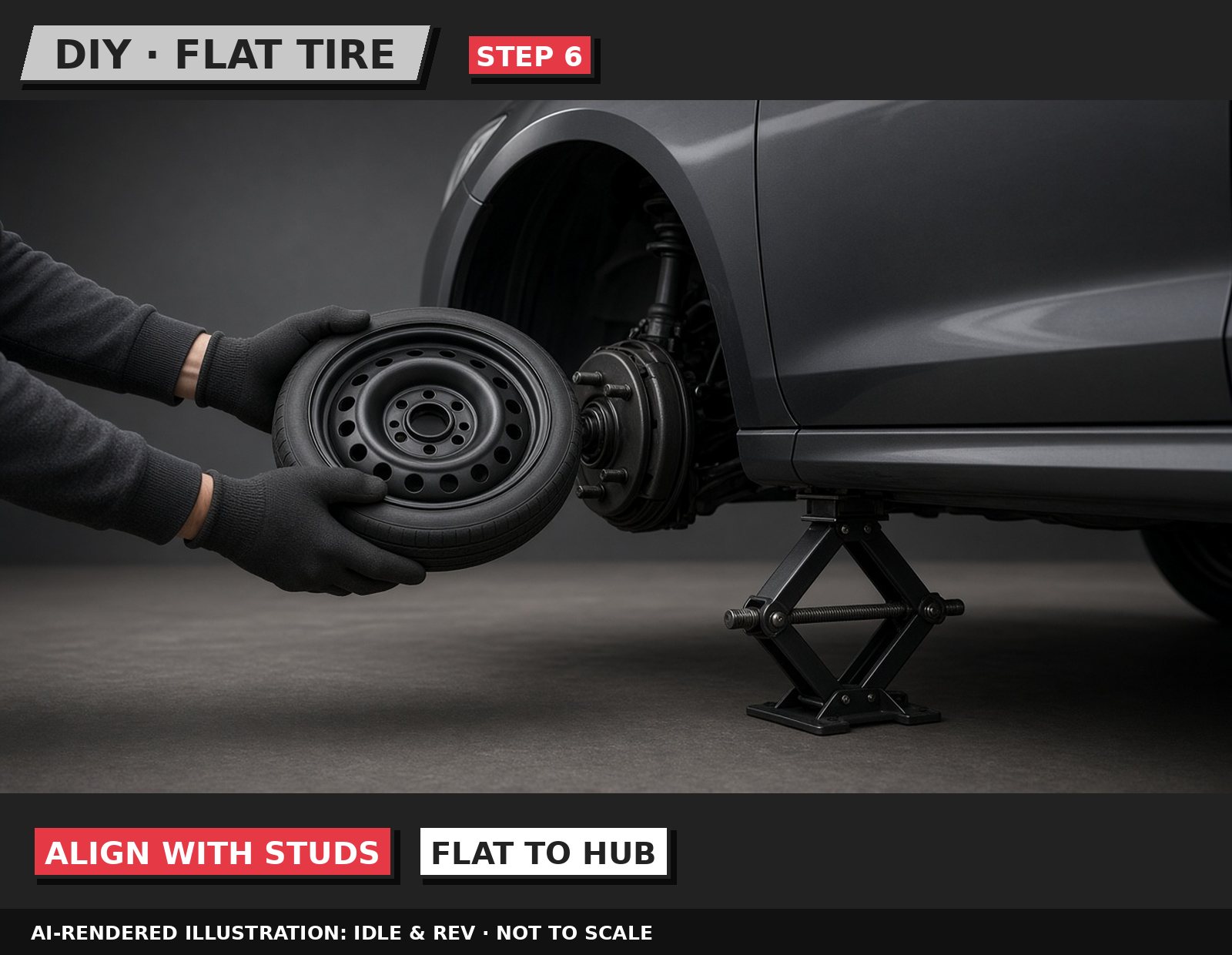
Illustration: Idle & Rev (AI-rendered, for illustration; not to scale) - Hand-tighten the lug nutsThread the lug nuts on by hand until snug.
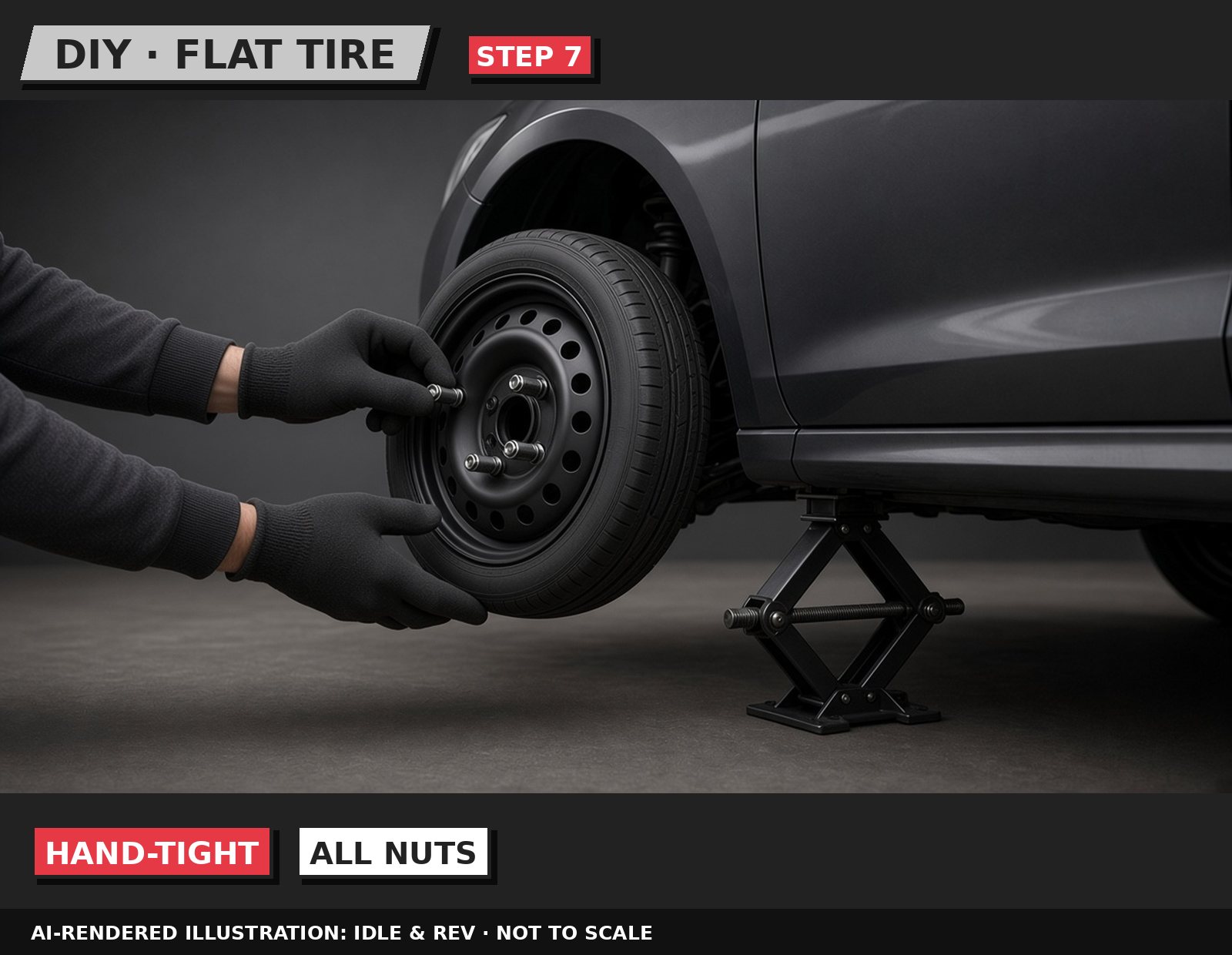
Illustration: Idle & Rev (AI-rendered, for illustration; not to scale) - Lower and tighten in a star patternLower the car until the spare touches the ground, then tighten the nuts fully in a star (crisscross) pattern so the wheel seats evenly. Lower the car the rest of the way and remove the jack.
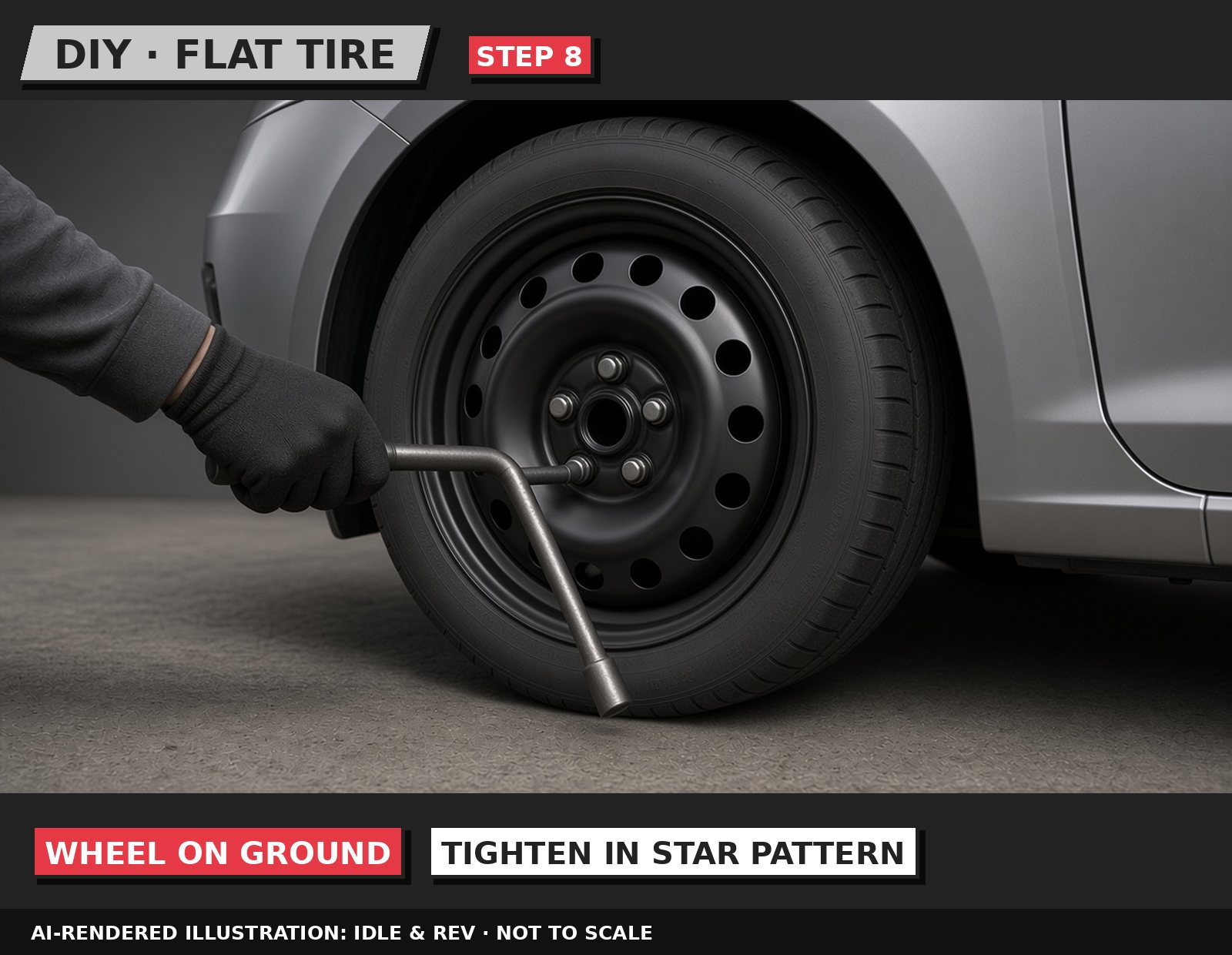
Illustration: Idle & Rev (AI-rendered, for illustration; not to scale) - Check the spare and stow everythingCheck the spare's pressure, put the flat, jack and tools away, and remove the wedges. Get the flat tire repaired or replaced soon.
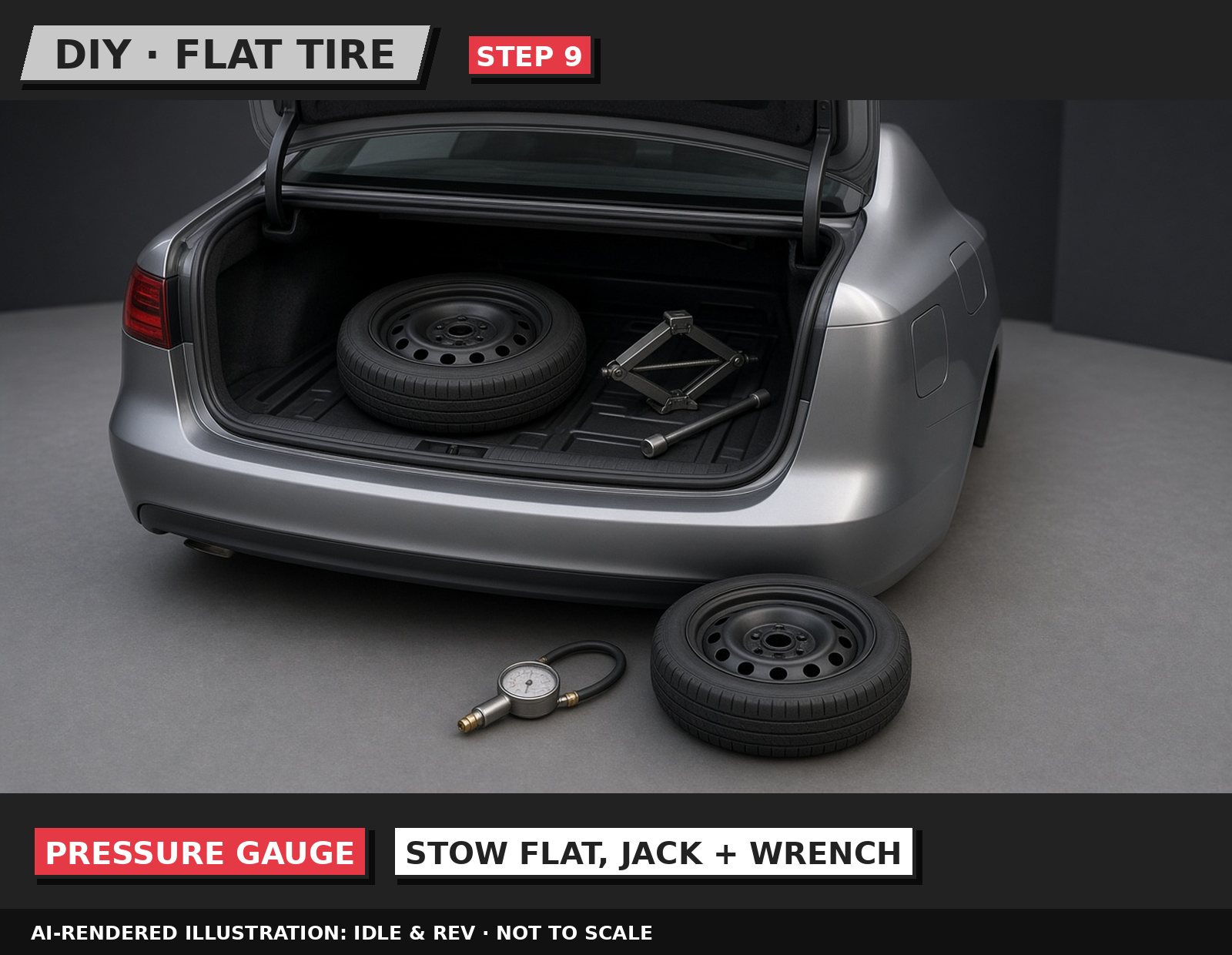
Illustration: Idle & Rev (AI-rendered, for illustration; not to scale)
Temporary spare limits
Compact "donut" spares are for getting to a tire shop, not for regular driving. They have speed and distance limits, which are printed on the spare's sidewall or a label on it and listed in your owner's manual; stay within them. Get the flat repaired or replaced as soon as you can, and have the lug nuts torqued to spec.
Sources: Bridgestone: How to change a flat tire, NHTSA: Tires