
How to check your tire pressure
4 min read
Find the right number, check them cold, and fill to spec in five minutes.
Correct tire pressure affects braking, handling, tire wear and fuel economy, and underinflation is a leading cause of tire failure, according to NHTSA. It takes five minutes and a gauge that costs a few dollars.
The key point most people miss: the right pressure is the one on your car's placard, not the number molded into the tire.
Find the right pressure
Your car's recommended cold tire pressure is on the tire placard, usually on the driver's door jamb, and in the owner's manual. The front and rear numbers can differ. The PSI on the tire sidewall is the tire's maximum, not what your car needs, as both NHTSA and Bridgestone point out.
- A tire pressure gauge (digital or dial)
- An air compressor or gas-station air pump
- Your car's placard pressure
Step by step
- Check when the tires are coldCheck before driving or after the car has sat for at least three hours. Driving warms the tires and raises the reading, so a warm check will show more air than is really there.
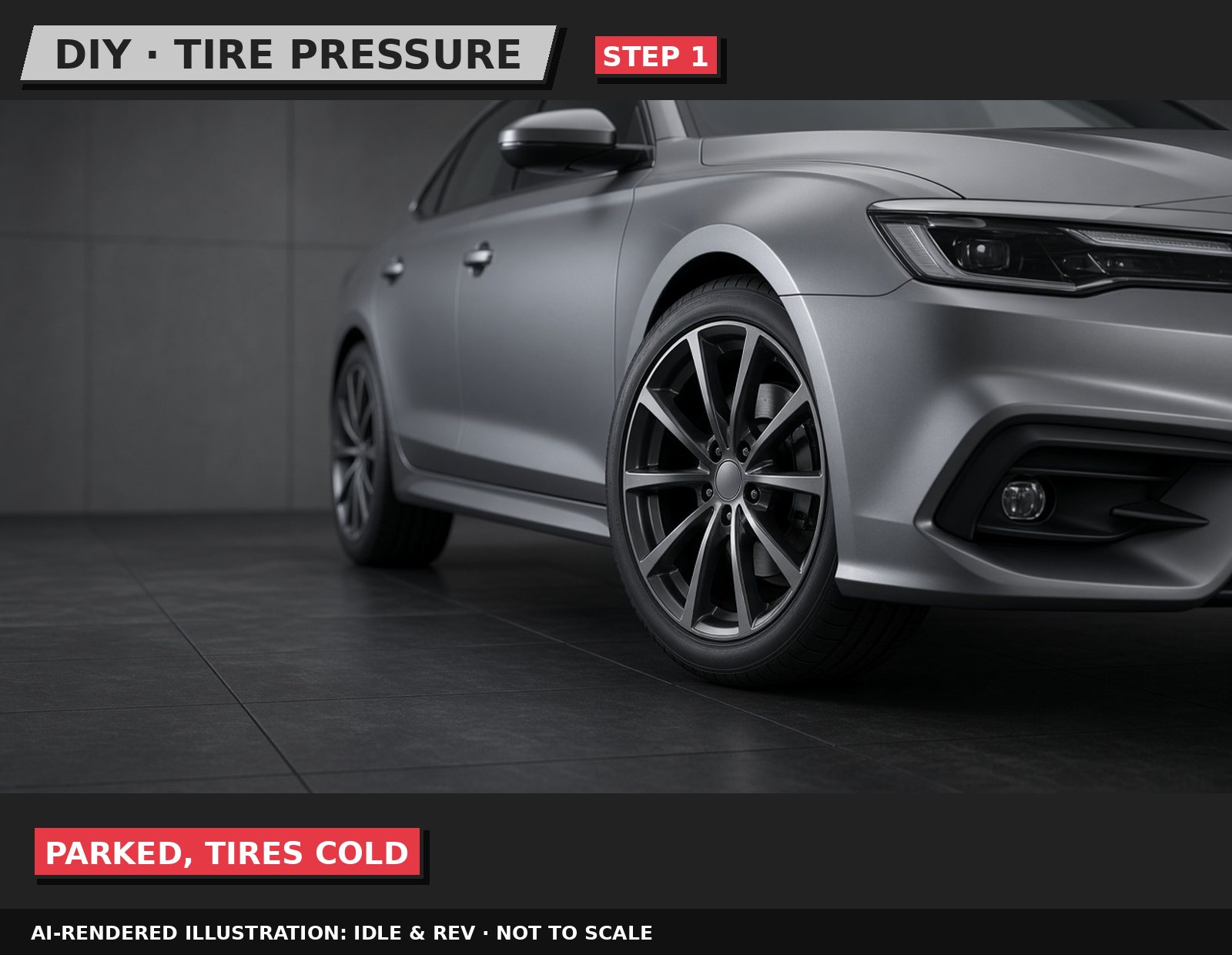
Illustration: Idle & Rev (AI-rendered, for illustration; not to scale) - Find the placard pressureOpen the driver's door and read the recommended cold pressure for the front and rear tires.
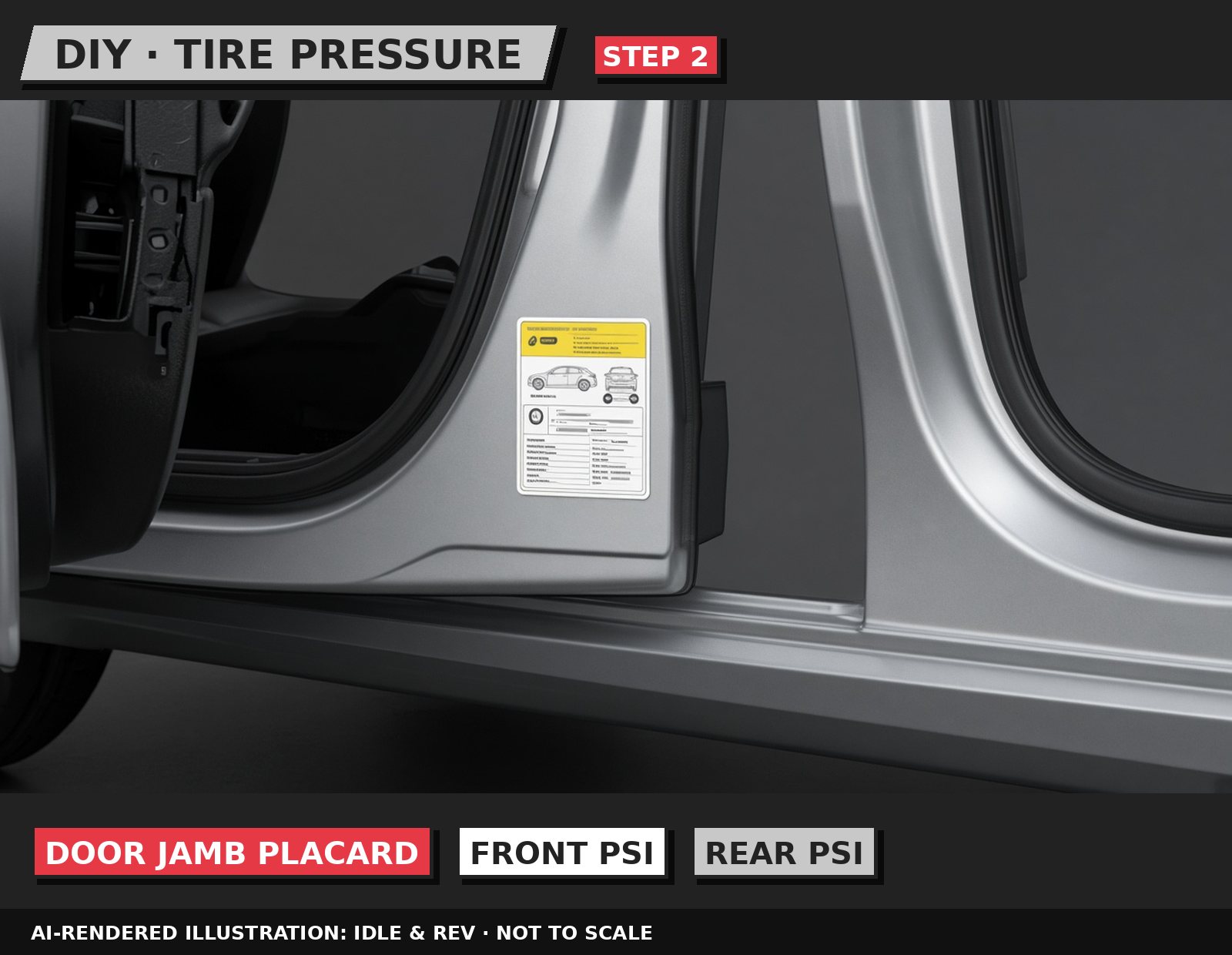
Illustration: Idle & Rev (AI-rendered, for illustration; not to scale) - Remove the valve capUnscrew the cap from the valve stem and put it somewhere you won't lose it.
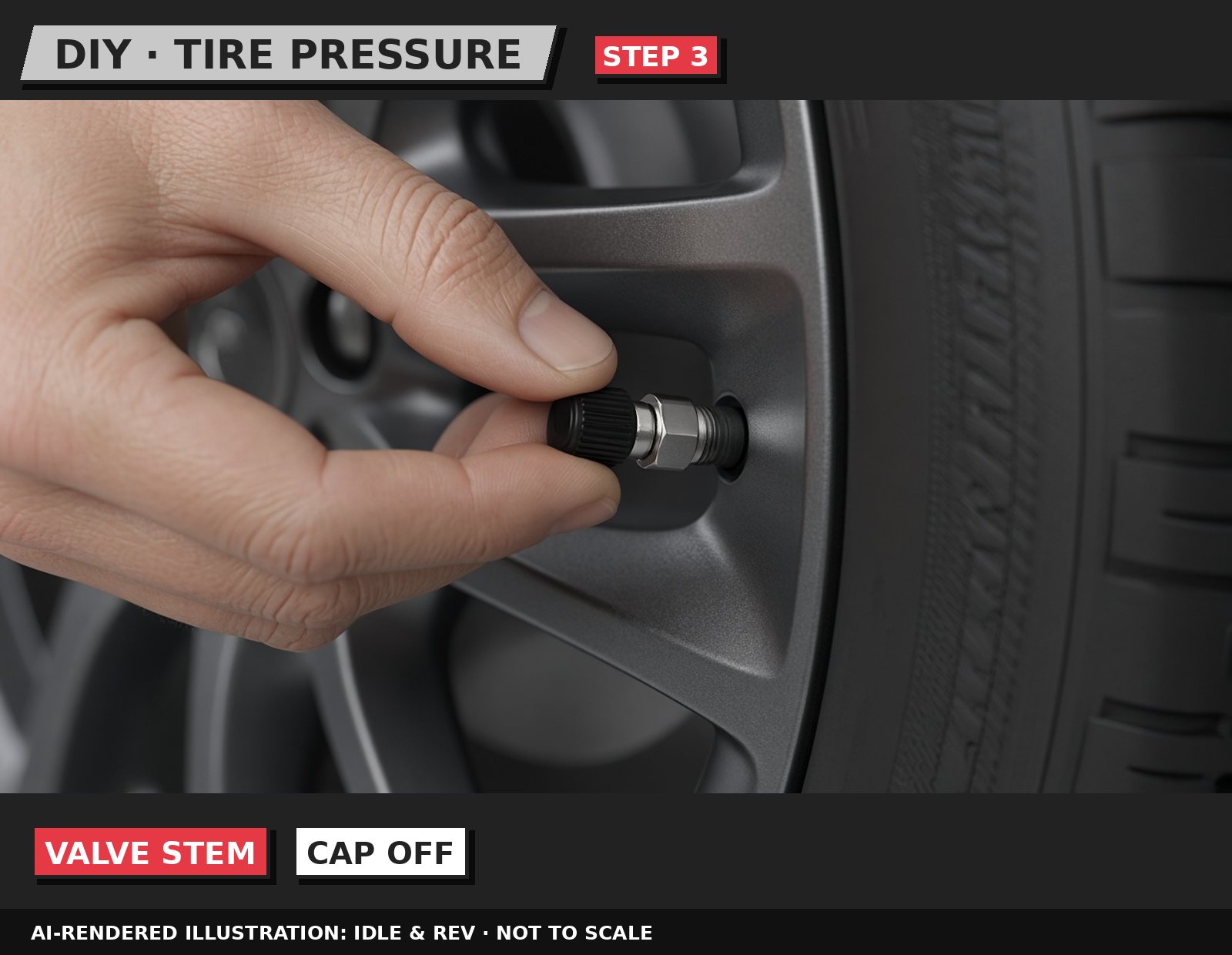
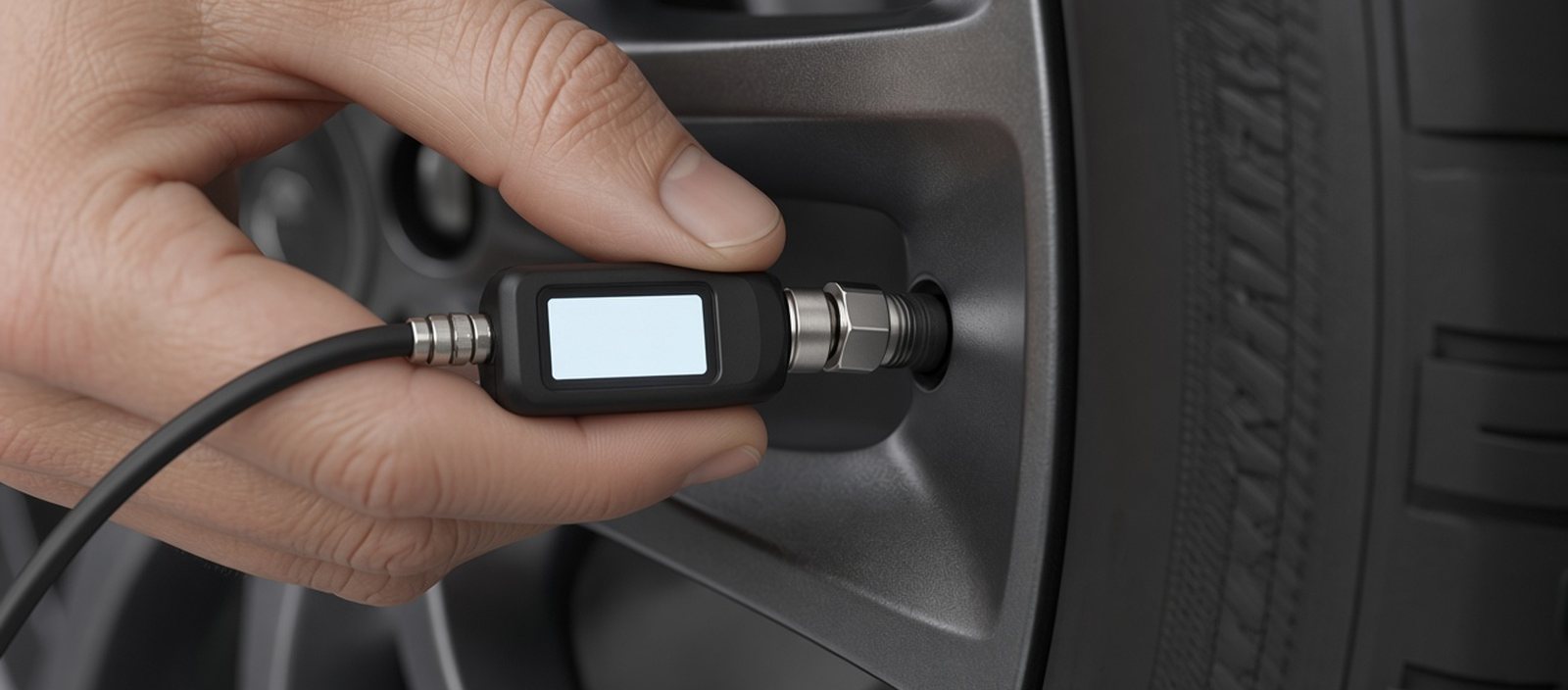
Illustration: Idle & Rev (AI-rendered, for illustration; not to scale) - Press the gauge on and read itPress the gauge straight onto the valve stem firmly enough that the hissing stops, then read the number. If you hear air escaping, reseat it and read again.
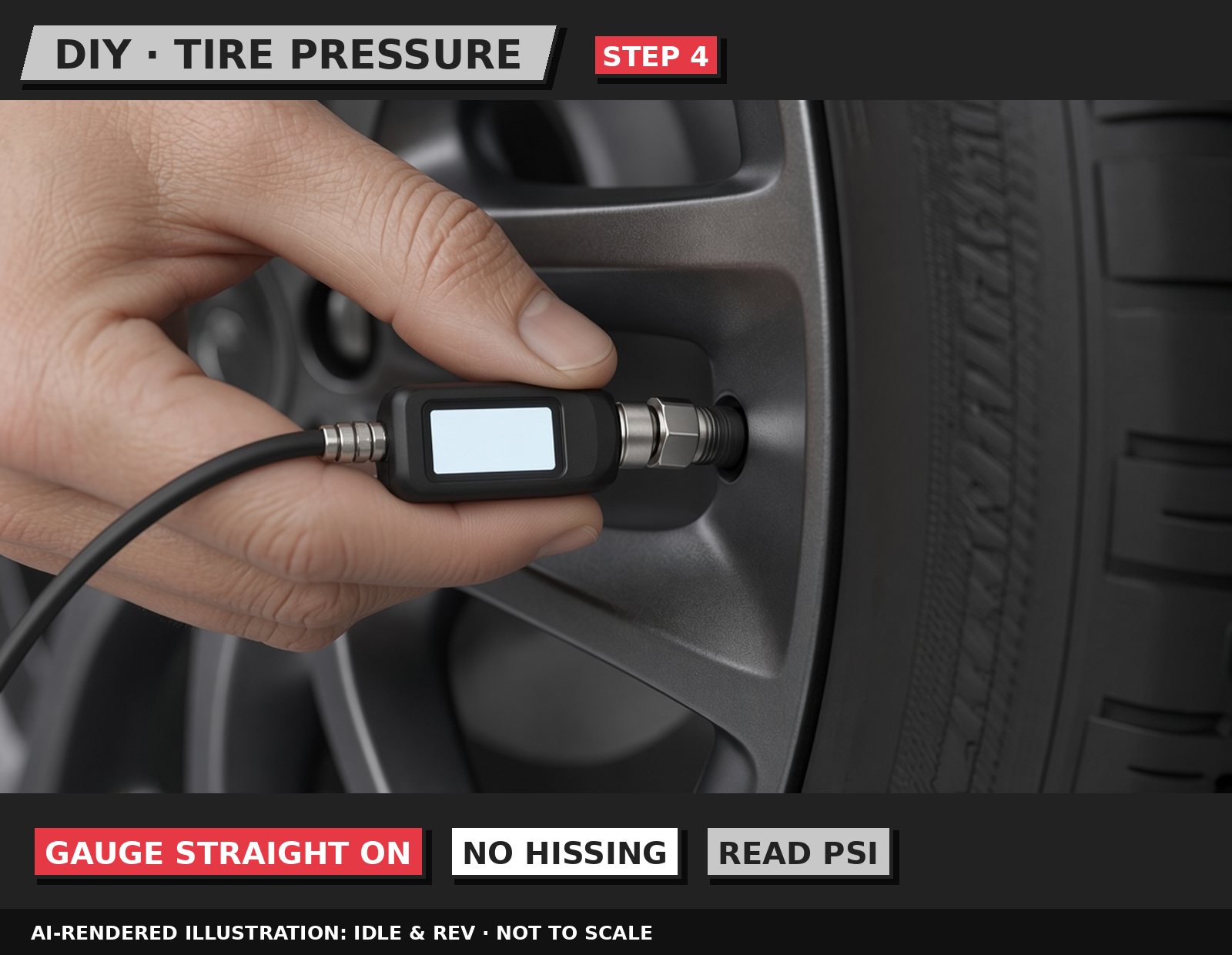
Illustration: Idle & Rev (AI-rendered, for illustration; not to scale) - Add air if it's lowPress the air hose onto the valve in short bursts and recheck with your gauge. Don't trust a pump's built-in gauge on its own.
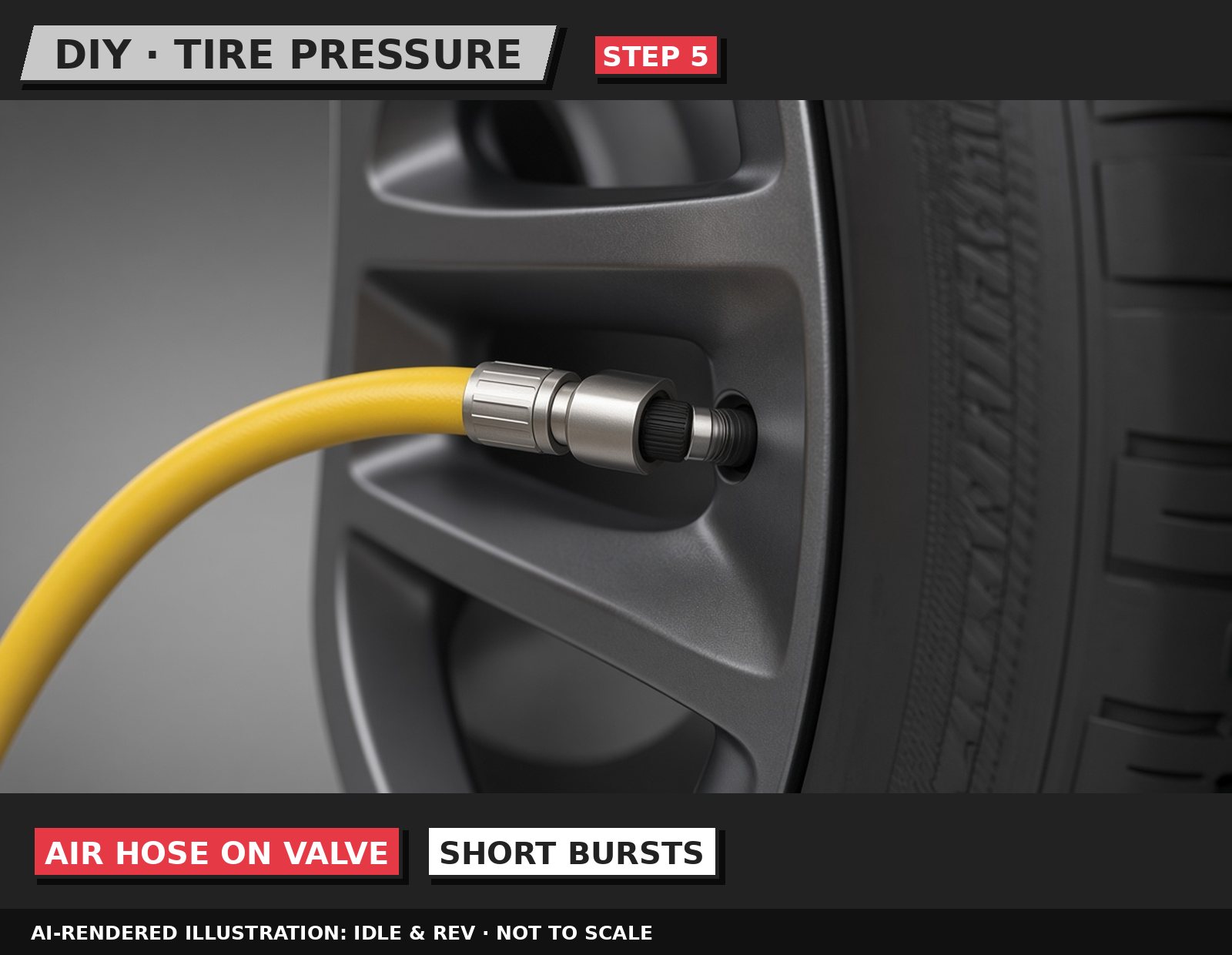
Illustration: Idle & Rev (AI-rendered, for illustration; not to scale) - Let air out if it's highIf you overshoot, press the small pin in the center of the valve (many gauges have a nub for this) to release air, then recheck.
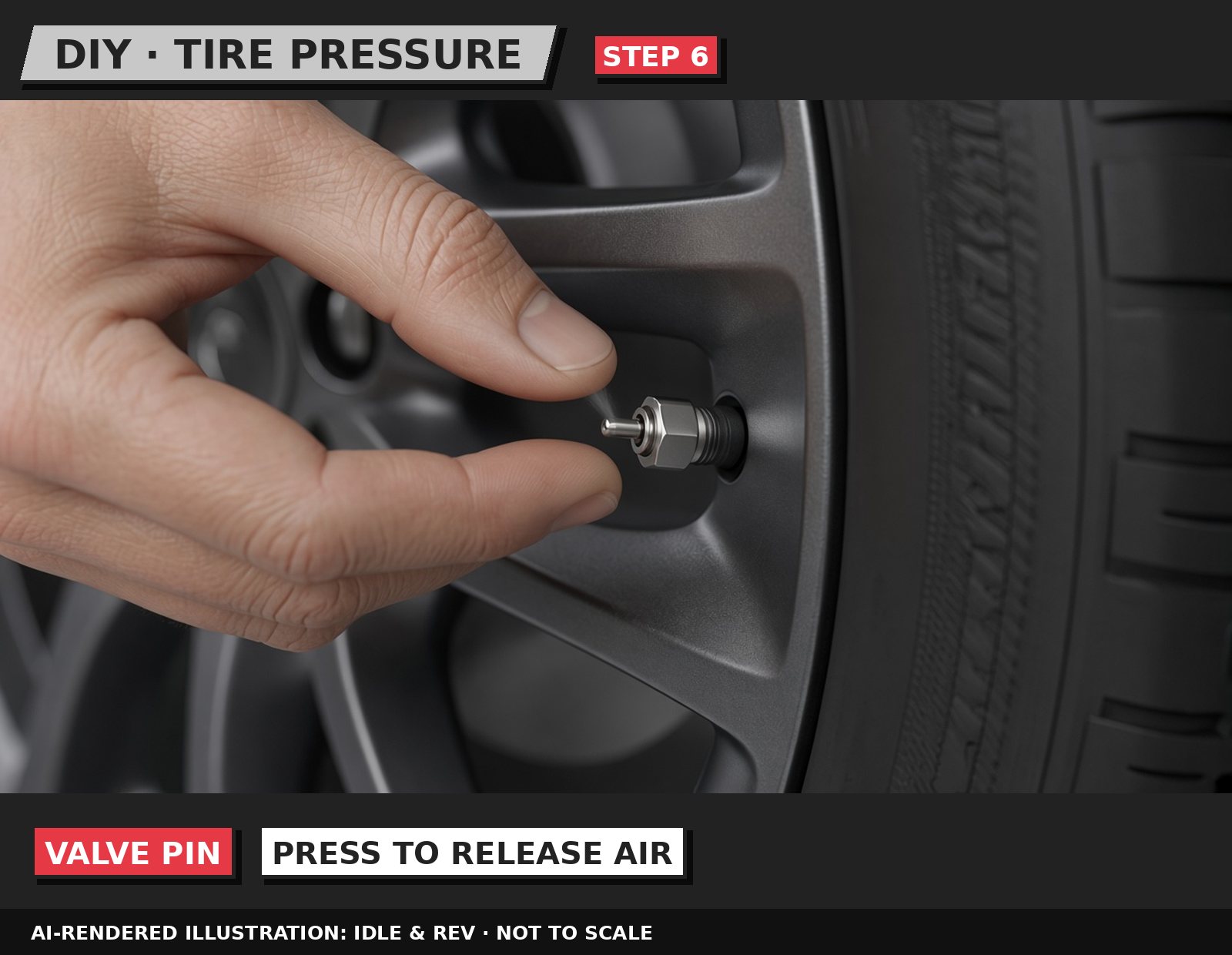
Illustration: Idle & Rev (AI-rendered, for illustration; not to scale) - Cap on, repeat on every tireScrew the cap back on and repeat on all four tires, plus the spare.
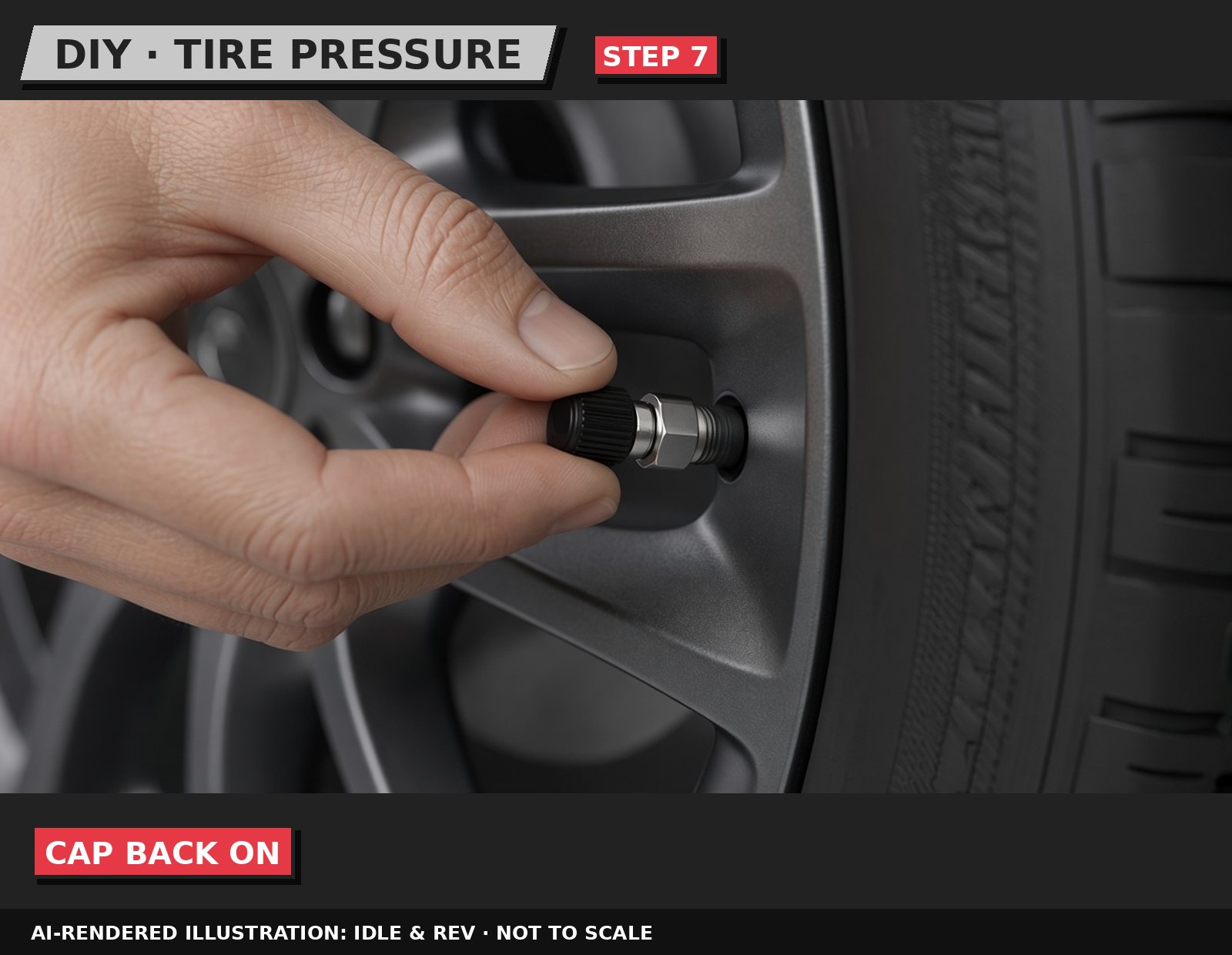
Illustration: Idle & Rev (AI-rendered, for illustration; not to scale)
How often
NHTSA recommends checking at least once a month and before long trips, including the spare if it has one. Tires slowly lose air over time, and pressure also drops when the temperature falls, so check more often when the weather turns cold. Your tire pressure monitoring system (TPMS) light is a backstop, not a substitute: it typically only comes on once a tire is already well below the recommended pressure, so don't wait for it. Your owner's manual explains how your car's system works.
Sources: NHTSA: Tires and tire safety, Bridgestone: How to check your tire pressure