Issue #2 · Friday, October 16, 2026
← Back to today's issue
Car of the DayOct 16, 2026
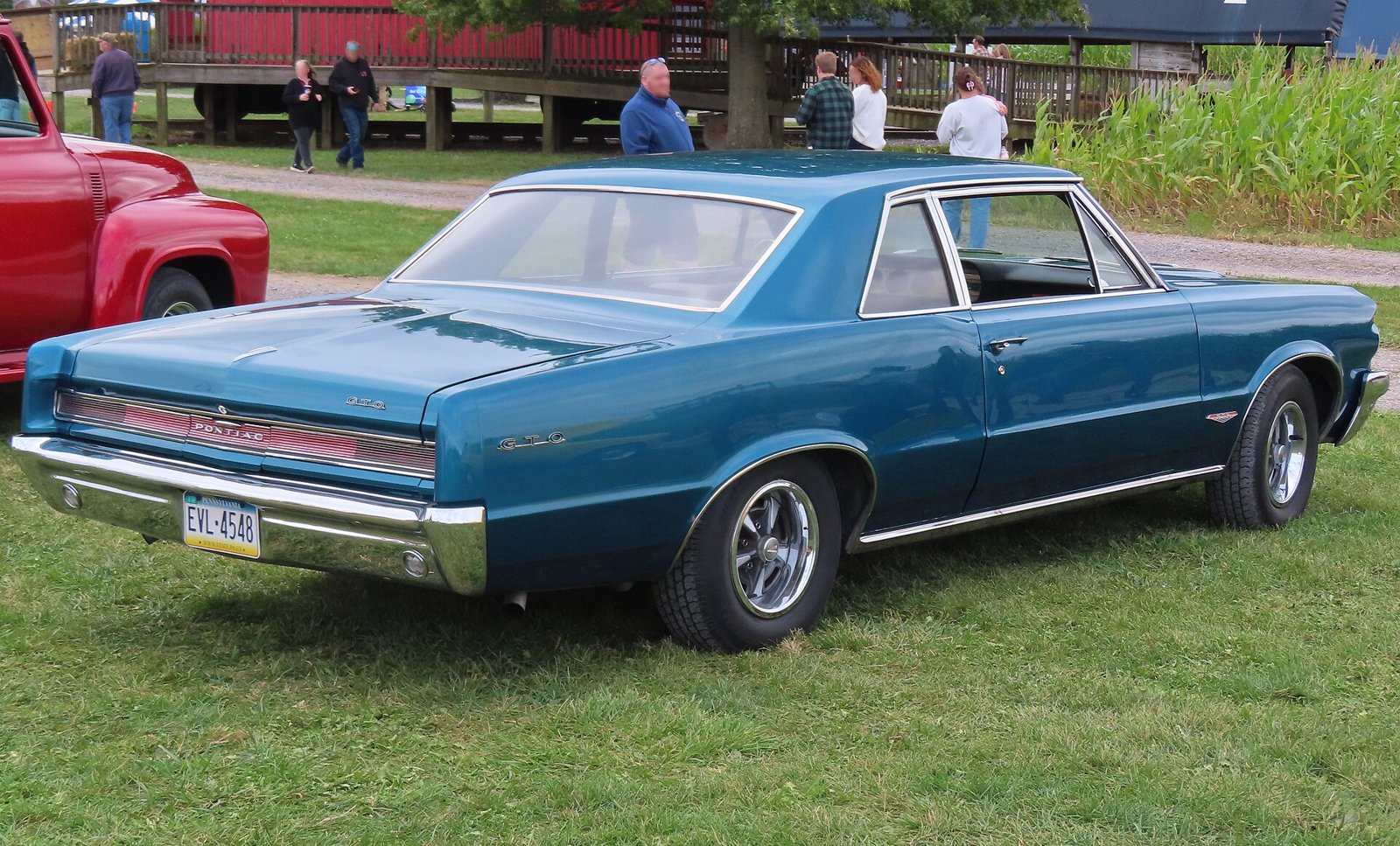
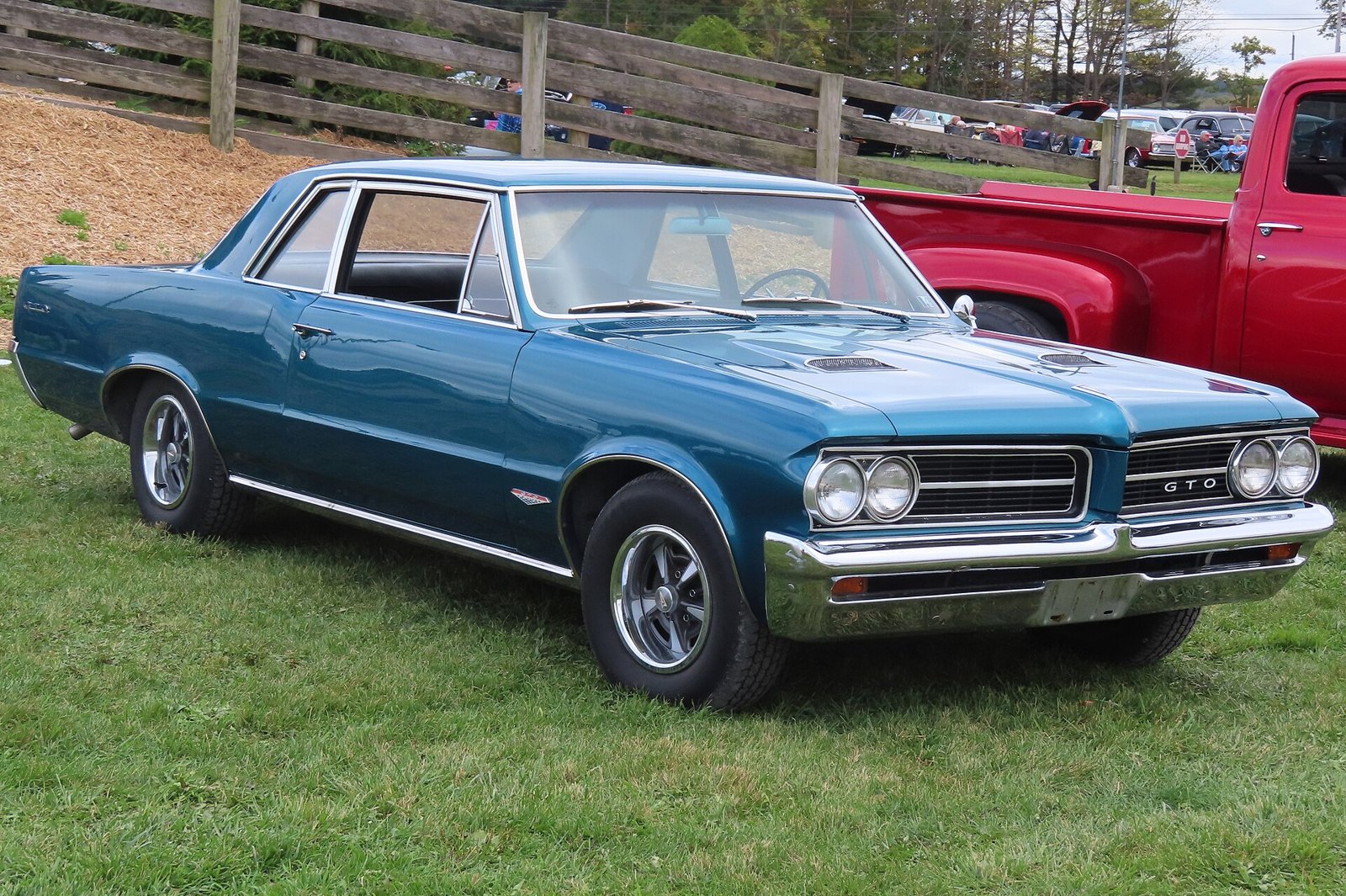
1964 Pontiac GTO Sports Coupe in Gulfstream Aqua Metallic
Photo: 1964 Pontiac GTO Sports Coupe, Mercer, Pennsylvania, 2025. MercurySable99 via Wikimedia Commons · License: CC BY-SA 4.0

Pontiac GTO (1964)

4 min read

The 1964 "Goat" that kicked off the muscle-car era, 100 years after Pontiac's debut.

In early 1963 GM banned its divisions from racing, so Pontiac, whose image was built on performance, turned to the street. According to Pontiac marketing man Jim Wangers, John DeLorean, Bill Collins and Russ Gee took the redesigned 1964 Tempest and dropped in the 389 cu in V8 from the full-size Grand Prix. That broke GM's rule capping its new A-body intermediates at 330 cu in, but the team found a loophole: the rule didn't cover optional engines. General manager Pete Estes approved it, and sales chief Frank Bridge capped the first run at 5,000 cars.

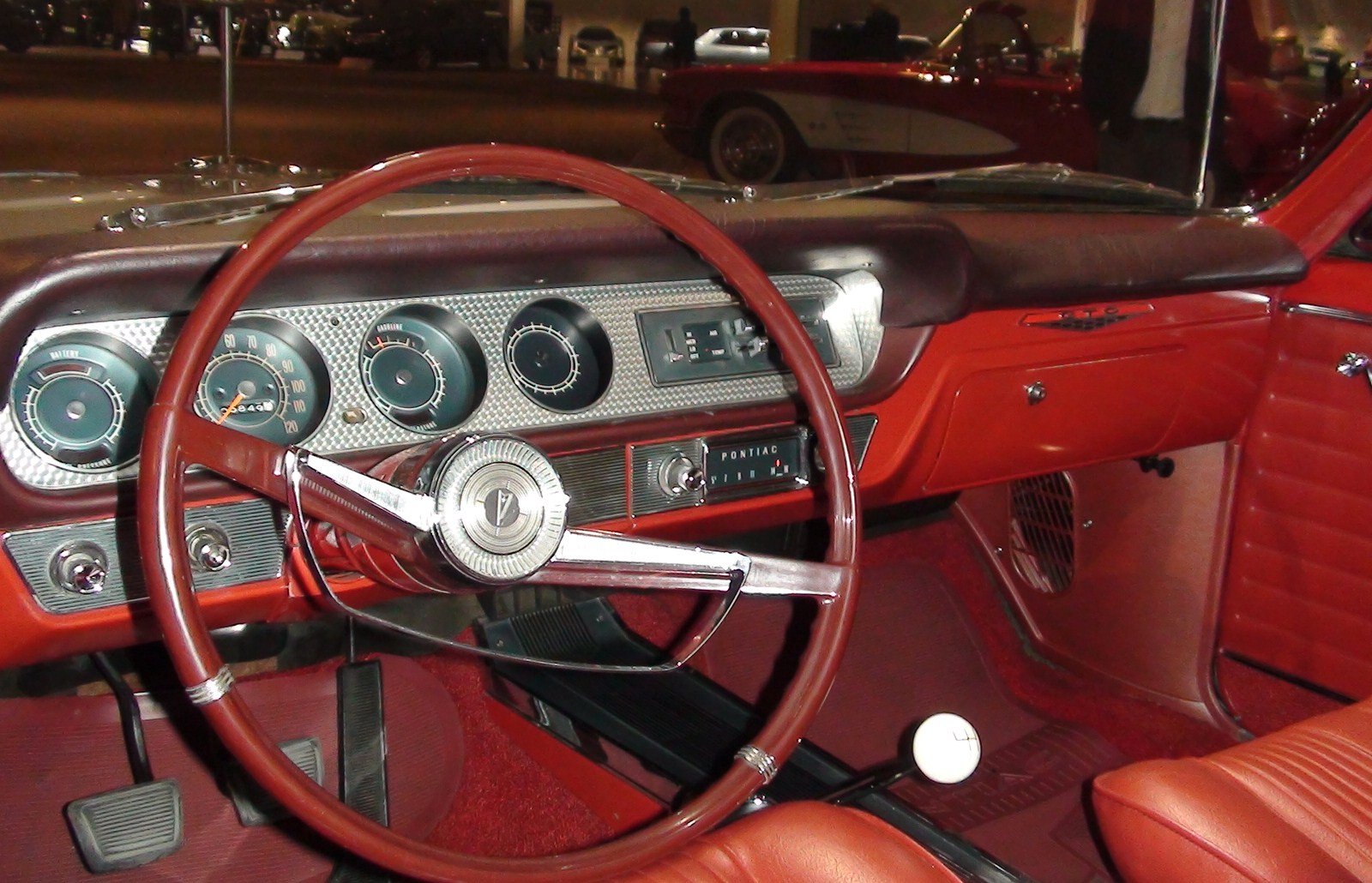
Production began on September 3, 1963. The GTO was a $295 option package on the Tempest LeMans coupe, hardtop and convertible, with the 389 rated at 325 hp, dual exhausts, a Hurst-shifted floor three-speed, stiffer springs, a thicker front anti-roll bar, 7.50×14 redline tires and hood scoops. Options included "Tri-Power" (three two-barrel carburetors, 348 hp), a four-speed, limited-slip and metallic brake linings. Bridge's 5,000-car forecast was wildly off: 32,450 were sold in 1964 and 75,342 in 1965. The GTO is credited with popularizing the muscle-car segment, and rivals at GM and elsewhere quickly copied the formula.

It wasn't perfect. Car Life and other testers criticized slow steering and drum brakes carried over from the ordinary Tempest.

Why it's our Car of the Day: 2026 is Pontiac's 100th anniversary, and this weekend's Lake Mirror Classic concours in Lakeland, Florida (Oct 16–18) features a "100th Anniversary of the Pontiac" display that includes a 1969 GTO Judge. On X, posts mentioning "Pontiac GTO" ran at roughly 1,000 over the past seven days (X recent-count data, Oct 9–16), far ahead of other classics we checked, such as the Porsche 959 (about 70) and Maserati MC12 (about 50).

Sources: Wikipedia: Pontiac GTO · 1964 GTO brochure specs (Car Back Catalogue) · POCI: Lake Mirror Classic, 100th Anniversary of the Pontiac
Mechanics

Specs are for the 1964 GTO unless marked.

Chassis

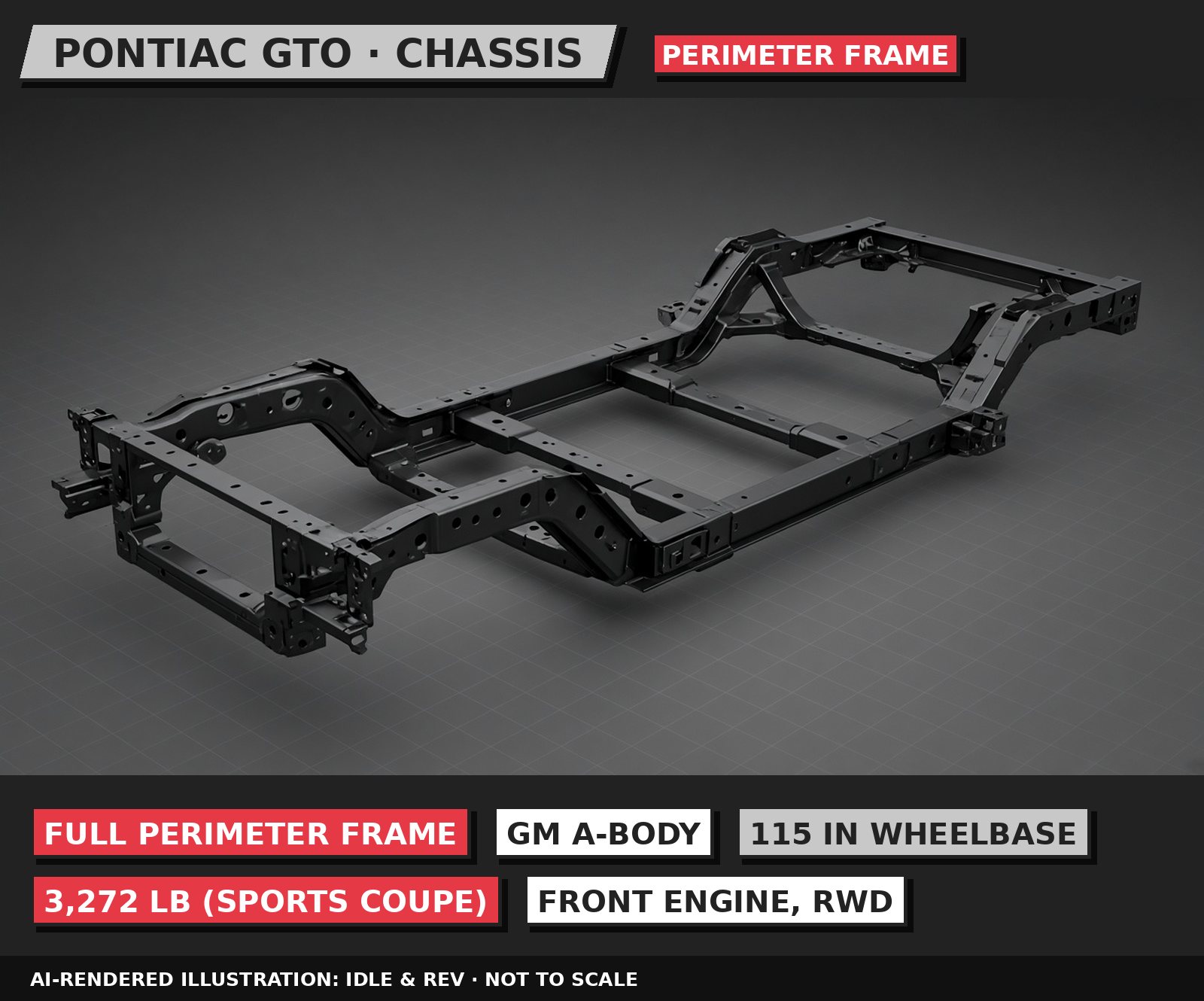
  • GM A-body intermediate platform: separate steel full perimeter frame with the body bolted on
  • Wheelbase 115 in; length 203 in; width 73.3 in; tread 58 in front and rear
  • Shipping weight: 3,272 lb (Sports Coupe), 3,292 lb (Hardtop), 3,422 lb (Convertible)
  • Front engine, rear-wheel drive

The 1964 A-bodies were the first GM intermediates designed around a full perimeter frame, borrowed in concept from full-size Pontiacs and Oldsmobiles. That sturdy, conventional base let Pontiac drop a big-car V8 into a mid-size car without reengineering the structure. The formula was simple: big engine, smaller car.

AI-rendered 3D illustration: 1964 Pontiac GTO chassis, labelled
Illustration: Idle & Rev (AI-rendered, for illustration; not to scale)

Suspension

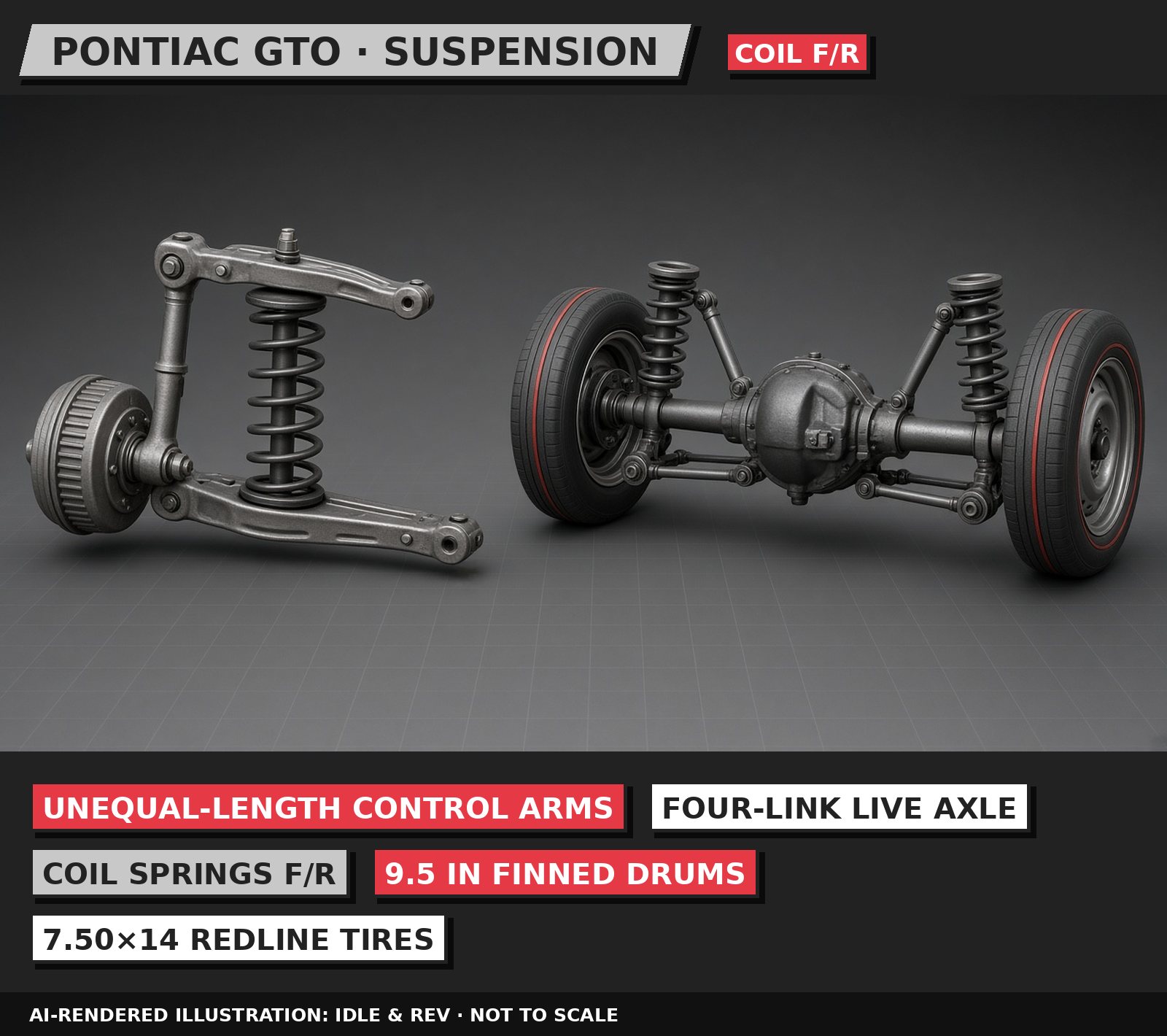
  • Front: independent, unequal-length upper and lower control arms on ball joints, with coil springs
  • Rear: live axle located by a four-link setup, with coil springs
  • Heavy-duty coil springs, wheel rates of 90 lb/in front and 110 lb/in rear; 0.938 in front anti-roll bar; firm-valved shocks
  • Brakes: duo-servo, self-adjusting finned drums, 9.5 in diameter, 269.8 sq in swept area (metallic linings optional)
  • Tires: 7.50×14 redline nylon on 14×6JK rims; steering 24:1 (20:1 quick, 17.5:1 power)

Four-link coil rear suspension was a step up from leaf springs for an intermediate, and it helped put 428 lb-ft to the road. The weak spot was stopping: the drums were the same as an ordinary Tempest's, and road testers called them inadequate at high speed.

AI-rendered 3D illustration: 1964 Pontiac GTO suspension, labelled
Illustration: Idle & Rev (AI-rendered, for illustration; not to scale)

Engine / Powertrain

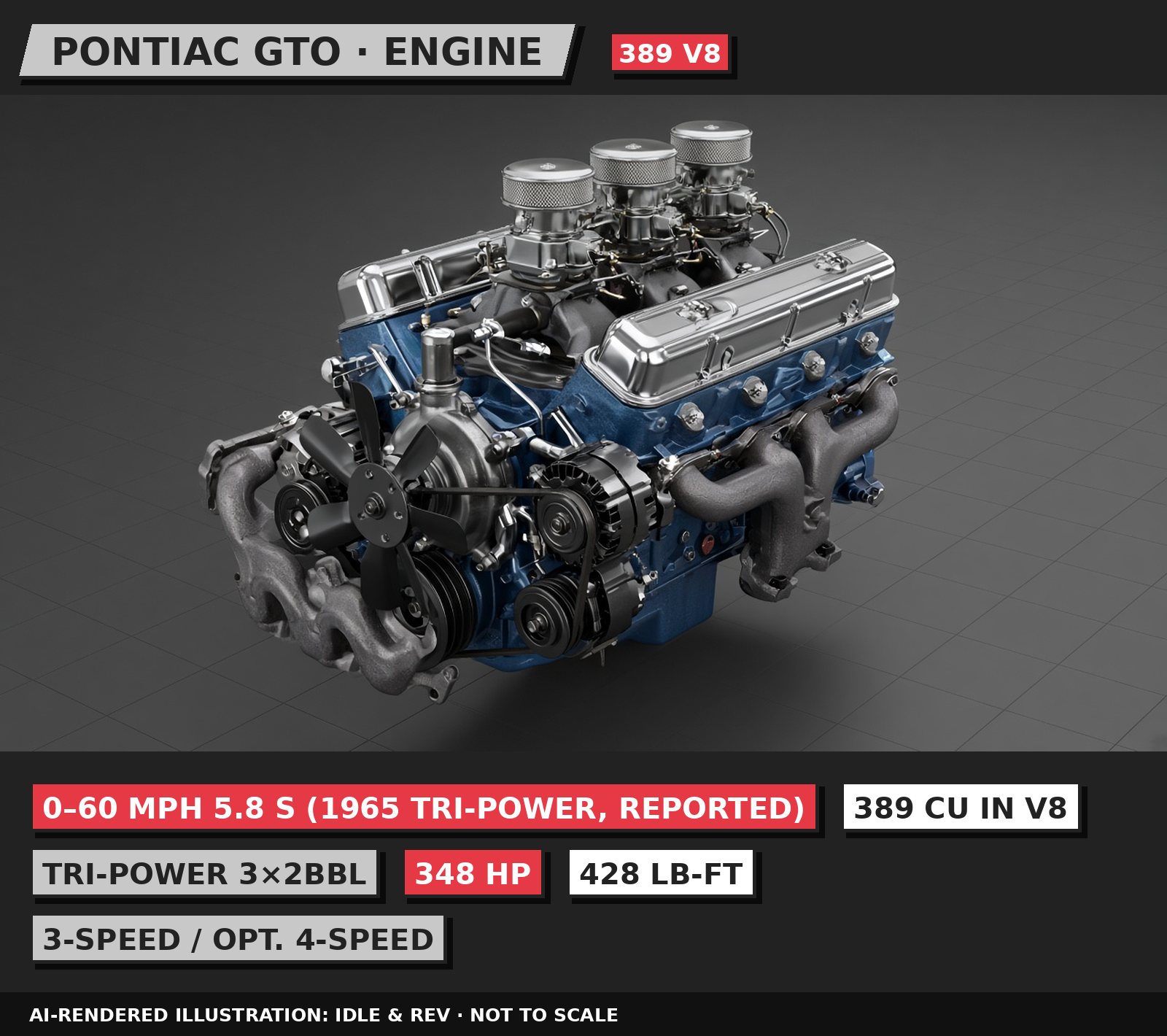
  • 0–60 mph: 5.8 s for a 1965 GTO with Tri-Power, close-ratio four-speed and 4.11 limited-slip (Car Life road test, reported); quarter mile 14.5 s at 100 mph. No 1964 figure is cited here.
  • Pontiac 389 cu in (6.4 L) OHV V8, cast-iron block, five main bearings; bore × stroke 4.06 × 3.75 in; 10.75:1 compression
  • Standard: single four-barrel, 325 hp at 4,800 rpm, 428 lb-ft at 3,200 rpm
  • Optional Tri-Power (three two-barrels): 348 hp at 4,900 rpm, 428 lb-ft at 3,600 rpm
  • Gearboxes: floor-shift three-speed manual with Hurst shifter (standard); aluminum-case all-synchro four-speed; two-speed automatic

The 389 wasn't exotic. It was a big, torquey pushrod V8 in a car built for something smaller, and that was the point. Tri-Power was the factory's step up from there: three two-barrel carburetors for 23 more horsepower at the same 428 lb-ft. How Tri-Power works →

AI-rendered 3D illustration: 1964 Pontiac GTO engine, labelled
Illustration: Idle & Rev (AI-rendered, for illustration; not to scale)

Mechanics sources: 1964 Pontiac GTO brochure specs (Car Back Catalogue); Wikipedia: GM A platform (RWD); Wikipedia: Pontiac GTO (cites Car Life 1965 road test)

On track

1964 Pontiac GTO at speed · AI-rendered illustration by Idle & Rev, not real footage

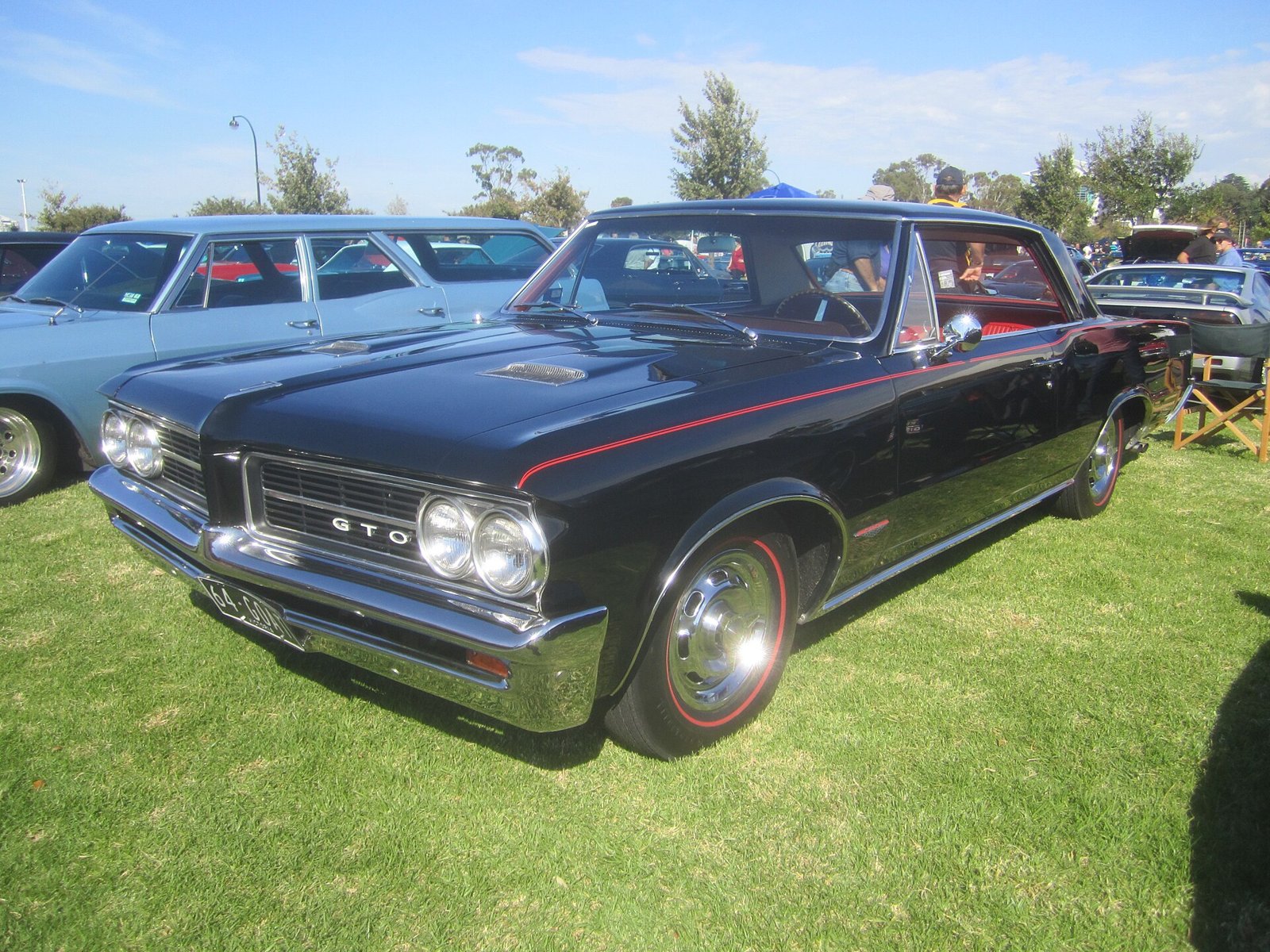
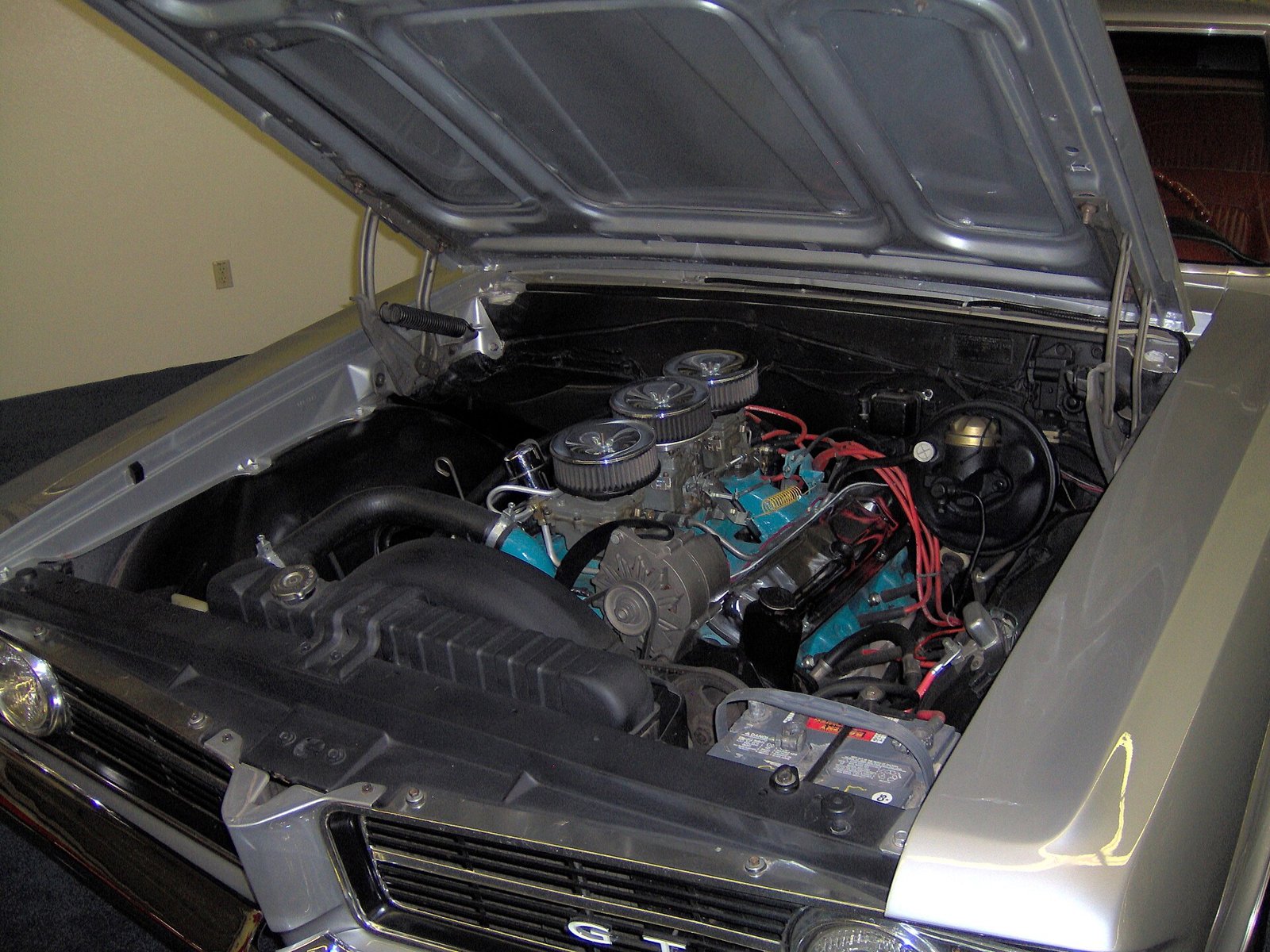
Gallery